

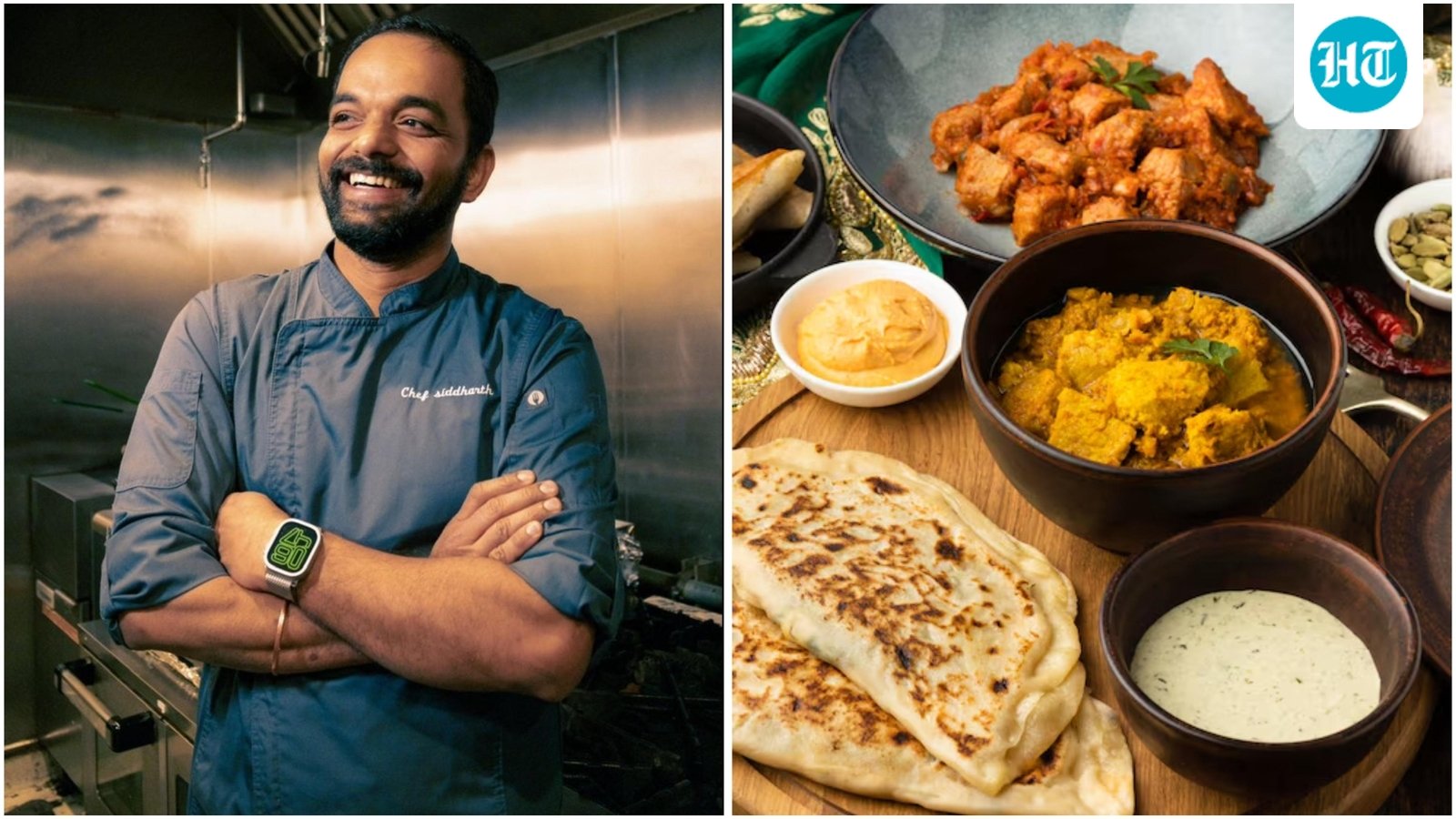
The term “authentic” is frequently used to describe Indian cuisine, but what does it really mean? Does an authentic biryani require a specific recipe? Can a chef experiment with traditional dishes without losing their original identity? In a country where culinary traditions vary across regions, communities and households, defining authenticity is far from simple.
In an interview with HT Lifestyle, Chef Siddharth Parab, Executive Chef at Haldiram’s USA, explains why authenticity goes beyond ingredients and recipes to encompass cooking techniques, cultural context, flavours and the intent behind a dish. (Also read: Tired of making the same sabji? Try Chef Ranveer Brar’s Besan Ki Sabji with soft wadi, spiced curd gravy and flavourful tadka )
Authenticity goes beyond recipes and ingredients
“Authenticity is not just about using the ‘right’ ingredients. How those ingredients are prepared can be just as important,” says Chef Siddharth. He explains that even a simple dal can taste different depending on the lentils used, the cooking method and the final tempering. Traditional techniques such as slow cooking, roasting spices, fermentation, tempering and smoking help define the flavour of Indian food.
“For instance, a tadka of cumin, garlic and chillies added to hot ghee creates a very different aroma and depth of flavour than simply mixing the same spices into a dish,” he explains. A dish’s history and cultural context matter, too, as many preparations are associated with particular regions, communities, seasons or occasions.
There is no single definition of authentic Indian food
“Indian cuisine cannot be defined by a single set of rules because its diversity is one of its greatest strengths,” says Chef Siddharth. From Kashmiri rogan josh and Kerala fish curry to Rajasthani dal baati churma and Bengali shorshe ilish, India’s culinary landscape reflects diverse ingredients, techniques and traditions.
Biryani, for instance, has several regional interpretations, including Hyderabadi, Lucknowi, Kolkata and Malabar styles, each with distinct cooking methods and flavours. “Labelling only one version of a dish as authentic overlooks the many ways Indian food has developed over time,” he says.
The same diversity exists in Indian homes, where recipes are passed down through generations through observation and experience, often without precise measurements. These family-specific variations are also part of the country’s culinary heritage.
Keeping traditional techniques alive in the modern kitchen
Modern equipment has transformed professional kitchens, but traditional techniques remain important for achieving characteristic flavours and textures. “Techniques such as fermentation, slow cooking, stone-grinding, charcoal cooking and roasting spices are not merely steps in a recipe; they influence the final character of a dish,” Parab explains.
Fermentation is essential to idli and dosa batter, while slow cooking develops the rich flavours associated with nihari. Similarly, stone-ground pastes and roasted spices create distinctive aromas that may be difficult to replicate by speeding up the process.
According to Chef Siddharth, modern kitchens can use technology to improve consistency and efficiency without abandoning traditional methods. The key is to understand which techniques are integral to a dish.
Modern innovation without losing a dish’s identity
“Indian food can evolve without losing its authenticity. The important question is whether the dish retains the characteristics that make it recognisable,” says Chef Siddharth.
He believes traditional dishes can be presented differently or adapted using contemporary techniques while retaining their defining flavours. For instance, a regional curry can be served in a modern style while preserving its characteristic spice blend and flavour profile.
The distinction lies between thoughtfully reinterpreting a dish and using a traditional name without preserving the qualities associated with it. For chefs, innovation requires understanding what makes a preparation distinctive before deciding which elements can be adapted.
The chef’s role in balancing heritage and evolution
“Before reinterpreting a traditional dish, a chef needs to understand where it comes from, how it developed and what makes it distinctive,” Chef Siddharth explains.
This knowledge helps chefs identify which elements should remain unchanged and where experimentation is possible. It also creates opportunities to introduce lesser-known regional recipes to new audiences and present familiar flavours in fresh ways.
Respecting culinary heritage does not mean reproducing every recipe exactly as it was prepared in the past. Instead, it involves making informed choices while preserving a dish’s cultural and culinary significance.
Authenticity in Indian cuisine is about understanding its roots
“Authentic Indian cuisine does not mean preparing every dish exactly as it was made centuries ago. Indian food has always evolved, influenced by history, regional exchanges and changing culinary practices,” says Chef Siddharth.
For him, authenticity means understanding a dish’s origins, respecting the techniques and flavours that define it, and making thoughtful adaptations for contemporary tastes.
Rather than treating tradition and innovation as opposing ideas, chefs can view them as complementary. When a dish’s history and defining characteristics remain central to the cooking process, innovation can help Indian cuisine evolve without losing its connection to its roots.
