

The first murmurs of the trend began about 18 years ago as a funny anecdote. Batting coaches I knew in Delhi and Mumbai started talking about how they were facing a strange conundrum: fathers and mothers protesting that too much time was being spent teaching their children how to play defence instead of how to hit fours and sixes. “That’s like wanting to run before you can walk,” the coaches would laugh, as they narrated these conversations.
This was when the Indian Premier League (IPL) was two or three years old, and the gavel at the auction was turning more heads than the fireworks on the ground. As young second-string Indian players started getting snapped up for tens of lakhs of rupees — something unheard of in domestic cricket until then — the viability of cricket as a profession that could support more than just the 15 superstars who made it to the Indian team started to reveal itself.
Six-hitters was what IPL needed, so six-hitters was what people wanted their kids to become. And since the customer is always right, a fundamental shift began to occur.
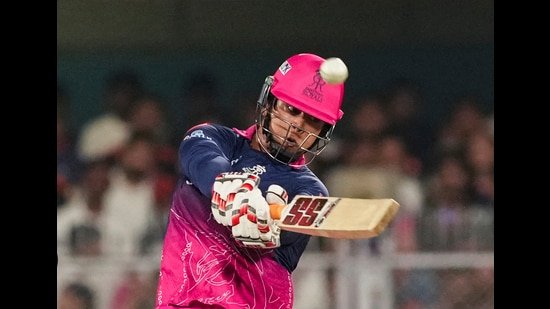
All these years later, say hello to Vaibhav Sooryavanshi.
RINSE AND REPEAT
My first brush with IPL was at the inaugural match in 2008. On a frantic night at the Chinnaswamy stadium, the home side Royal Challengers Bengaluru were pulverised by Kolkata Knight Riders courtesy a display of outrageous power hitting by Brendon McCullum. I remember instantly disliking the format, and as I watched more matches during that first season, the aversion grew.
Batting is meant to be about more than whacking the ball, and what the first few editions of IPL showcased was batters we’d watched for years simply going into overdrive for the duration of their innings. Rather than cricket at its most inventive, it became cricket at its most repetitive.
I recall multiple occasions between the 2008 and 2012 seasons when the batters were reduced to hitting the same shot on every delivery of an over: left leg out of the way, right arm swinging towards mid-wicket. Some of the shots connected, some were edged, some ended up as a swing-and-a-miss, and some were caught in the deep or chopped on to the stumps.
Sure, you would occasionally see genuine cricketing strokes in the V, or Sachin Tendulkar’s famous upper cut, or Kevin Pietersen’s storied switch-hit, but the larger trend was an old-school slog spread across 20 overs. It felt as if a free-flowing football match had been replaced by an endless penalty shoot-out.
Why this was happening wasn’t unfathomable.
ZONES OF INTEREST
Though there is a fraction of a second between the bowler releasing the ball and the batter offering a shot, the best players slow down time and capture countless nuances before they commit to a stroke. Which side of the ball is shining, what is the seam position, whether it has been released from the fingers or the back of the hands, what is the length and the line… these are all inputs a batter gathers in real time, before deciding how to play the delivery.
Batters typically start their innings by marking zones on the pitch. They know that if the ball lands in any of those slots, they can dispatch it to the fence. As the innings builds, the zones expand and the range of shots grows.
To Virender Sehwag, for instance, anything wide of the off-stump early in his innings meant a drive through the covers or a cut over backward point. To Yuvraj Singh, anything slightly short was a pull to square-leg with a horizontal bat. VVS Laxman got into the flow by punishing anything drifting towards middle and leg.
Once these slots are marked, the key is to back yourself to execute the stroke while being mindful of the field, in a cat-and-mouse game with the bowler. Only when the asking run rate is mounting or the overs running out, did the leg-out-of-way slog come in. In the early IPL, however, it inevitably became the default mode.
A NEW WORLD
Today’s League is different.
The biggest change in the last 18 years has been that the clamour for six-hitters has converted the coaches who once scoffed at the idea of young swashbucklers lofting the ball as soon as they came in. Now, every delivery is a boundary opportunity, and each of the 120 balls needs to be maximised.
Batters trained in this new way of thinking may struggle to survive in Test cricket or even build innings in one-dayers, but have the ability to dispatch any ball over the ropes. In other words, their hitting zones have expanded to the point where all areas of the pitch are fair game. Even yorkers that once needed to be dug out can now be converted into full tosses or chipped over the field behind square. The old batting hierarchy of defence-single-four-six has been reversed to a point where the batter’s first thought is how to hit a six and last recourse is a defensive prod.
Sooryavanshi, the toast of the IPL so far this season, is a prime example of this new paradigm. He is 15 years old (bone-density tests have proven this, despite the controversies) and must have started playing cricket around the time coaches first began to talk about their changings KRAs.
Yes, there are dropped catches and fortuitous edges in every knock Sooryavanshi plays, but some of the shots he can unleash — even when the bowler is Jasprit Bumrah — reveal a mentality that the game’s shortest format was missing in its early years.
The traditional slog has been replaced by inventive shot-making of the kind that sometimes seems unbelievable; possible only with modern bats that have more meat than bones compared to the relatively slender willow of two decades ago.
I still don’t like the IPL — it is Test cricket for me any day of the week, or the subtle nuance of the middle overs in one-dayers, over a parade of boundaries — but this new skill-set has made the league more watchable than before. If nothing else, out of curiosity about what hitherto inconceivable shot we might see next.
(The views expressed are personal)
