

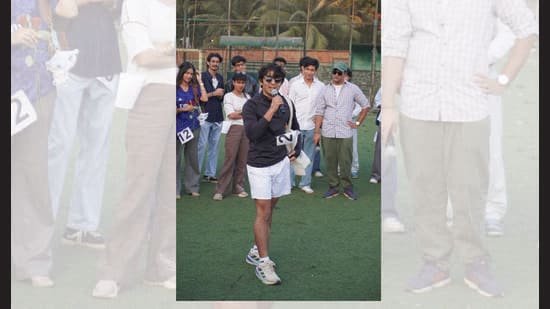
It’s scary enough to spot a performative man on Hinge; running into an army of woke bros is straight out of a horror movie. And yet, in Mumbai in February, a handful of self-identifying Performative Males showed up at a playground to compete to be top dog, to an audience of 150 and two judges. They made a show of “liking women’s interests”, even showed sympathy for “period cramps”, while keeping their misogyny intact. All for a cash prize of ₹10,000 and short-lived online glory. Also at the event were another handful of women, eager to be crowned the best Pick-Me Girl (You know, the one that’s “not like other girls” and “eww, doesn’t wear makeup”?)
If you haven’t heard about slop events yet, maybe you’re just not online enough. They’re this generation’s answer to internet fatigue, with IRL events that mimic the world of their socials. Online, everyone’s watching mukbangs on YouTube. Offline, they’re watching a man eat a rotisserie chicken at an abandoned pier in Philadelphia. Online, everyone’s complaining that it’s hard to find (and keep) a partner. Offline, someone organised a Fight Your Evil Situationship rave in LA. People who call themselves twink and gym bro online are meeting up at gyms in New York City. And unlike comment sections, there’s no bloodshed. At the club, they’re all fam.
Slop events aim to get young people to pull their faces out of their screens, and build a community offline. Is it working or is it just for the plot?
Plugged in, logged out
Why now? Because Gen Z, despite follower counts, overflowing DMs and a strong Close Friends game on Insta, is overwhelmingly lonely. They’re also exhausted from a pandemic, an unstable economy, the climate crisis and a life dictated by the algorithm. Hanging out costs money. Hobbies aren’t profitable. Even AI offers banal life advice.
How are the kids coping? With silliness apparently. In NYC, Timothee Chalamet lookalike contests drew hundreds of participants last year simply because the event was free, removed from marketing machinery. Performative Men meet-ups are so popular, they’re held as far apart as Pakistan and Singapore. Meet-ups for Short Kings are held in Seattle, and their counterparts, Tall Guy Gatherings, pop up in Boston on the east coast of the US.
Of course, India had to enter the game. In February, District Culture hosted a meet-up for men named Aditya (the internet’s code for a toxic desi male). Entry was free (with identification) for a night of chatter, arm wrestling and worshipping other Adityas. There was a wall of fame too. In Delhi, in August last year, Baith Club’s free-entry contest for Performative Men drew a crowd. The dudes came, clutching matchas, wired earphones plugged in.
Viraj Sheth, CEO AND Co-Founder of Monk Entertainment (which set up the Performatives event in Mumbai) has a specific audience for slop events. “We’re going after Gen Z and young Millennials who are hyper-online. We’re giving them a space to just exist offline for a bit,” he says. He also set up Mumbai’s Just For Kicks Club in February. Their next event is Kan’t Ye, a Kanye West listening party after the artist cancelled his India gig.
This feels real
Even to the chronically online, a slop event can seem random and chaotic. But they take the edge off, which is why they’re usually a hit. At Sheth’s Performatives event, participants knew sparks would fly more than they do in a Reel’s comments. Shailee Priyadarshi, 28, won the Pick-Me Girl competition because she asked the judges whether they could see her lipstick. When they replied no, she, embodying the trope, said, “I’m not wearing any, baby.”
“That the event was free was the biggest motivator for me to show up,” says Priyardarshi. She later went out with other attendees. They still keep in touch.
Do we get sloppy seconds?
“Communities now are built around shared interests online. That’s powerful, but it’s also shallow unless you take it offline,” says Sheth. But most events in India are one-off and rarely break out of their viral fame. They’re still hosted by events companies, who show up with an army of influencers. A generation that sends emojis to their managers and can edit Reels with just two thumbs knows that actual community takes actual effort to build. A slop event is rarely the messy meshing of actual humans that everyone hoped for.
Long-running communities, on the other hand, stay determinedly out of the frame. Shruti Sah and Harsh Snehanshu’s initiative Cubbon Reads turned three this January, and pulls readers out of their homes every Saturday morning to read in Bengaluru’s Cubbon Park. “Two years ago, when it started to drizzle, our readers stayed put, opened their umbrellas and continued to read under their umbrellas,” says Snehanshu. Adityas could never!
For now, slop events merely set the stage for first interactions. Those seeking a village, may do well to remember that they must become a villager, too. Communities don’t need the puppeteering of an events company to function. Film clubs, quiz leagues, drum circles, poetry slams, tree-spotters and even kitty parties have thrived for years without PR or sponsors. “Each villager is capable of building a village. It is all a matter of will,” says Sah.
From HT Brunch, May 23, 2026
Follow us on www.instagram.com/htbrunch
