

That hot, humid night in Tokyo, standing in an eerily empty Olympic stadium as a typhoon approached the coast, did Neeraj Chopra think of the ripples his historic gold might cause?
At the time, in 2021, Chopra was a freak occurrence: no one had seen a javelin thrower from India, or in fact from anywhere in South Asia, make it to an Olympic final, let alone win the thing.
Today, South Asia is the epicentre of the javelin throw. It is the sport’s powerhouse, the place from where its top contenders come. By the next edition of the Games, Pakistan’s Arshad Nadeem, who finished fifth in Tokyo, was on the podium, becoming the first individual Olympic gold-medallist from his country at Paris 2024.
Nadeem grew up so poor in Pakistan’s Punjab that village elders had to pool money to fund his training, and he carved his first javelins out of eucalyptus branches. His gold-medal throw set a new Olympic record, of 92.97 metres.
He and Chopra stood side by side in Paris, in a 1-2 finish for Asia.
Then, on June 4 this year, on a mild evening in Rome, former Sri Lankan fast-bowler Rumesh Pathirage hurled the javelin 92.62 metres to win gold at the Diamond League Golden Gala, recording the second-best throw in Asian history (behind Nadeem’s Olympic one).
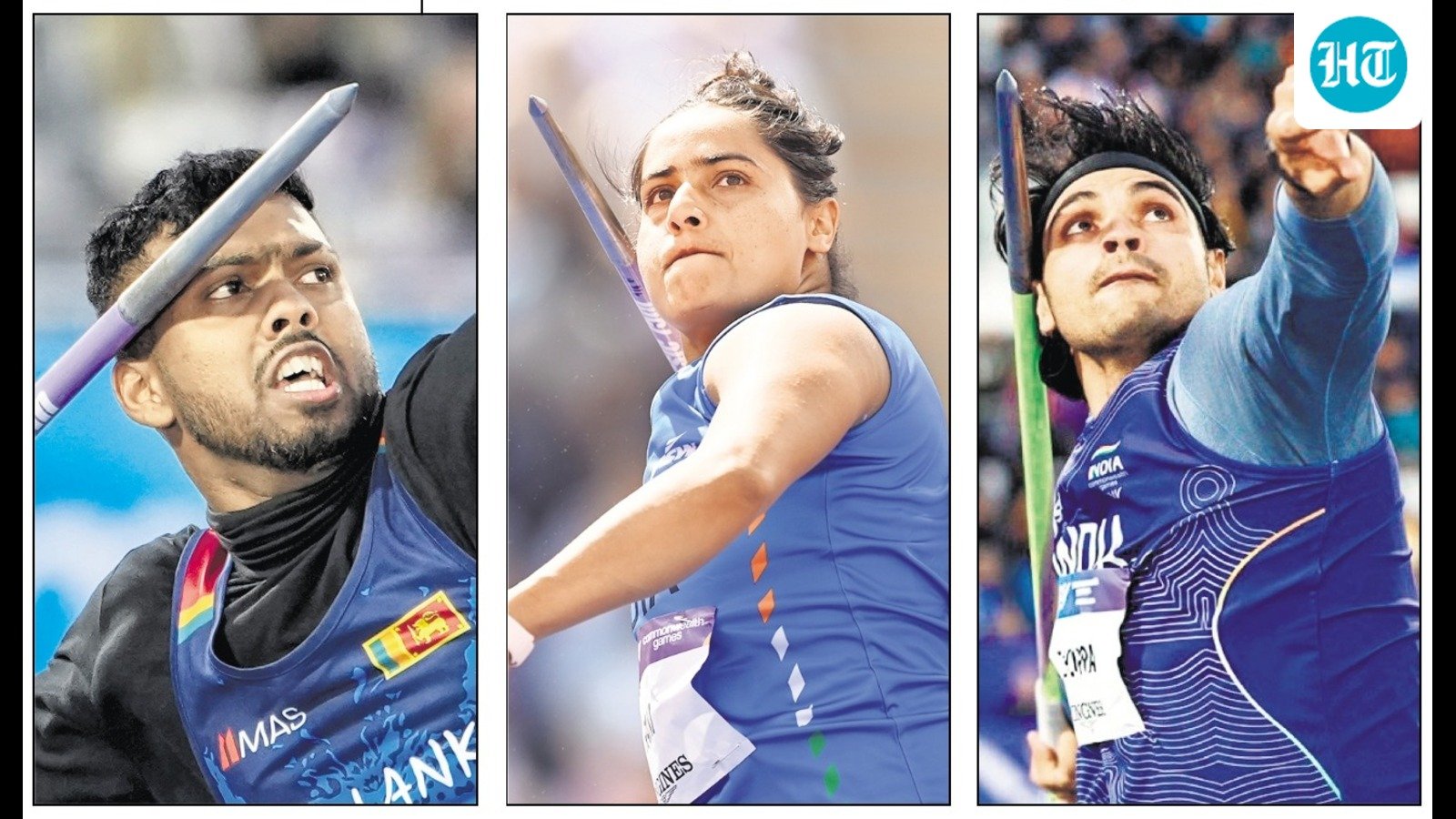
It isn’t surprising that the javelin final at the Commonwealth Games on August 1 finished with Pathirage, 23, winning gold and Chopra, now 28 and making a comeback after a long layoff following injury, winning silver. Third place went to a rising star in Indian javelin-throw, 24-year-old Yashvir Singh. The 12-man final featured three Indians, a Sri Lankan and a Pakistani.
Chopra has set quite a ball rolling. In recent years, India alone has seen Kishore Jena, DP Manu and Sachin Yadav make the world championships final, Chopra and Jena pull off a gold-silver finish at the Asian Games in 2023, and Annu Rani win the women’s gold at the same event.
Before Chopra, there was barely any representation from India, Pakistan or Sri Lanka in this discipline. So it’s clear that his gold opened a floodgate, allowing in the element of belief: if he can do it, maybe I can too. Amid the growing ambition, world-class training centres opened, better coaches were drawn to them, and a shift in priorities led to more government funding too.
We have come to realise that cricket, the one sport that rules India, Pakistan and Sri Lanka, works on the same biomechanics as the javelin throw: fast-bowling uses the arm as a sling, the hard, snappy rotation of the hip to generate torque, a run-up, a leap, and a braking leg to transfer force from the ground, up the body, and into an object. Watch a javelin thrower and a hard and fast throw from the deep in a cricket field and, biomechanically, there is very little difference.
This grounding in cricket is perhaps one reason it’s taken so little time for the javelin revolution to sweep through the subcontinent.
Chopra and a clutch of Indians, as well as Pathirage and Nadeem, will all go head-to-head at the Asian Games next month, in what promises to be another South Asian fireworks show, in this ancient war game-turned-sport.
(Email rudraneil@gmail.com. The views expressed are personal)
