

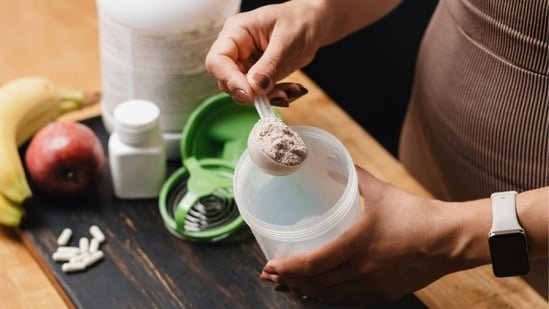
Protein powders have gained a non-negligible place in everyday routines, acting as a supplement to increase protein intake and help build muscle mass. They are now everywhere, from online listings to offline shelves. But with so many choices, confusion is inevitable, especially when it comes to selecting the right one.
Shalini Sudhakara, a nutritionist who frequently shares insights on health and wellness, in an April 30 Instagram post, addressed the common problem of protein powders, noting that if they are not chosen carefully, fake and adulterated ones may be counterproductive to your health.
She disclosed an easy guide on how to identify genuine protein powder.
1. Check the ingredient list
Don’t go by the fancy branding. You need to turn it over and take a closer look at the ingredient list, Shalini also asserted, calling it ‘the most important.’ Otherwise, if you do not scrutinise the ingredient list, which is foundational to your choice, you may be misled.
Here’s what Shalini asked to look for: “It should be made up of whey protein isolate or whey protein concentrate or whey protein hydrolysate or a combination of these three things. If it is a plant protein powder, 100 per cent of its protein source should be either from tea, soy or brown rice.”
These are markers of a genuine protein powder. If the ingredient list is vague, then it is likely dubious and might be a low-quality product. The efficiency is also low, and they might not hold up to their nutritional promises.
2. Clear protein labelling
Next, the clarity of the protein label is also instrumental in identifying how authentic it really is. The nutritionist outlined these markers that indicate a clean protein label: pea protein, casein protein, whey hydrolysate, soy protein isolate, brown rice protein, whey protein isolate, and whey protein concentrate.
If your label says protein powder, protein blend or muscle formula, then the nutritionist cautioned that it may be just a health drink, and not a pure protein powder.
So, if a protein avoids specifying its protein type and mentions generic things, it is not a pure protein supplement and may be mixed with other components, which substantially reduces its effectiveness for muscle recovery or daily protein goals.
3. Protein per scoop
The next indicator is protein per scoop, which is how much protein you are actually getting per serving. The nutritionist differentiates between the protein per scoop of genuine and inauthentic protein powder.
“A good protein powder gives you anywhere between twenty-four grams to 30 grams of protein per scoop. If it is anything less than that, it is adulterated and not pure powder,” Shalini explained.
4. Watch out for red flags in the ingredient list
Further continuing to decode the ingredient list, there are some obvious warning signs you need to be able to spot, as they may indicate that your protein powder is of low quality. The nutritionist warned about ingredients like maltodextrin, dextrose, corn syrup solids, excessive artificial flavours, and added sugars. This means the product is not purely protein-focused but is instead geared more towards improving taste, texture, or shelf life, thereby moving away from its primary purpose and diluting its nutritional quality.
Note to readers: This report is based on user-generated content from social media. HT.com has not independently verified the claims and does not endorse them. This article is for informational purposes only and not a substitute for professional medical advice.
