

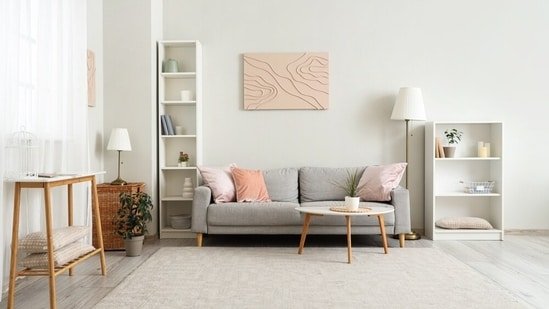
Living room is the first impression maker of your home sweet home. The moment a guest walks in, it sets the mood for the entire house. Even for the residents, it is the space where they unwind, relax, chit-chat and spend slow moments after a long day. So, naturally, a lot of attention goes into making the living room look presentable. But maybe that is exactly where things go wrong.
ALSO READ: Distracted in your study room? 5 decor tips to boost focus and improve productivity
In the efforts to make the space look stylish, homeowners end up doing too much, perfectly matching cushions or choosing excessively ornate decor pieces. Then the living room feels too cluttered, visually noisy and oddly out of sync.
It is important to understand that home decor is not as simple as buying beautiful statement pieces or conversation starters for your space. In reality, good interior design is deeply rooted in balance, proportion and cohesion.
So what are the common mistakes homeowners make? To understand that, we spoke to Kirti Madan, creative design director at Mahima Group who walked us through the common mistakes that make even the most well put-together living room miss the mark.
“What I have noticed is that even premium homes fail to feel refined because the space lacks visual flow and emotional comfort,” she shared, highlighting an observation frequently noticed in her design practice.
So even when after buying new things, from a new sofa and fresh curtains to textured walls, trendy lighting and Pinterest-inspired colour palettes, the living room may still feel oddly off. Why does that happen?
Answering this, Kirti explained, “Many homeowners are left with the same feeling: something feels off. The room may look expensive, but it doesn’t feel complete. It lacks warmth, rhythm, or personality. In design, that ‘put together’ feeling rarely comes from one hero piece. It comes from balance, proportion, and thoughtful editing.”
Here is an extensive guide based on the insights revealed by the designer which elaborate the common mistakes that make living room feel ‘off’ despite makeovers:
1. Buying everything as a matching set
- One of the quickest ways to make a living room feel flat is by matching sofa sets, identical side tables, and perfectly coordinated cushions may look safe, but they remove character from the room.
- Real homes need contrast and layering.
- A combination of a linen sofa and a wood-accent chair or an old brass lamp immediately adds depth to the room.
2. Pushing every piece against the eall
- One of the most common layout mistakes in homes.
- People assume pushing furniture to the edges will make the room look larger.
- In reality, it creates an awkward empty centre and breaks conversation flow.
- Even in compact apartments, furniture needs breathing space. A sofa pulled just a few inches away from the wall, with a rug anchoring the seating area, instantly makes the room feel intentional.
3. Choosing the wrong rug size
- A rug that is too small disconnects the entire room visually. This happens more often than people realise. Homeowners buy rugs based on availability rather than scale. The result is a floating coffee table with furniture sitting outside the rug boundary.
- Ideally, at least the front legs of the sofa and chairs should sit on the rug. This visually ties the furniture together and makes the room feel grounded. A small rug in a large living room creates the same effect as wearing shoes two sizes smaller than your outfit.
4. Depending only on one ceiling light
- Good living rooms are layered, not over lit. A single white ceiling light makes even expensive interiors look harsh and unfinished. Lighting should create mood, softness, and dimension.
- A well-designed living room usually combines three levels of lighting:
A. Ambient lighting for overall brightness
B. Accent lighting like wall lamps or floor lamps
C. Warm decorative lighting for atmosphere
- For instance, a textured wall panel will disappear completely under one overhead LED but come alive under soft side lighting.
5. Overdecorating every surface
- Many homeowners confuse styling with filling. Every shelf does not need décor or a plant stand.
- When every wall carries frames and every table has accessories, the room begins to feel visually noisy. Luxury interiors are edited carefully. Empty space is equally important.
- An enormous piece of art can have more influence than six smaller frames.
- Similarly, one sculptural vase on a coffee table feels more refined than multiple decorative objects fighting for focus.
The most memorable living rooms are rarely the most expensive ones. They are the ones that feel balanced, personal, and effortless the moment one walks in
