

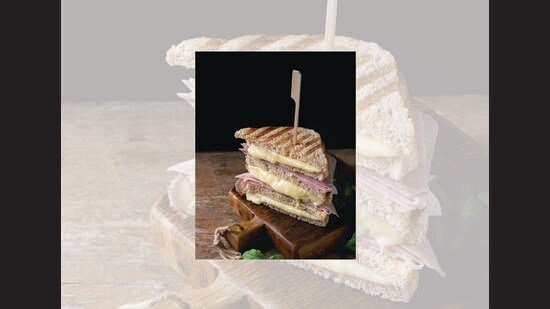
Can you think of one international food that you have almost certainly eaten (unless you are bound by religious restrictions or vegetarianism) without ever realising that what you are eating is rubbish, a mere facsimile of the real thing?
And that the real thing is a food that has enthralled emperors from the days of Julius Caesar; one that is so prized that people will pay hundreds of dollars for only a small packet; one that is so valuable that whole herds of animals are not just bred specifically to provide it, but are also kept on a special diet so that the taste remains clean; one that is such a flavour bomb that often only a small quantity is required to transform the taste of other ingredients; and one that is prized as much in China as it is in Colombia?
I am betting that you have come across it often without having any idea of how delicious or highly valued it can be globally, or how poor the quality of the version we get on the cheap in India is.

It’s ham. As you may have guessed.
Yes, I know. You will say you have eaten it in a sad ham sandwich and did not think there was anything special about the taste. And that you can’t understand why I am making such a fuss about it.
So, let’s start from the beginning. Ham is the meat from the hind legs of a pig that has been cured. Different cultures have been making ham independently for centuries. The ancient Romans loved it. They probably discovered it during their conquest of Gaul (now modern France). But they had no idea that the Chinese had a ham culture of their own. While the Romans liked its taste and ate it on its own, the Chinese treated it like a condiment, using it to flavour rice and other dishes. (It’s still part of the classic recipe for many varieties of fried rice).
Even in medieval England, where the poor could not afford to eat much meat, they would use a small chunk of ham to flavour a large pot of potatoes, which would suddenly start tasting much better.
Most countries had their own ways of curing ham — some intense and expensive and others relatively cheap — but the basic principle was that you preserved the meat in salt for a while and then, when it was cured, you sliced and ate it.

This worked well until modern industrial farming came along. Now, most commercially available hams are made from the meat of pigs who have been cheaply bred in huge pig farms.There is no real salt curing. Instead, the meat is injected with a weak solution of salt (brine), to which sugar has been added. The months that are required for proper aging are forgotten about. A partial cure is quickly effected and this bland watery ham is sliced, packed and sent to the market. A properly cured ham should keep (in most temperate climates) without refrigeration, but commercial, quick-cured ham will rot. Which is why we have to keep it in the fridge.
This is the kind of fast-tracked ham we find in our shops (even at most of the expensive shops) and it is what five-star hotels use in their kitchens. Nobody really enjoys this limp, watery ham on its own, so it is usually served In sandwiches. Even then, the bland flavour can be unappetising, so one trick is to serve it as part of a ham-and-cheese sandwich. And if they want to intensify the flavour, then they grill or pan-fry the sandwich so that the processed cheese melts. The ham then serves the same purpose that it did when it was added to potatoes in medieval England: It adds its flavour to the cheese.
But even this does not make for a very interesting sandwich, because the processed cheese also has very little flavour and the addition of a weak piginess does not improve it very much.
If this is how you have usually consumed ham, then no wonder you can’t understand what the fuss is about.
The food writer Edward Behr says, “A ham, as it ages, reveals the quality of fresh pork in the same way that mature cheese reveals the quality of the original milk”. In India, we have no aged ham or mature cheese, and very little high-quality pork, so this dictum is not particularly useful. But in much of the world, the quality of the pork that goes into ham is paramount.

In Spain, which produces the best hams in the world, it is all about the pigs and how they are bred. The most expensive ham, Pata Negra (which can cost hundreds of dollars), comes from black-legged pigs. These are specially reared in the wild and some are brought up on a diet of acorns (ie: jamon iberico de bellota), which imparts a clean taste to the ham. The best Spanish hams taste like no ham you have ever eaten before. They are sliced to be translucent and every bite has so many layers of flavour that a plate of ham can be a gourmet meal on its own.
In much of Europe, hams are often distinguished by the region where the pigs come from. In Italy, you will be offered ham from Parma (where Parmigiano cheese comes from) which will taste different from San Daniele ham from Friuli, which in turn will have little in common with Speck from the Tyrol region (on the border with Germany), which will be lightly smoked. No Italian foodie would dream of eating generic, commodified ham of the sort the factories turn out.
Do we, in India, have a choice? Well frankly, no. You are never going to find good ham at a shop, so if you want to know how special great ham is, then try it when you are abroad or bring some back with you. Good ham is aged for months, so it will keep.

This is what true ham lovers tend to do. They travel with their own ham. At a top hotel in the Maldives, they told me that when billionaire Francois-Henri Pinault (who owns Gucci, Bottega Veneta etc) came to stay with his family (he is married to Salma Hayek) he brought a whole leg of Spanish ham with him. The hotel’s chefs were summoned to his villa several times a day to shave thin slices of ham from the leg. (Pinault came by private plane, so the leg probably had its own seat.)
There are other options. I don’t know if this is still true but decades ago, when I lived in Mumbai, I would be served good ham made by enterprising housewives who bought legs of pork from butchers and cured them to create their own ham. Their hams were more English in style than European, but they were considerably better than the industrial rubbish in the shops. I am sure the practice continues, but I am too out of touch to recommend any specific ham makers.
But whatever solution you find, do try real ham. It has nothing in common with the commercial stuff they feed us, thinking we don’t know any better.
From HT Brunch, May 16, 2026
Follow us on www.instagram.com/htbrunch
