

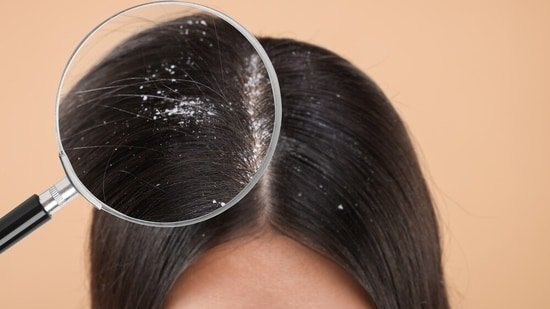
With increased rainfall, many people notice a sudden rise in dandruff, itching, and white flakes falling on their shoulders. If your scalp feels itchier or flakier during the monsoon, it is not just your imagination. Dermatologists explain that the season creates the perfect conditions for scalp flakiness to worsen, even among people who do not usually struggle with dandruff. (Also read: Fitness coach Puneet Rao says, ‘your workout is not a fat-burning magic trick’; shares what actually helps you lose fat )
Why dandruff worsens during monsoon
Dr Sonali Kohli, Senior Consultant, Dermatology, Sir HN Reliance Foundation Hospital, Mumbai, shares her insights with HT Lifestyle on why dandruff and flaky scalp become more common during the monsoon and the steps that can help manage the condition.
“Monsoon creates the perfect environment for a fungus called Malassezia to go out of control. Malassezia lives on everyone’s scalp all year round, feeding on the natural oils our scalp produces. It is not a problem until conditions shift in its favour, and the monsoon does exactly that,” says Dr Kohli.
“When humidity rises sharply, the scalp sweats more and the sebaceous glands ramp up oil production. This warm, moist, oily environment is where Malassezia thrives. As it overgrows, it triggers an inflammatory response from the immune system. That inflammation speeds up the natural skin cell turnover cycle on the scalp and instead of shedding invisibly the way it normally does, the skin sheds in visible clumps. That is the flaking we see,” she explains.
Dr Gulrez Tyebkhan, Consultant Dermatologist, Saifee Hospital, Mumbai, adds that seasonal changes can significantly impact scalp health. “With increased rainfall, there has been an increase in dandruff, itching and white flakes on your shoulders, so it is not in your imagination. Dermatologists claim that the monsoon brings the best conditions for scalp flakiness to become worse, even among those who do not suffer from dandruff normally,” says Dr Tyebkhan.
What is Malassezia
The scalp, like the rest of the skin, is constantly regenerating itself. Old skin cells shed and are replaced by new ones naturally every few weeks. Normally, these tiny flakes are washed away during regular hair washes and are not noticeable.
“Monsoon reverses this process, however. As skin cells naturally shed, the process slows down, leaving dead cells on the scalp. These scales appear over time in the form of flakes and can also cause itching,” explains Dr Tyebkhan.
Another major factor is the increased growth of Malassezia, a fungus that naturally exists on the skin. “Malassezia normally inhabits people’s skin, but it grows faster during humid times. This causes inflammation, making the skin flake more and more,” says Dr Tyebkhan.
Dr Kohli also highlights that dandruff and seborrhoeic dermatitis, a condition that causes more intense flaking, redness, and itching, are linked to the same fungal activity. “Dandruff and seborrhoeic dermatitis are both driven by this same fungus. The monsoon simply provides the right conditions for Malassezia to multiply and dominate,” she adds.
The gut-scalp connection
While scalp care plays an important role, internal factors may also influence flare-ups. “The gut microbiome and the scalp are more connected than people think. During the monsoon, dietary changes, increased consumption of street food, and gut infections are common. When the gut barrier is compromised, systemic inflammation rises, and this can worsen scalp inflammation,” says Dr Kohli.
“I regularly see patients whose dandruff flares coincide with gut disturbances during this season,” she adds.
How to prevent monsoon dandruff and flaky scalp
1. Wash your hair regularly
Maintaining scalp hygiene is one of the simplest ways to prevent excessive flaking. “A lot of people who suffer from scalp flaking wash their hair only once a week, which leads to the accumulation of dead skin cells, sweat, oil, and dirt on the scalp,” says Dr Tyebkhan.
“Washing your hair at least twice or thrice a week during monsoons is a general guideline to keep the scalp clean and free from accumulated scales,” he adds.
2. Use antifungal shampoos correctly
“This is the baseline. Ketoconazole, zinc pyrithione, or selenium sulphide shampoos used twice a week actively reduce the Malassezia load on the scalp,” says Dr Kohli.
She adds, “The key thing I tell patients is to leave the shampoo on for three to five minutes before rinsing. Most people rinse it off immediately, which means the active ingredient barely has time to work.”
Dr Tyebkhan explains that in some cases, dermatologists may also recommend additional treatments. “Antifungal shampoos are a common treatment, but leave-on antifungal lotions or solutions may also be recommended. These remain on the affected area for several hours, allowing the medication to work more effectively against the fungus. The shampoo removes the scales, while the leave-on antifungal agent reduces fungal growth,” he says.
3. Keep your scalp dry
“A damp scalp for hours is an open invitation for fungal overgrowth. People often come home after getting wet in the rain, tie their hair, and continue with their day,” says Dr Kohli.
“Dry your scalp and roots thoroughly after washing or getting wet. A low-heat blow dryer is absolutely fine and far better than leaving the scalp damp,” she advises.
4. Avoid heavy oiling on the scalp
While oiling is a traditional hair-care practice, heavy oils may worsen dandruff during humid weather.
“Coconut oil applied to the scalp is a beloved Indian practice, but in the monsoon it can backfire. Heavy oils sit on the scalp, trap moisture, and create a favourable environment for Malassezia,” says Dr Kohli.
“If you want to oil your hair, apply it to the lengths and ends only and avoid applying heavy oils directly on the scalp,” she suggests.
5. Do not ignore persistent symptoms
“If the flaking is accompanied by severe itching, redness, or persists despite frequent washing, it may be due to an overgrowth of Malassezia rather than just dead skin,” warns Dr Tyebkhan.
Dr Kohli adds, “If the itching is intense, there is redness or crusting at the hairline, or the flakes are thick and yellowish, it may be seborrhoeic dermatitis rather than simple dandruff.”
“Persistent dandruff accompanied by symptoms like excessive itching, redness, crusting, or hair loss should not be ignored. A dermatologist can assess whether it is simple scalp flaking or a fungal condition requiring targeted treatment,” concludes Dr Tyebkhan.
About the doctors
Dr. Sonali Kohli is a Senior Consultant at the Skin Health and Rejuvenation Centre at Sir H. N. Reliance Foundation Hospital. After completing her M.B.B.S. in 2008 from Padmashree Dr. D. Y. Patil University, Dr. Kohli pursued an M.D. (Skin and VD), graduating in 2013. She completed a fellowship in Cosmetic Dermatology in Mumbai (2013), followed by a fellowship in lasers in Thailand (2014). Currently, she is pursuing an M.Sc. (Facial Aesthetics) at Anglia Ruskin University, UK.
Dr. Gulrez Tyebkhan is a Consultant Dermatologist at Saifee Hospital, Mumbai, with over 15 years of experience in the field of dermatology. He has previously worked with reputed organisations including Croslands Ranbaxy, Sun Pharmaceuticals, and Nicholas Piramal India Limited. His expertise includes various dermatological procedures such as dermabrasion, chemical peels, acne scar reduction, and skin biopsies.
Note to readers: This article is for informational purposes only and not a substitute for professional medical advice. Always seek the advice of your doctor with any questions about a medical condition.
