

Would you watch a movie, promote it and post online about it, if you had helped write the script? Of course you would.
How about if you had been chatting with the director-producer for years, following his work since he first started tinkering with the camera as a teenager?
YouTube fandom may be taking shape as the mainstream movie studio’s newest challenge.
Films made on budgets of $15,000 are being released in theatres and drawing crowds. Stories crowd-sourced on YouTube are turning into major hits.
The dominant genre, so far, is horror.
There has been a cultural shift here, from spectatorship to participation, says Dahlia Schweitzer, pop culture critic and professor of film, media and performing arts at Fashion Institute of Technology in New York City. “Traditional horror asked audiences to watch a nightmare unfold. Contemporary horror increasingly invites audiences to help build, interpret, and expand the nightmare themselves.”
The biggest such success, Backrooms, is now in theatres in India too. Other hits this year include Obsession and Iron Lung, with more on the cards.
BACKROOMS
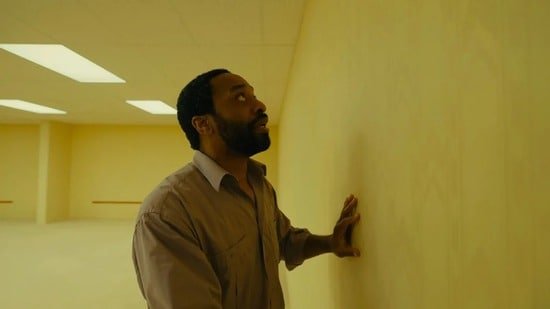
Produced on a budget of $10 million and directed by 21-year-old YouTuber Kane Parsons, Backrooms was released in May and is already A24’s highest-grossing film of all time.
It has earned $330 million globally at the box office so far, more than the production banner’s Marty Supreme ($191 million) and Everything Everywhere All at Once ($147 million).
It stars Oscar nominee Chiwetel Ejiofor as Clark, a furniture-store salesman grappling with a failed marriage, who stumbles upon a maze of empty yellow rooms that feed on unresolved pain.
The story, co-written by Parsons, was inspired by a 4chan thread about haunted empty yellow backrooms that smelled of damp carpets and buzzed with the noise of fluorescent lights. “God save you if you hear something wandering around nearby, because it sure as hell has heard you,” the original post said.
Intrigued by the idea, Parsons, then 16, began uploading clips in 2022, bringing these backrooms to life as a place where people vanish without a trace. With over 200 million views, the viral videos paved the way for his film, which uses the concept of liminal spaces to explore grief and trauma, isolation and futility.
He is now considering expanding the Backrooms universe with a sequel.
OBSESSION
The psychological horror made on a budget of less than $1 million by 26-year-old YouTuber Curry Barker, Obsession was released in May and is already one of the year’s most profitable releases, earning more than $300 million at the global box office.
It was written, directed and edited by Barker, who shot it in 20 days with a cast of newcomers. After its premier at the Toronto International Film Festival (TIFF), it was acquired by Focus Features for $15 million.
Barker began his social-media career with comedy sketches, in 2021. He expanded into horror shorts in 2023. His first film was a found-footage slasher feature called Milk & Serial (2024), and was made on a budget of $800.
Obsession follows a shy boy unable to tell his childhood crush he’s in love with her. He turns to a wish-granting toy for help, with terrifying consequences. The layered story has sparked online conversations about consent, male entitlement and toxic relationships.
Barker is now working with Blumhouse Productions and Focus Features on his next horror story.
IRON LUNG
This one didn’t even route its success through a production house.
Directed by and starring 37-year-old Mark Fischbach aka Markiplier on YouTube, Iron Lung was self-financed, based on an indie sci-fi video game created by David Szymanski, who also worked closely on the project.
It follows a convict who must navigate an alien ocean to find resources that may help humanity survive.
The film leveraged Fischbach’s 38 million YouTube subscribers to create demand, prompting major theatre chains to finally pick it up. When it was released across more than 4,000 screens worldwide in January, YouTube CEO Neal Mohan tweeted that it signalled a “new era of Hollywood”. “Incredible to see… creators like Markiplier holding the keys to their own production and distribution,” he wrote.
Made on a budget of $3 million, it has earned over $51 million globally.
In case you’re wondering, none of these are nepo babies. Fischbach started his channel as a broke and heartbroken 22-year-old student, in 2012, posting funny reaction videos to gaming playthroughs.
“The next project might not be horror, just so people don’t get this expectation that that’s the only thing I’m going to do,” he told BBC in February.
REWIND
The boom has been building for years.
In 2018, Canadian YouTuber Kyle Edward Ball launched the channel Bitesized Nightmares, where he released videos based on people’s descriptions of their scariest dreams. Just a few minutes long, they were atmospheric, building dread through simple scenarios: descending basement stairs, driving down a desolate road, lost claustrophobically in a maze.
Ball eventually turned the idea into the horror film Skinamarink (named after a popular children’s song), produced on a budget of $15,000 in 2022.
It follows siblings Kevin, 4, and Kaylee, 6, who wake up in the middle of the night to find their father missing. As they look for him, doors and windows in their home begin to disappear.
The film did the festival rounds and eventually made more than $1.5 million in a theatrical run. Ball is now working with A24 on a second horror film.
These films indicate how powerful online communities and social-media fandom can be, even in the largely closed world of movie-making, says Jessica Maddox, an associate professor of media studies at University of Georgia.
It isn’t just a fad, she points out. These are stories that explore the world in ways that resonate directly with those watching. The backrooms, for instance, are being seen as a stand-in for our lost and helpless wandering in an anxiety-inducing world that holds our less meaning and hope than before.
Fandom then does what fandoms do. Fans of Backrooms, for instance, have become obsessed with questions such as: How did this space emerge? How many levels are there? Who else is trapped within? The collaboration continues after the movie has ended, with sense of incompleteness adding to the appeal.
“Fans enjoy piecing together clues themselves,” says Schweitzer. They enjoy a satisfying two-hour story that lets them continue the narrative after the credits roll.
