

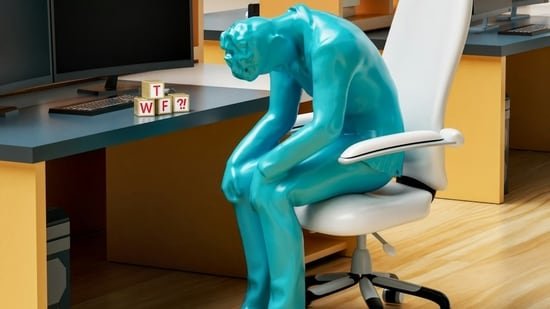
Sitting too much now defines how most jobs operate. At desks in offices or at kitchen tables working remotely, bad alignment creeps in when screens dominate attention, motion stays low, and chairs offer little proper support. Neck tightness shows up first, then slouched shoulders follow, along with achy lower backs, tired muscles, and sometimes even trouble moving freely later on. Strength does not stand apart from stance; neither breath depth nor joint ease – they shift based on how the body holds itself day after day. In an interview with HT Lifestyle, Sumit Dubey, fitness expert and the Founder of Sumit Dubey Fitness (SDF), shared exercises you can practice to improve your posture.
Back of the head gliding down the wall
“That’s how a chin tuck begins, correcting the drift forward that screens encourage. The motion, subtle but precise, builds endurance in hidden neck stabilisers while easing strain along the neck’s curve,” said Sumit. Instead of clenching, imagine drawing ears toward shoulders without tipping the face up or down.
Backward shoulder movement
The scapulae glide toward each other, almost like pages closing at the spine of a book, pausing briefly to activate stiff muscles along the ribcage. With the elbows kept low and the arms relaxed, tension gradually eases through the upper back. Better posture comes not from force, but from consistent, mindful repetition that most people overlook.
Hip flexor stretching
Lower-body movement benefits greatly from hip flexor stretching. When seated too long, tightness builds here – this shift often pulls on the lower back. Opening up that area supports better motion plus balanced pelvis positioning. Movement like cat-cow eases tension along the spine. Rotation through the upper back region clears daily stiffness, restoring fluidity slowly.
Planks or glute bridge
Standing tall isn’t just about bones – muscles hold the line. “Planks or glute bridges, done regularly, build resilience in the belly and hip regions tied to spinal balance,” Sumit advises. A quick shift in position after sitting for nearly an hour wakes up blood flow. Tiredness fades when motion slips into routine.
Sumit highlighted that most improvements start without gym sessions or costly gear. Over weeks, steady effort matters more than intensity, especially when paired with mindful motion. “Instead of staying frozen in one position, shifting frequently helps reduce strain. An organised workspace supports alignment just like exercise does. Lasting change usually comes from tiny habits repeated, not dramatic fixes,” he added.
Note to readers: This article is for informational purposes only and not a substitute for professional medical advice. Always seek the advice of your doctor with any questions about a medical condition.
