

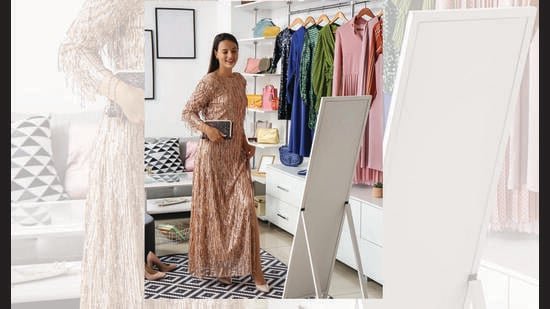
How far we’ve come. Personal stylists on reality TV used to be total villains. They fat-shamed new moms, they sneered at pantsuits, they put everyone in boring blazer-belt-skirt combos. No wonder regular folks are afraid of hiring a personal stylists. Life is not the Met Gala. Who needs this kind of hate?
Relax, real life is not a TV show. Stylists today don’t sneer. And they do much more than red-carpet looks. They’re helping women and men level-up their work wardrobes, they’re signing on for six guest looks for a single destination wedding, they’re building vacation fits and helping people purge their regrettable H&M hauls.

In Hyderabad, Pooja Karanam recently styled a family of four for a 50th birthday celebration, and put together 11 looks for a half-sari ceremony. She says she’s considering moving away from celebrity work entirely. “With regular clients, there is so much to do,” she says. “You can build looks around their personality. And people now notice how confident well-styled clients look.”
Here’s what to know before you spring for a stylist.
Expect a heart-to-heart. No good stylist will swoop in, recommend five trends and swan out. They’ll want to understand you before they pull out a single reference. They’ll ask about which occasions you need assistance with (daily officewear, an upcoming meeting, upgrading your existing style to your promotion, an industry switch, a family wedding and so on). They’ll also want to know what kind of life you live: Whether you move in conservative circles, need to be on camera, host work events, are mostly on your feet, interact with kids, meet clients and artisans on the same day, and such. Karanam sends every potential client a document that lays out her process, her fee structure, and what a person should expect at each stage. It always surprises them.

Open every door. Show your stylist what you already own, and which styles makes you happiest, what you’ve bought but never had the guts to wear, down to your accessories and your underwear. It gives them an idea of the kind of shopper you naturally are – a bargain-hunter, a functional dresser, someone who just “buys whatever fits”, who picks safe prints, or is an impulse spender. A good stylist will elevate what already makes you happy, rather than force a makeover. And they’ll take their own measurements, rather than accept your, “Oh, I’m a Medium, actually”.

Get real. Once you and the stylist start building a moodboard (palette, shape, inspiration, fabric, trends), prepare to go back and forth, and be honest. “The stylist needs to know not just your event date, but your insecurities, your dislikes, your limits, how far you are willing to go,” says Aishwarya Raghunathan, costume designer and founder of Hasta, a Chennai-based digital platform that connects handicrafts artisans with businesses and consumers. Most first-time clients aren’t prepared for this much introspection. Raghunathan recalls one client who had a clear idea of what she wanted, but didn’t share what she was actually comfortable wearing. “It took time to come to that common ground.” Most women like the idea of red-carpet dressing until they’re faced with a low-cut, high-slit or backless gown; or find out how uncomfortable heels, corsets, hair inserts and boob tape can be.

Do the math. Stylists typically charge either a flat fee for a specific event, or add 10% to 30% of the cost of the wardrobe they build for you as their cut. Chennai-based stylist Themis Vanessa recommends starting with a budget but allowing for a little leeway: “No stylist should keep buying outfits for you without checking with you.” Karanam says she often battles the perception that styling is a simple job, in which clients pay someone to go shopping. “They don’t understand what bad dressing can do to how a person is perceived.” Her fee covers the thinking, the sourcing, the problem-solving – all the hours spent before the first garment is even approved.
Prepare for fittings. Because this is when the stylist checks how all their suggestions actually look on you. Some may ask you to walk, sit, climb stairs, even bend to pick up your child to check for unwanted gaping, or step into the sunlight to test if the fabric is sheer. Themis says the wear test is telling. “Women who are not used to high heels are not going to be able to walk confidently in their first time in stilettos,” she says. “That’s going to make the whole look seem off.”

Alter your plans. And be open to even a complete rethink of a look. A good stylist should know what to do if a zipper snags, sequins make noise as you walk, or the bra isn’t helping the outfit at the last moment. They should have a fashion-first-aid kit and know how to hand-sew a falling hem, re-drape a sari that has shifted, and give a sheer fabric more coverage at short notice. “These inconveniences happen at the worst time,” says Themis. “You need to pick up on it like a life skill, so you have better control over what you do.” And through it all, you should come away with the confidence to dress yourself better in the future, with all that you’ve learnt.
From HT Brunch, May 16, 2026
Follow us on www.instagram.com/htbrunch
