

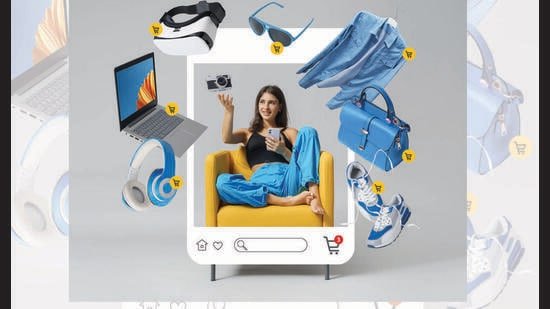
Your Instagram feed has become a very convincing shop window. Handmade bags, linen dresses, protein coffee, customised pet portraits, dopamine decor or suspiciously affordable designer dupes – the algorithm always seems to know exactly what you want. What it can’t tell you is whether the seller will actually deliver. It’s easy to click ‘Buy Now’ on that cute asymmetrical skirt that keeps popping up on your feed. But every purchase comes with a degree of risk. Best-case scenario? You’ve discovered your new favourite brand. Worst case? You’re stuck with a polyester nightmare while the seller vanishes into ether, taking your customer-service hopes with them.
So, before you open your UPI or type in your card details, here are a few checks that could save you a lot of money and a frustrating week in your DMs.
Spot the dupes. Social media platforms are full of unverified sellers, so it’s worth doing a quick background check before you place an order. Start by checking whether the account is listed as a business. On Instagram, tap the three dots next to the username and select “About this account”.
Pay attention to where the account is based. A small business selling five pairs of earrings for ₹500 while operating out of the Philippines or Bangladesh should raise questions. Next, look at when the account was created. If it’s brand new and has few or no customer reviews, proceed with caution. One of the biggest red flags is frequent username changes. Instagram shows how many times an account has changed its username, even if it doesn’t reveal the previous names. Multiple changes can suggest the seller has rebranded repeatedly. That’s a tactic sometimes used by fraudulent stores to shed negative reviews and start over under a new identity.
Track the path. Reverse image search is your best friend. Screenshot the item, run it through Google Lens and see where that image has actually been. Is it popping up on ten different dropshipping sites? Shady. Is it lifted off a legitimate brand’s website? Shadier. Also worth noting: If the product photos look suspiciously perfect – no wrinkles, no shadows, skin that defies physics – that’s AI doing the modelling, not an actual human in an actual garment.
Stay in site. No website. No customer support. No clear return policy. That’s three red flags right there. But even if the store has a website, look closer. URLs with numbers swapped in for letters (amaz0n.com) can be dodgy. No padlock in the address bar means no secure connection. Steer clear of sites with pixelated images, wonky layouts and grammatical errors. Also, a legitimate business has a business email, a phone number, a physical address, a clear return policy and terms and conditions that actually exist.
Anthony Mascarenhas, secretary of the Consumer Welfare Association Mumbai, says that it is crucial to check if there’s a manufacturer listed somewhere on a brand’s page or site. “That’s because, if you receive defective goods and decide to take legal action, it’s the manufacturer who will be held liable.”
Check the review mirror. The comment section is a gold mine, if the seller hasn’t already locked it up. Disabled comments should send alarm bells off. And if the comments are open but full of unanswered complaints, that’s not much better. A seller who ignores “where is my order?!” in public is definitely ignoring it in your DMs too.
Don’t trust glowing testimonials on their own page, as those are easy to curate. Reddit is where the unfiltered truth lives. Search the brand name and see what comes up. If they’ve taken someone’s money and vanished, there’s a reasonable chance a very angry stranger has already documented the whole thing.
Cover yourself. The basic sweep is done. Now assume things could still go wrong. Before you pay, start documenting. Screenshot the product listing, the price, the seller’s bio, the promises they’ve made in their highlights. Also screenshot every conversation. If they block you post-payment (it happens), you’ll want evidence. Follow the page from a second account too, so a sudden rebrand doesn’t catch you completely off guard.
Most small sellers will ask you to pay in advance. “But if there is no physical presence of the brand, you have to be more cautious,” says Palash Singhai, Advocate on Record at the Supreme Court. Here’s a pro-tip: Credit card payments are easier to refund; UPI and NEFT usually make the process harder.
Level it up. You can do everything right and still get burnt. There are two bad endings to an Instagram shopping story. The first: Something arrives, but it’s awful – wrong size, wrong colour, terrible fabric. The second: Nothing arrives at all and the seller disappears. Both are addressable, just through different routes.
For faulty goods, call the National Consumer Helpline at 1915. They’ll issue a notice to the seller, and the consumer forum takes it from there, says Mascarenhas. You can also approach the cyber police. If a seller disappears, that’s “criminal breach of trust,” says Advocate Singhai. File a complaint with cybercrime officials and report the account on Instagram. The Consumer Protection Act, 2019 and the Information Technology Act both apply here. “Tracing someone takes time, due to the infrastructural limitations in our country, lack of experts and the system as it stands,” says Singhai. But he adds that no one is fully untraceable. In the meantime, maybe buy the skirt in person.
From HT Brunch, June 06, 2026
Follow us on www.instagram.com/htbrunch
