

Calling ceviche “raw fish marinated in citrus juice and spices” is a bit like describing the Taj Mahal as a marble building. Technically correct, but missing the point. Because ceviche, enjoyed across South America, but particularly worshipped in Peru (they actually celebrate National Ceviche Day on June 28) is almost magical. It uses super-fresh fish, and the citrus marination, barely 30 minutes, is what breaks down the fish proteins, giving the raw flesh a cooked flavour but retains its delicate taste. Good ceviche typically has crunch: Raw red onion, coriander, toasted corn, and creamy avocado or sweet potato, all sliced just so, so that every morsel balances texture and flavour.
Around the world, ceviche (and Peruvian cuisine) has been something of a phenomenon. In India, however, it’s hard to find outside of luxury-hotel restaurants and multi-cuisine menus. It’s the same with food from Georgia, Ghana and other West African countries, Russia and the Philippines – cuisines that are currently being modernised and celebrated around the world, but can’t seem to take off in India.
What’s holding them back? The recipe changes in each instance. Take a look.

Distant connections
With Peruvian food, the world is literally in the way. The country is halfway across the globe; so importing bulk ingredients by sea can take up to 50 days. This means that Peru’s famed potatoes – they grow 4,000 types – and dozens of corn varieties are impossible to transport cheaply. Indian potatoes, bred for a long shelf life and for neutral aloo-subzi, just can’t absorb the spicy Huancaína cheese sauce.
Roxanne Bamboat, a food-content creator from Mumbai, ate at Lima, London’s first Michelin-starred Peruvian restaurant, in 2015. She was excited when an outpost opened in Mumbai in 2016. Disappointment set in quickly: Peru’s diverse produce was missing from the menu. “For restaurants already operating within tight margins, flying ingredients over 24+ hours is often economically unviable,” she says. Diners tasted nothing new, and Lima shut shop pretty soon.

With countries closer to India, “the main issue isn’t the cost, but the inconsistent availability of specific ingredients,” says Kalyan Kar, who with Kajari Mukherjee, runs the Kolkata restaurant Flavours of Africa. There have been several attempts, over the years, to get India to taste the food of the continent. Mumbai’s Ubuntu tried it 17 years ago, serving South African potjie stew and bunny chow. Green Onion, also in Mumbai, offered prawn egusi and other Nigerian favourites but didn’t survive the pandemic. Delhi’s Blue Nile was briefly famous for its Ethiopian injera before it closed down.
Flavours of Africa opened last year and serves food from Kenya, Namibia, Ghana, Tanzania, Nigeria and Ethiopia. Ghanaian fufu, a smooth stretchy staple, is made from cassava and green plantains. But it takes only a hint of global unrest for shipments across the Arabian sea to be affected. So, they rely on local substitutes.Only cassava grown in Kerala works, and it can cost ₹130 a kilo, “which means we cannot always make fufu”.

Georgia, hugging the Black Sea, isn’t too far away. The region’s cuisine is having a massive moment in New York and London. At trendy Chama Mama in Manhattan, diners queue up for adjaruli khachapuri (a boat-shaped bread, for which raw egg yolk and a slab of butter are whipped into bubbly cheese right at the table) and khinkali (giant soup dumplings that were once served along the Silk Road). And yet, only a handful of places serve these Georgian staples on their pan-European menus.
Why? Because it’s hard to recreate Georgian food with standard kitchen backups. Sulguni, the intensely sour, salty cheese that gives their breads that signature elastic stretch, is deeply tied to Caucasian pasturelands, and getting it past India’s strict raw-dairy import regulations is a bureaucratic nightmare. Khmeli suneli, the essential spice blend of blue fenugreek, summer savoury and marigold petals tastes unique, not something our masalas can mimic.
Aparna Bhat’s The Traveling Thali hosts food pop-ups and culture workshops in Mumbai, which spotlight the culinary traditions of the Caucasus region. “To bake a convincing boat-shaped khachapuri, I have to meticulously re-engineer the missing sulguni cheese from scratch, blending mozzarella for stretch, feta for briny saltiness, and homemade paneer for body,” she says.

Serving suggestion
Right now, an Indian in Dubai can sit down to a shared platter of Ethiopian dorowat, order Mongolian hot pot, and dig into a Brazilian barbecue. The emirate has enough expats from those nations to keep those restaurants going. India, less so. “People from the diaspora are more likely to boost the spread of their native cuisine,” says Irina Malysheva, information in-charge at the Russian House in Kolkata.
Her nation’s food is in the midst of a TikTok-driven luxury renaissance. Diners worldwide are indulging in “caviar bumps” licked straight off the hand. Pop icons like Rihanna have smothered fast-food nuggets in premium sturgeon roe. Sweet Kamchatka crab, harvested from Russia’s icy volcanic far-eastern peninsula, is the big draw at the seafood buffet.

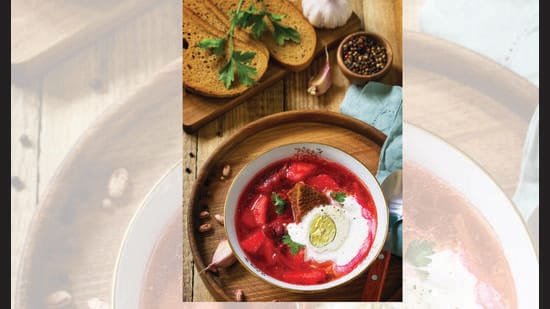
But, for decent Russian food in India, the best bet is not a metro city, but Goa. “The Russian diaspora in Goa is much larger than in Kolkata, with more Russian chefs and entrepreneurs who have set up eateries,” says Malysheva. So Goa, despite its size, has more Russian restaurants than any other state. Anna Galstian, who has lived in Goa since 2008, opened the Matryoshka Russian Café two years ago, serving borscht; the cold soup okroshka; and syrniki, cottage cheese pancakes that are a hit with Indian walk-ins.
“At our café, we have focused on preserving the authenticity of Russian cuisine and have not significantly modified recipes for local tastes,” says Galstian. The grills and stroganoff follow recipes designed for colder climates. The meat jellies and cured pork aren’t exactly what spice-seeking Indian diners are used to. Galstian admits that adding a bit of heat could bridge the gap between Russian kotleti and desi kebab.

Rising in the East
Thai food has done well in India for decades. Vietnamese cuisine too. But India is still cold towards the food of the Philippines. Influenced by Spanish, Chinese and American culinary traditions, Filipino cuisine is built around soy sauce, vinegar, garlic and calamansi. “Many people are curious, especially the younger generation, and want to try it, but they don’t know much about the cuisine yet,” says Ellery Rosales-Kulkarni, 37, who opened Elle’s Kitchen, a collective of six Filipina mothers serving Filipino food in Goa, in August 2025.
Their menu features lumpiang shanghai (spring rolls) and caldereta (a thick tomato stew) in addition to the sweet-sour adobo, meaty kare-kare curry, and the falooda-like buko pandan. Rosales-Kulkarni recalls a pop-up in Chennai, where “people said they felt like they were eating Chinese food, but it didn’t taste like Chinese.” The difference, she explains, often comes down to the caramel extract in Filipino soy sauce which makes it milder and sweeter than the salty Chinese kind.
Many customers do return for a break from their own masala-heavy meals, but sourcing ingredients is difficult, leading to an oft-changing menu. So, for now, Filipino food in India is more treasure hunt than restaurant category.

Lean cuisine
Even among Indians who are interested in these cuisines, there’s the lingering concern that much of the menu will be unpalatable and meaty. It means that any restaurant revolution will have to expand its meatless offerings. So, expect Ghanaian jollof rice with stewed tomato, Georgian lobio (kidney bean) and ajapsandali (veggie stews), Filipino adobo with tofu, Peruvian fried quinoa and meatless Russian borscht (beet soup) and vareniki (dumplings).
And they’ll need a little diplomatic assistance. Thai food is popular today largely because their government drafted a blueprint of easy-to-replicate dishes such as Pad Thai as ambassadors for the cuisine. Peru spent the early ’00s turning ceviche and the Pisco Sour into national calling cards through a coordinated push by chefs, tourism bodies and the government. Italy invests heavily in protecting its flavours worldwide. It has rules for which regions can produce which cheese, the recipies for its most popular pastas have been codified.
In other words, cuisines do not go viral by magic. Somewhere, someone is pulling the strings. The hope is that someone will, to bring more celebrated cuisines to India.
From HT Brunch, June 06, 2026
Follow us on www.instagram.com/htbrunch
