

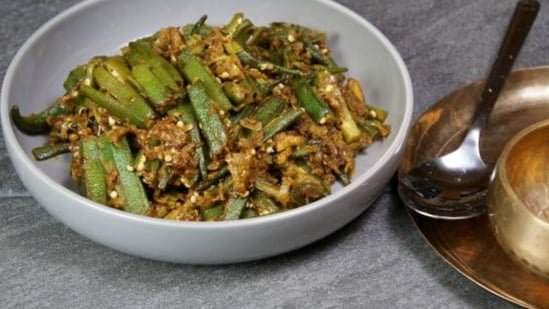
Bhindi masala dry stir fry recipe combines fresh okra, onions, tomatoes, and carefully selected spices to create a quick vegetarian dish that pairs well with roti, dal, or rice. Popular across North India and many other regions, this dry stir fry is prepared by cooking bhindi until tender while preserving its texture and flavour. Its bright green colour, lightly crisp edges, and spiced coating make it one of the most enjoyed Indian vegetable recipes during the warmer months when okra is widely available.
Okra provides soluble fibre, Vitamin C, Vitamin K, and antioxidants”>soluble fibre, Vitamin C, Vitamin K, and antioxidants that support digestive wellness and overall health. The fibre content contributes to digestive balance, while antioxidants help protect cells from everyday oxidative stress. Onions, tomatoes, ginger, and garlic add additional nutrients and plant compounds that complement the nutritional profile”>nutritional profile of the dish. Spices such as turmeric, cumin, coriander, and chilli powder contribute flavour while enhancing the overall appeal of this spiced okra recipe.
Fresh bhindi is sliced and cooked with onions, tomatoes, ginger, garlic, and spices until lightly crisp and coated with masala. Tomatoes add mild sweetness and colour, while onions contribute texture and savoury flavour. The finished dish offers a combination of soft vegetables, crisp okra edges, and aromatic spices. Its vibrant appearance and balanced flavour make it suitable for lunch or dinner throughout the year.
Bhindi masala dry stir fry differs from chur churi bhindi mainly in texture and preparation style. Bhindi Masala includes onions, tomatoes, and a thicker spice coating, creating a slightly softer texture with layered flavours. Chur churi bhindi is typically sliced thinner and cooked longer until much crispier, often with fewer vegetables. While both celebrate the flavour of okra, Bhindi Masala offers a richer masala-based preparation, whereas Chur Churi Bhindi focuses on crunch and simplicity.
Bhindi Masala vs Chur Churi Bhindi: Quick Comparison
Quick Look
Preparation Time: 15 minutes
Cooking Time: 20 minutes
Servings: 4
Calories: Approx. 120 per serving
Cuisine: Indian
Difficulty Level: Easy
Best Meal: Lunch or Dinner
Texture: Soft and lightly crisp
Crispy Bhindi Masala with Onion and Tomato
Fresh okra, onions, tomatoes, and aromatic spices come together in this flavourful Indian vegetable dish perfect for everyday meals.
Ingredients
- 500 g bhindi (okra)
- 2 onions, sliced
- 2 tomatoes, chopped
- 1 teaspoon ginger-garlic paste
- 1 teaspoon cumin seeds
- ½ teaspoon turmeric powder
- 1 teaspoon coriander powder
- ½ teaspoon red chilli powder
- ½ teaspoon garam masala
- 2 tablespoons oil
- Salt to taste
Method
- Wash, dry, and slice the bhindi into medium pieces.
- Heat oil and cook the bhindi separately until lightly crisp. Remove and keep aside.
- In the same pan, add cumin seeds, onions, and ginger-garlic paste. Cook until onions turn golden.
- Add tomatoes, turmeric, coriander powder, chilli powder, and salt. Cook until soft.
- Add the cooked bhindi and mix gently with the masala.
- Sprinkle garam masala and cook for 2 minutes before serving.
Tips To Restaurant-Style Bhindi Masala
- Dry the bhindi completely, any moisture can make the bhindi sticky during cooking.
- Cook bhindi separately first, this helps maintain texture and prevents excessive sliminess.
- Young okra pods cook better and have fewer seeds.
- Cooking in batches helps the bhindi stay crisp.
- Add tomatoes after onions, this creates a balanced masala base without making the dish watery.
- Frequent stirring can break the bhindi and affect texture.
- Adding garam masala towards the end preserves its aroma.
Nutritional Value of Bhindi Masala
Bhindi masala provides fibre, vitamins, minerals, and plant compounds”>fibre, vitamins, minerals, and plant compounds from vegetables and spices while remaining relatively low in calories.
FAQs
Why does bhindi become sticky during cooking?
Bhindi releases a natural gel-like substance when exposed to moisture. Proper drying helps reduce this.
Which oil works best for bhindi masala?
Mustard oil, groundnut oil, or regular cooking oil work well.
Why is bhindi cooked separately first?
Cooking bhindi separately helps preserve texture and prevents excessive softness.
