

In an era dominated by fleeting culinary trends and rapidly changing restaurant concepts, some flavours refuse to be rushed. On June 14, an Instagram collaboration between Delhi Affair and Luxury First struck a nostalgic chord with food lovers. Also read | Inside India’s 1st no-electricity restaurant in Jaipur with thousands of mirrors and only candles for light
Sharing a curated list titled ‘restaurants in India older than your grandparents’, the post perfectly encapsulated the timelessness of these legendary culinary landmarks. The feature highlighted iconic eateries that have deeply influenced the country’s culinary landscape, prompting followers to share how many of these historic gems still operate in their own cities.
Spanning historic hubs like Kolkata, Mumbai, Delhi, Bengaluru, and Pune, these nine pre-independence-era joints continue to open their doors every morning, serving up decades of heritage alongside their famous recipes. Here is a look at the institutions keeping the old-world charm alive.
1. Leopold Cafe, Mumbai (Estd. 1871)
Leopold Cafe stands as a resilient pillar of Mumbai’s bustling multi-cultural history. From its origins as an Irani establishment to its current status as a bustling pop-culture landmark, its rustic wooden tables and retro wall signs transport diners straight back into the late 19th century.
2. Indian Coffee House, Kolkata (Estd. 1876)
A massive, high-ceilinged hall echoing with intellectual debates, poetry, and political chatter, the College Street Indian Coffee House remains the beating heart of Kolkata’s ‘adda’ culture. It is a place where time stands still, and a simple cup of coffee bridges the gap between generations.
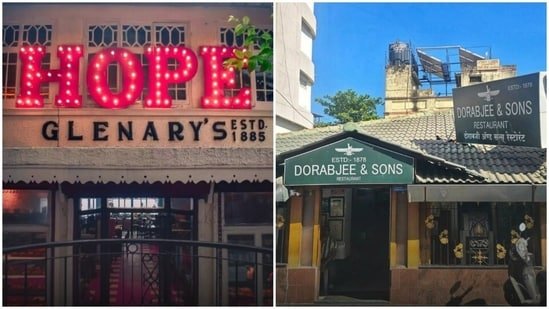
3. Dorabjee & Sons, Pune (Estd. 1878)
This humble, heritage structure in Pune is legendary for its authentic Parsi cuisine. Its classic tiled roof and traditional signage serve as open invitations to savour recipes that have remained strictly unaltered for nearly 150 years.
4. Glenary’s, Darjeeling (Estd. 1885)
Perched in the foggy hills of West Bengal, the glowing neon ‘Hope’ sign over Glenary’s bakery is a beacon of colonial charm. Stepping into this bakery means stepping into a world of freshly baked breakfast pastries, fine teas, and a view of the mountains that has charmed visitors since the days of the British Raj.
5. Tunday Kababi, Lucknow (Estd. 1905)
No culinary map of India is complete without the melt-in-the-mouth Awadhi delicacies of Lucknow. Tunday Kababi’s century-old secret spice blend produces kebabs so tender that they were originally crafted for a nawab who had lost his teeth.
6. Karim’s, Delhi (Estd. 1913)
Tucked away in the narrow lanes of old Delhi near Jama Masjid, Karim’s serves royal Mughlai food to the masses. The sight of chefs working over massive silver deghs (pots) continues a culinary lineage that traces its roots directly back to the kitchens of the Mughal emperors.
7. Britannia & Co., Mumbai (Estd. 1923)
The interior of Britannia & Co is a masterclass in nostalgia. Bentwood chairs, checkered tablecloths, and peeling paint on high arches tell stories of an older, quieter Bombay, where patrons still flock to eat Berry Pulao under the watchful gaze of vintage royal portraits.
8. Mavalli Tiffin Rooms – MTR, Bangalore (Estd. 1924)
The stately art deco facade of the original Mavalli Tiffin Rooms is hallowed ground for lovers of south Indian breakfast. Famed for inventing the rava idli during World War II shortages, MTR remains an unmissable Bengaluru morning ritual.
9. Flurys, Kolkata (Estd. 1927)
Bringing a slice of European elegance to Park Street, Flurys has been India’s premier tearoom for nearly a century. Famous for its rum balls, English breakfast, and chic pink aesthetic, it remains a testament to the old-world sophistication of Calcutta (now Kolkata).
Note to readers: This report is based on user-generated content from social media. HT.com has not independently verified the claims and does not endorse them.
This article is for informational purposes only.
