

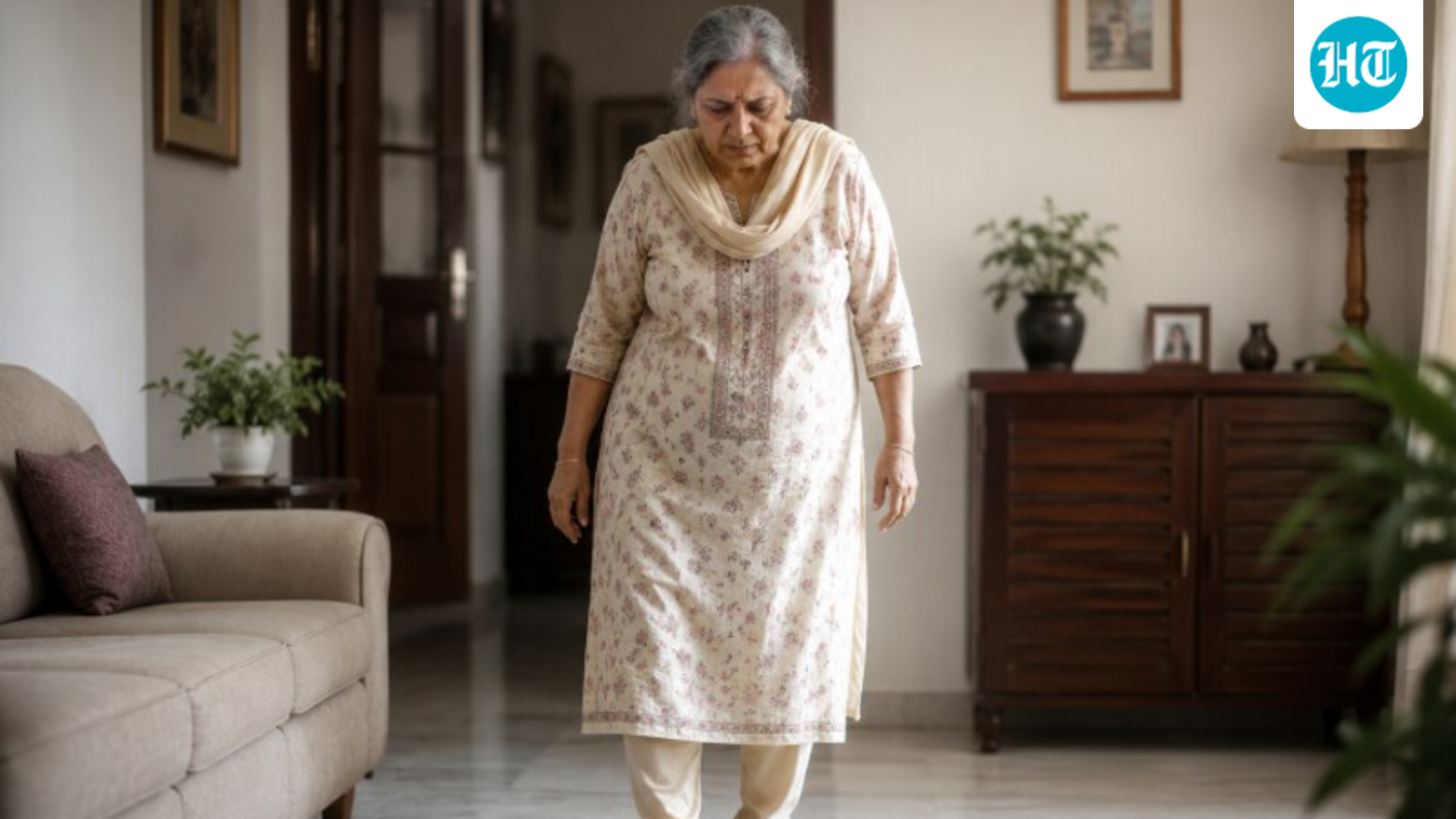
Have you noticed an older parent developing a side-to-side or “penguin” walking pattern with age? While it may sometimes be dismissed as a normal part of getting older, physiotherapist Dr. Akash Singh says changes in gait can be linked to weakness in important hip muscles and may affect balance, the back and knees. In an August 12 Instagram video, the doctor explained why some older adults may develop what is known as a waddling gait and why it should not simply be attributed to ageing. (Also read: Want better gut health? Nutritionist says this one simple dinner habit may help ease acidity, reflux, and bloating )
What causes a waddling gait?
“This is called waddling gait. And this is due to the weakness of your hip muscles, specifically the gluteus medius and hip flexors,” says Dr Akash.
Explaining how the muscles work during walking, he says, “When you walk, you are on a single leg. Then your gluteus medius keeps your pelvis stable. And if it is weak, the pelvis will drop.”
According to Dr Singh, the body may then compensate for the instability by leaning towards the opposite side. “And to compensate for that, the body will lean to the other side,” he explains.
Hip flexor weakness can also affect how a person walks. “And if the hip flexors are also weak, then you will not be able to lift your feet to walk. Which will eventually look like this,” he says.
Why should older adults not ignore changes in walking?
Dr Singh points out that a change in gait can have effects beyond how a person walks. “The problem is that its effect does not stop at just walking. The pelvis falls at every step. The lower back has to compensate for it,” he says.
This compensation, he explains, may contribute to back discomfort. “From there, the back pain starts. The knee collapses from the inside. There is uneven pressure on the cartilage, which can cause knee pain,” he adds.
Balance can also become a concern. “And the balance decreases. The fall risk increases. Which can be serious in older adults,” Dr. Singh says. He therefore urges people not to automatically dismiss changes in the way their parents walk as simply a consequence of ageing. “So next time you see your mom walking like this, don’t just blame the age,” he says.
A waddling gait can have different underlying causes, so persistent or worsening changes in walking, pain, weakness or balance should be assessed by a qualified healthcare professional rather than self-diagnosed.
Dr. Akash Singh (PT) is a Mumbai-based physiotherapist with 5+ years of experience in physiotherapy, pain management, fitness, and rehabilitation. He is the founder of One Rehab and holds a Bachelor of Physiotherapy degree from Himalayan University.
Note to readers: This article is for informational purposes only and not a substitute for professional medical advice. Always seek the advice of your doctor with any questions about a medical condition.
This report is based on user-generated content from social media. HT.com has not independently verified the claims and does not endorse them.
