

At 55, my well-ordered life imploded. I couldn’t sleep. I had night sweats. My anxiety spiked and libido flatlined. The final indignity: belly fat that rendered my favorite jeans unzippable.
I had been drop-kicked into Club Menopause, a membership about as unsexy as AARP. At least the latter comes with perks.
My gynecologist prescribed Bijuva, an FDA-approved bioidentical hormone, which did next to nothing. After about a year, I found a doctor specializing in menopause who prescribed an estrogen patch, testosterone cream and progesterone pills. The hot flashes and insomnia stopped, but I still felt out of sorts.
Then a friend told me about Palace Merano, a 120-year-old hotel turned luxury medical spa in the foothills of Italy’s Dolomites. She had gone there needing a reset, enrolling in a four-day “Detox & Longevity Program,” a physician-crafted itinerary to restore her “psycho-physical balance.” The program costs around $3,700, plus a nightly room rate of about $500.
It was pricey, but sounded like a solid complement to hormone therapy. If nothing else, I hoped the mild climate and views of snow-capped peaks would buoy my spirits. I packed my bags.
La Dolce Detox
After a 9-hour flight and a 2.5-hour drive into the mountains from Milan, I craved a Negroni. But as part of the program, I’d sworn off alcohol—along with sugar, refined carbs, dairy and coffee.
I was welcomed instead with a cup of fennel tea. The hotel’s medical director, Dr. Massimiliano Mayrhofer, assured me that Palace Merano’s combination of Traditional Chinese Medicine and Western science, along with an anti-inflammatory diet, could mitigate some of my menopause woes.
A full diagnostic panel informs every guest’s customized itinerary. My results showed various deficiencies, which the staff recommended treating with vitamin B and glutathione IV drips, acupuncture, cupping massages, osteopathy and daily hydro and mud therapy.
The meal plan, which a dietitian explained could help lessen my chronic anxiety, cut out “inflammatory foods” such as cheese, red meat and anything processed. I was also told to avoid white bread, crackers, pasta and rice—what the dietitian called “fiber-stripped carbs”—because they could send my blood sugar soaring and then crashing.
By the end of my stay, I felt sharper and more empowered to deal with stress. I also lost 5 pounds.
Of course, four days in the mountains can’t reverse the biology of hormonal shifts. But the program helped where my cocktail of hormones couldn’t, giving me tools and practices to quiet my mind.
Since the trip, almost 2 years ago, I have made acupuncture and meditation part of my weekly routine. I also eat healthier and aim for eight hours of sleep a night.
Mexican Mood Boost
Even as I adjusted to a new menopause normal, some symptoms, like anxiety, still surged. Recently, mine was manifested in neck and shoulder pain. The discomfort led me to look into other wellness experiences that directly address menopause.
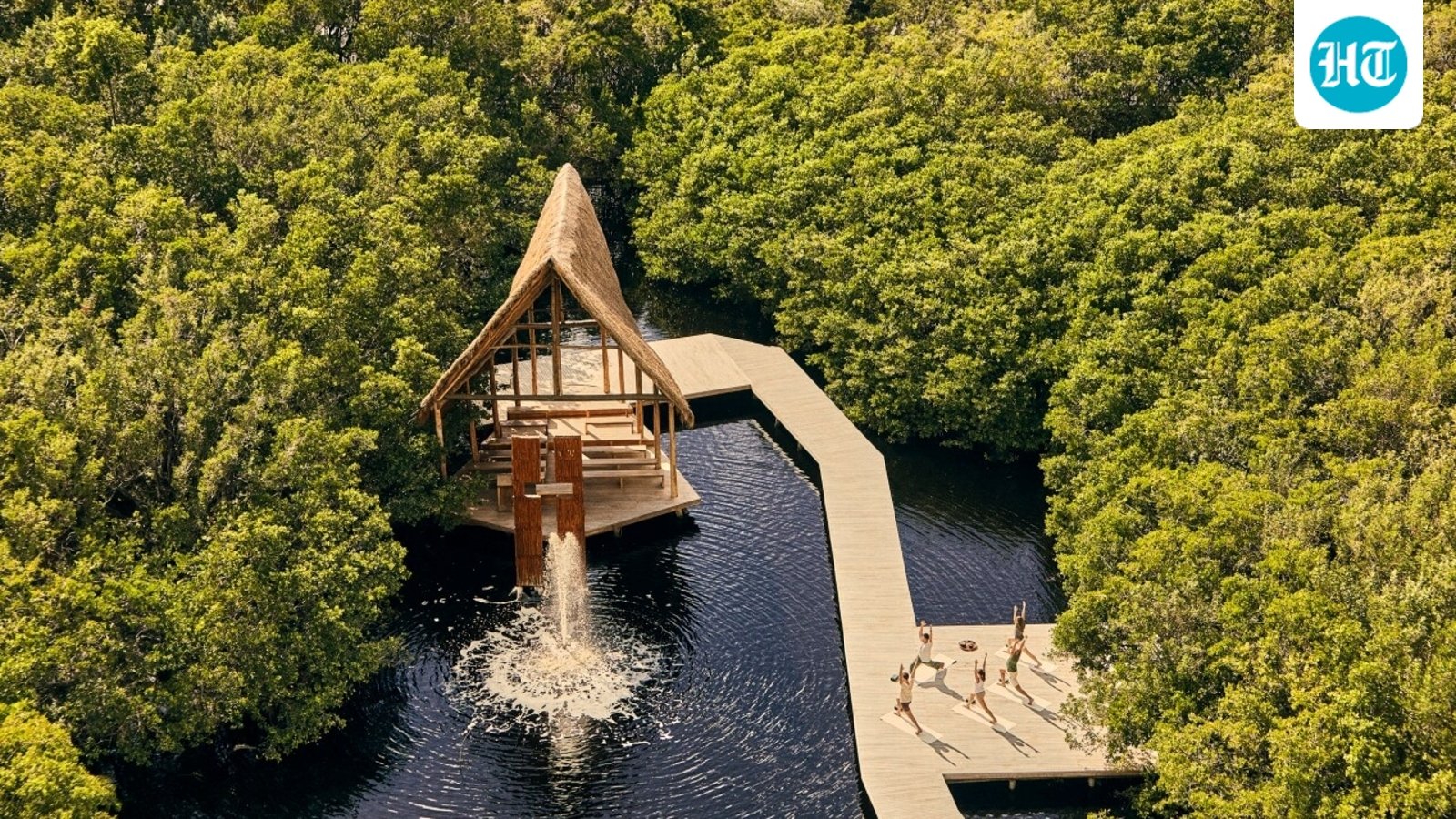
I came across a new women’s-health-focused program at Sha Mexico, a medical spa and hotel in Costa Mujeres, just north of Cancún.
It offers a “Women’s Health Pack” ($1,800) that includes hormone testing and gynecologic consultations, which I combined with Sha’s four-day “Rebalance & Energize” program ($2,880), a regimen of healthy eating and mind and body practices designed to lower cortisol levels and calm the nervous system. A room at the hotel cost me an extra $755 a night.
The facility’s views of the tranquil turquoise Caribbean boosted my mood almost immediately.

The medical staff recommended breathwork and stretching sessions, along with contrast therapy, alternating between freezing-cold temperatures and heat.
When I wasn’t getting massages or attending fitness classes included in my program, I joined free paddleboard sessions and evening movie screenings. With the activities and plentiful food such as fresh fish, tempeh and lightly blanched vegetables, the experience felt more like a vacation than my time in Italy.


But I hesitated at certain recommendations. When I told one doctor about my inability to focus, she suggested a peptide called Semax as well as oral oxytocin, neither of which is FDA-approved. She also recommended treatments utilizing exosomes, vesicles derived from stem cells, which purport to combat anxiety among other menopause symptoms.
Dr. Lauren Streicher, a professor of obstetrics and gynecology at Northwestern University, noted that the long-term effects of peptides and exosomes are unclear because of a lack of clinical trials. “The wellness landscape is filled with unproven remedies,” she said.
To some, that’s a concern—to others, it’s the reason to go.
Between skin care, cooling products and supplements, menopause, a once-taboo topic, is now an $18.7 billion market and is projected to grow to $28.8 billion by 2033, according to Grand View Research, a market research firm. Longevity programs for women were named a top trend in 2026 by the Global Wellness Summit.
During my stay in Mexico, two doses of exosomes inhaled via nebulizer seemed to soothe my mind. But racing thoughts returned just a week after I came home.
Alpine Decompression
Together, hormone therapy and wellness clinics have helped me accept—and even make peace with—a new version of myself. But neither is a magic bullet, which is why I’m already planning the next refresh.
Soon, I’ll head to Mayrlife, a medical clinic in the Austrian Alps, which just launched a “Meno Classic” program with customized dietary interventions and treatments for women. The experience is seven days and costs around $4,442, plus a nightly room fee of around $545.


The setting is, once again, part of the draw: The clinic sits above the sapphire Lake Altaussee, surrounded by pine forests and limestone massifs. If the colon irrigation and hypoxia training don’t chill me out, I have a feeling the long nature walks and lake swimming might.
