

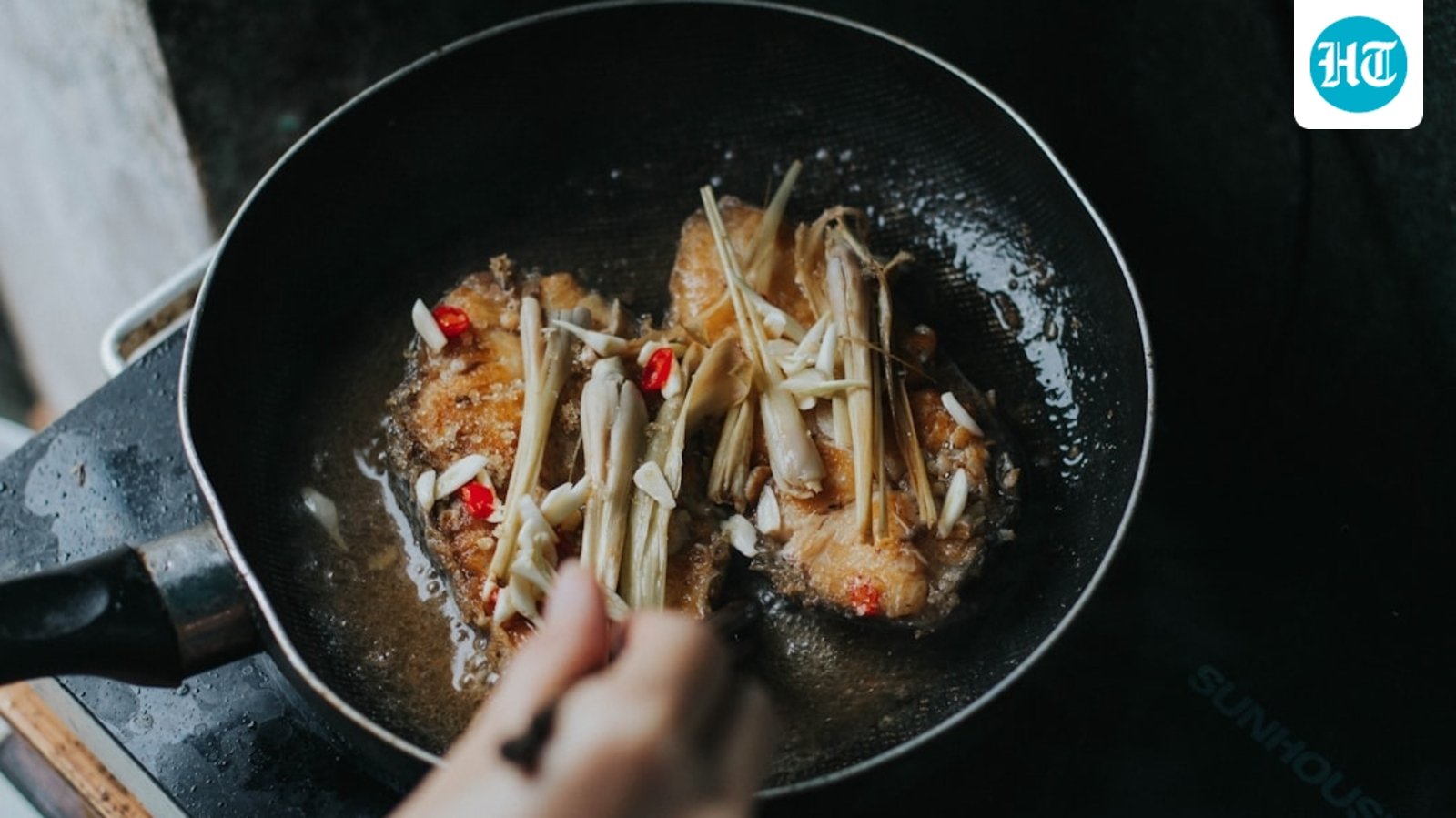
There’s something undeniably satisfying about crispy food – from the irresistible sizzle of a samosa frying to the crunch of golden fried chicken and the delicate crispness of perfectly cooked tempura. While it’s easy to assume that achieving that satisfying crunch requires plenty of oil, chefs say the secret lies more in technique than quantity. Factors such as controlling the heat, choosing the right coating and managing moisture can make all the difference in creating that perfectly crisp texture.
In an interview with HT Lifestyle, chef Rajveer Singh – who has experience across restaurants in Mumbai, Punjab and Bengaluru, and specialises in Indian and tandoori cuisine – shared tried-and-tested techniques for achieving that perfect crispy texture, without having to rely on excess oil.
Dry the food before it hits the heat
“The first rule of crispiness is straightforward: moisture is bad,” highlights Rajveer. “A thin layer of water can be turned into steam, which affects the browning process. For example, when preparing crispy potatoes, rinse the potatoes and dry them well.” He recommends using a kitchen towel to dry your vegetables, chicken, potatoes or fish before cooking them.
Don’t confuse high heat with right heat
Crispy does not necessarily mean it has to be cooked in the highest possible cooking temperature. Overheated oil can cause the outer part of food to be burned while undercooking its interior, and low-temperature frying enables food to absorb more oil, hence becoming greasy. The chef suggests, “For deep-frying, in most cases, the temperature is considered to be in the range of 175 to 190 degrees celsius, depending on the kind of food. The use of a thermometer is a better approach than assessing the oil temperature by looking at it.”
Give the food enough space
An overcrowded pan can decrease your chances of achieving that wonderfully satisfying crunch. Rajveer explains, “When too much food is cooked at the same time, it causes a decrease in the temperature of the oil and, thus, humidity increases. Instead of frying the food, it starts to be steamed. It is crucial to fry in smaller portions and leave enough space for the hot air and oil to circulate.”
Use starch strategically
A small amount of starch can go a long way in creating a delightfully crisp coating. Cornstarch, rice flour and potato flour are particularly effective, helping form a light, crunchy exterior without the need for excessive oil. For instance, the chef notes, “if you coat cauliflower in light cornstarch and seasoning mix before frying, it will have the sophisticated exterior like in a restaurant, avoiding the use of heavy batter.”
Try the restaurant-style double fry
Some dishes benefit from being fried twice to achieve that perfect balance of a crisp exterior and tender interior. Explaining the technique, Rajveer says, “The first frying serves to cook the ingredient and remove water. In the second phase, the food is fried at a higher heat to attain the crunchy outer layer.” He adds that this is the secret behind the signature crispness of French fries and is also commonly used in Korean fried chicken recipes.
Keep tempura batter cold
The distinctive crunch that tempura is known for comes down to a careful interplay of temperatures. A cold batter hitting moderately hot oil creates the signature light, airy and crisp coating. This is why the chef recommends using cold water and chilled bowls when preparing tempura batter, since it can help maintain the temperature contrast needed for that delicate crunch.
Use a wire rack after frying
How fried foods are handled after cooking is just as important as the frying method itself. Many people transfer fried items straight from the oil onto a paper towel-lined plate, but this is a mistake. The chef points out, “If fried food is placed straight from the fryer onto a paper towel-lined plate, steam from the food may get trapped underneath. By placing fried food on a wire rack, air can circulate around the food and the coating remains crispy.”
Add sauce right before serving
A perfectly crispy dish such as chilli chicken, fried cauliflower or chicken wings can turn soggy within minutes if the sauce is added too early. Rajveer recommends, “Sauce must be added at the last minute before serving. A better approach that prevents losing crunch is to provide the sauce separately for the guests, so that they can add it by themselves.”
Think beyond deep-frying
Using excessive oil isn’t the only way to achieve a crunchy texture. With the right technique, an oven or air fryer can also produce deliciously crisp results. For instance, the chef highlights, “Potatoes become crunchy when there is no moisture on their surface, and they are properly coated in oil.”
He concludes, “Crispiness is an interplay of moisture, temperature, timing and texture rather than just a matter of using a lot of oil. When these factors work together, it becomes easier to prepare all kinds of food, from ordinary potatoes to pakoras and tempura.” So, the next time you’re making something crispy, don’t reach for the bottle of oil. Try these techniques to achieve that irresistible crunch without using excess oil.
