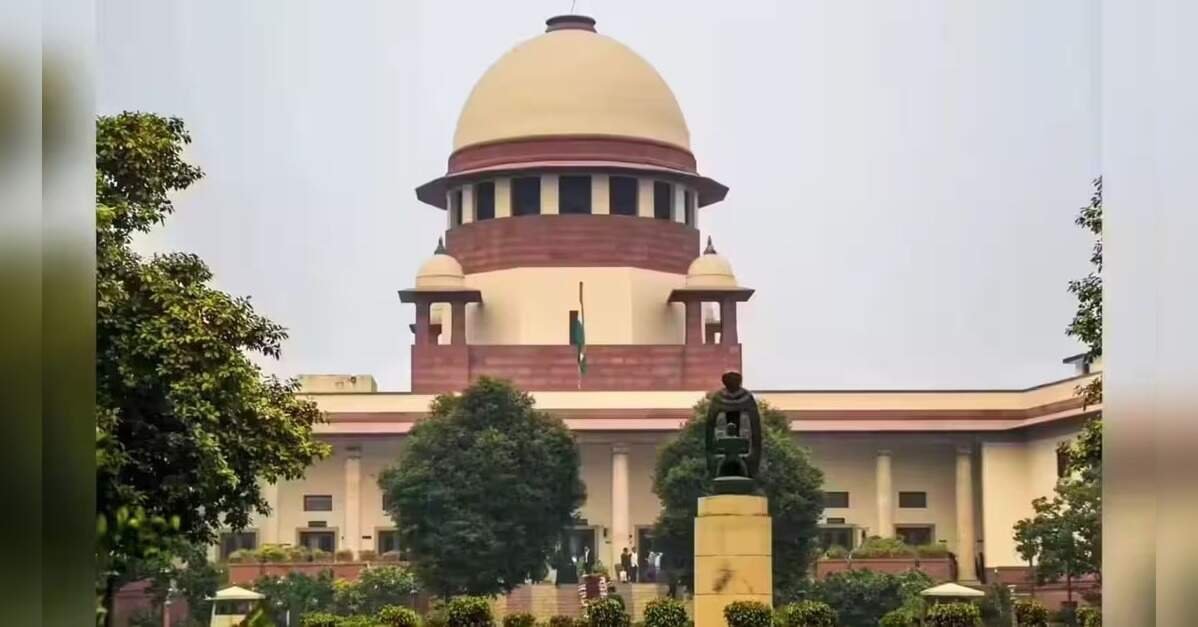
Supreme Court on Tuesday clarified that the forensic audit ordered by the Delhi High Court on Aug 31, is primarily directed against FHL, Fortis Healthcare Holdings Private Limited (FHHPL) and Singh Brothers (Malvinder Shivender Singh) and their companies.
Forensic audit need not be misconstrued that there is a “fishing and roving enquiry” into the affairs of banks other than their transaction, the apex court said.
A bench led by Chief Justice Surya Kant said that the direction of forensic audit with regard to banks therefore ought to be read in that context. These directions pertain to commercial transaction/relation between FHHPL, FHL, judgment debtors and banks.
The forensic audit stems from Daiichi Sankyo’s long-running effort to recover a Rs 3,500 crore arbitration award from former Ranbaxy promoters Malvinder and Shivinder Singh. Daiichi had acquired Ranbaxy from the Singh brothers for $4.6 billion in 2008 and later won a Singapore arbitration award after alleging that the brothers had concealed information relating to the drugmaker. The award was upheld by Indian courts, but its enforcement has remained tied up in litigation for years.
The dispute subsequently reached Fortis Healthcare, which was earlier controlled by the Singh brothers. Daiichi argued that the brothers’ Fortis shareholding and related transactions needed to be examined because assets that could have been used to satisfy the award had allegedly been dissipated. The Delhi High Court’s August 31 order therefore sought to reconstruct the trail of Fortis shares, funds and related transactions.
A key event in that trail was IHH Healthcare‘s 2018 acquisition of a 31% stake in Fortis for about Rs 4,000 crore through a bidding process. Daiichi had sought scrutiny of transactions around the deal, including the movement of the money received from IHH and the dilution of the Singh brothers’ Fortis stake.
The High Court also brought 17 banks and financial institutions into the scope of its audit, seeking examination of their role in transactions involving pledged Fortis shares. Some lenders challenged this aspect, arguing that they were not parties to the original Daiichi-Singh arbitration. Yes Bank, for instance, said it did not oppose scrutiny of Fortis, the Singh brothers and their companies, but objected to a wider examination of its own conduct.
The Supreme Court has now allowed the audit to proceed while narrowing how the High Court’s directions should be understood. Importantly, Fortis has maintained that it was a “complete stranger” to the Daiichi-Singh arbitration, saying it was never a party to those proceedings and that its former promoters’ shareholding had fallen below 1% by March 2018. The company has also said it received none of the proceeds from the alleged dissipation of the former promoters’ stake.
The Supreme Court has further clarified that the High Court’s observations about Fortis were tentative and made only to justify ordering the forensic audit. They are not findings that bind the auditor or determine the outcome of the exercise.