

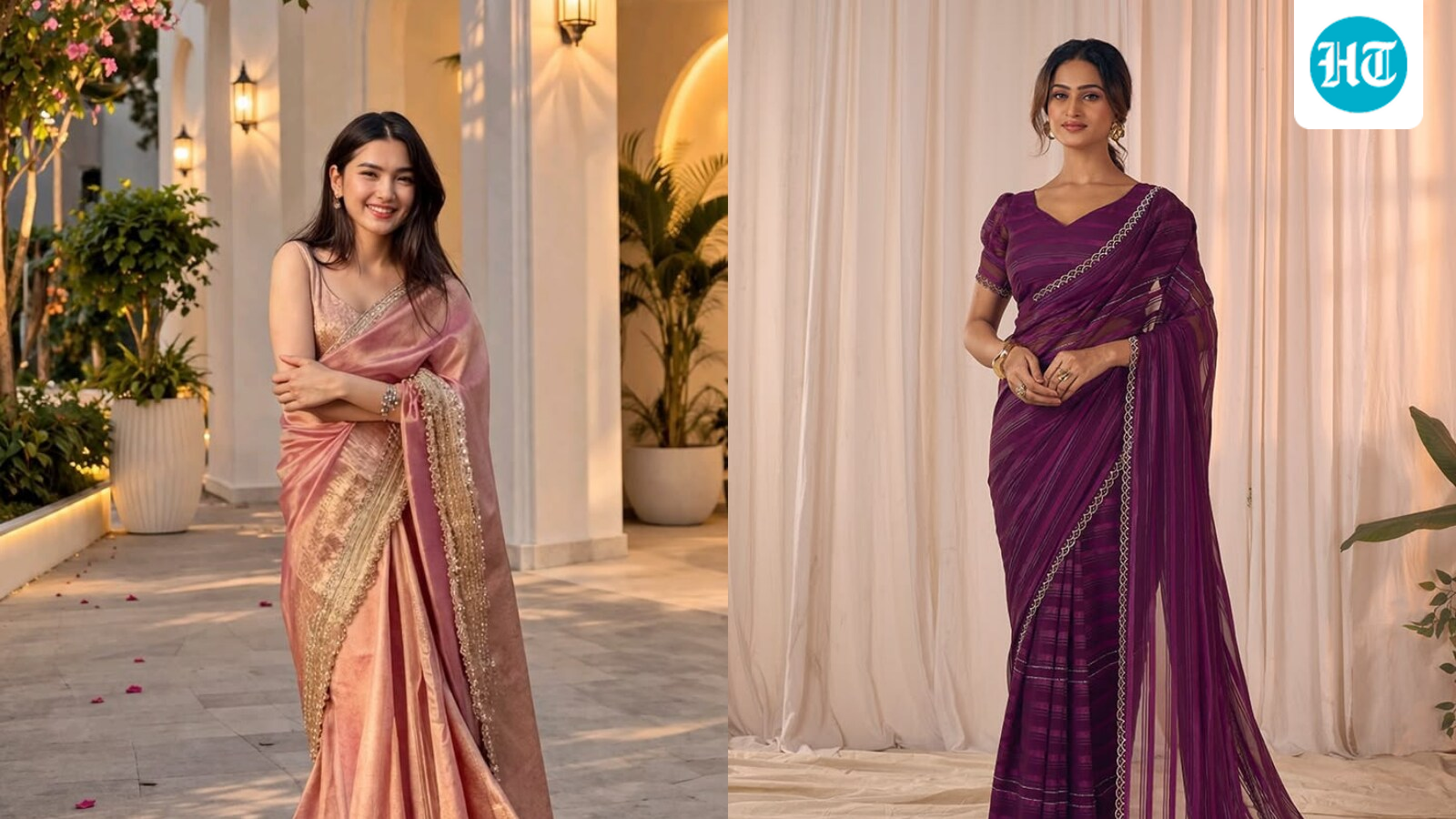

Choosing a saree for a wedding or festive celebration involves more than picking a colour or embroidery pattern. The fabric can influence how the saree drapes, how comfortable it feels over several hours, how formal the outfit looks and how much effort it takes to maintain. Two popular options are silk and georgette, but they serve different styling needs.
Silk sarees are often associated with traditional celebrations, intricate craftsmanship and a rich appearance. Georgette sarees, on the other hand, are known for their fluid drape and versatility, making them a popular choice for everything from daytime festivities to evening receptions.
Neither fabric is automatically better than the other. The right choice depends on the occasion, the saree’s construction, the weather, your personal style and how long you expect to wear it.
So, if you are deciding between a silk saree and a georgette saree for your next wedding invitation or festive event, here is what you should consider before making a purchase.
Silk vs georgette sarees: Understanding the difference
Silk is a natural protein fibre traditionally valued for its lustre, drape and association with Indian textile craftsmanship. Depending on the weave, silk sarees can range from lightweight and fluid to structured and substantial. Kanjivaram, Banarasi and Mysore silk sarees, for example, offer different weaving traditions, appearances and styling possibilities.
Georgette is a lightweight fabric characterised by a slightly crinkled surface and a fluid drape. It is commonly made from silk or synthetic fibres such as polyester. This distinction matters because a silk georgette saree and a polyester georgette saree may differ in feel, care requirements, price and finish.
In practical terms, silk often appeals to those seeking a traditional, rich-looking occasion saree, while georgette offers flexibility for people who prefer softer movement and a less structured silhouette. However, the actual weight and comfort of either saree depend on the fabric composition, weave, embellishments and lining.
1. Appearance: Which saree looks more festive?
Silk sarees are a natural choice for people who enjoy traditional Indian occasionwear. Their appearance can range from a subtle sheen to a more pronounced lustre, depending on the type of silk and weave. Designs featuring zari borders, brocade patterns, woven motifs or intricate craftsmanship can make them particularly suitable for weddings and formal family celebrations.
A silk saree can also be styled with a traditional blouse, temple jewellery, gold-toned accessories or a structured hairstyle for a classic occasionwear look.
Georgette sarees offer a different aesthetic. Their fluid fall can create a softer silhouette, while printed patterns, sequins, embroidery, ruffles and embellished borders allow them to work across traditional and contemporary styles. A georgette saree with delicate embroidery may suit a daytime function, while a heavily embellished version can work for a cocktail evening or reception.
Which should you choose? Consider silk if you want a traditional, statement-making look, particularly for a ceremony or a formal family occasion. Choose georgette if you prefer fluid movement or a contemporary style. Remember that embellishment, colour and construction can be just as influential as the fabric itself.
2. Comfort and weight: Which is easier to wear for hours?
Comfort is an important consideration when dressing for weddings, where ceremonies, photographs, meals and celebrations can stretch across several hours.
Silk sarees vary considerably in weight. A lightweight silk saree may be comfortable for extended wear, while a heavier weave or a saree with substantial zari work and embellishments can feel more demanding. The blouse, petticoat, pleating and draping technique also affect how comfortably the saree sits.
Georgette is often chosen for its fluid drape, and many georgette sarees are relatively lightweight. This can make them appealing for events involving plenty of movement, dancing or travel between venues. However, a heavily embellished georgette saree may still feel heavy, and some versions may require careful pinning to keep the pleats in place.
If you are attending a wedding in warm weather, consider the complete outfit rather than the fabric name alone. Check the saree’s weight, lining, embellishments and blouse material. A breathable blouse and a comfortable drape can make a noticeable difference.
Which should you choose? A lighter georgette saree may be practical for a long reception or a celebration involving dancing. A lighter silk saree can also work well for extended wear. Try the complete outfit before the event if possible, particularly if you are unfamiliar with the fabric.
3. Weddings and festive occasions: When does each fabric work best?
The type of event can help narrow down your options.
For a traditional wedding ceremony, a silk saree can be a fitting choice, especially when the dress code calls for ethnic occasionwear. Rich woven patterns, zari details and traditional jewellery can create a cohesive look for the ceremony or a formal family gathering.
For a wedding reception, cocktail event or evening celebration, both fabrics can work. A silk saree offers a classic formal appearance, while a georgette saree with considered embellishments can create a contemporary evening look.
For festivals such as Diwali, silk sarees with woven borders or traditional motifs can complement the celebratory mood. Georgette sarees in jewel tones, festive prints or embroidered designs can be equally suitable, particularly if you want an outfit that feels lighter or less traditional.
For daytime functions, the decision may come down to colour, embellishment and comfort. A lighter silk saree can look elegant at a family puja, while a printed georgette saree can be an option for a daytime mehendi or a festive lunch.
The important point is that there is no universal rule that silk is reserved for weddings or georgette is meant only for parties. Both can be appropriate across occasions when their design and styling match the event.
4. Styling: How to accessorise silk and georgette sarees
The way you style a saree can change its overall appearance.
Styling a silk saree
- Pair a printed georgette saree with a simple blouse if you want the print to stand out.
- Choose a contemporary blouse or statement earrings for a more modern occasionwear look.
- For an evening function, consider embellished georgette with a clutch and coordinated jewellery.
- Check the drape and pleats before leaving home, as the fabric’s fluid fall may need careful pinning depending on the saree’s construction.
These are starting points rather than strict rules. A minimalist silk saree can look contemporary, and a traditional georgette saree can look beautifully festive.
5. Maintenance: Which saree is easier to care for?
Maintenance is worth considering before investing in an occasion saree, particularly if you want to wear it repeatedly.
Silk sarees can require careful handling, depending on their weave, dye and embellishments. Some may need professional dry cleaning, and they should be stored in a clean, dry place away from direct sunlight and moisture. Follow the care label and the seller’s guidance rather than assuming every silk saree needs the same treatment.
Georgette care depends largely on its fibre composition and construction. Polyester georgette may be easier to maintain than some delicate silk-based versions, but embellished sarees can still require specialised care. Delicate fabrics may snag, and aggressive washing or ironing can damage the surface or embellishments.
Before buying either type, check the care instructions. If you plan to wear the saree only occasionally, consider whether you are comfortable with its storage and cleaning requirements.
6. Price and value: Which is the better investment?
There is no reliable price rule that makes all silk sarees more expensive than all georgette sarees. The cost depends on fibre composition, weaving technique, craftsmanship, embellishments, brand and place of manufacture.
A handwoven silk saree with intricate detailing may be a substantial investment, while a simpler silk saree can sit at a more accessible price point. Georgette sarees also span a broad range, from relatively affordable synthetic options to premium silk georgette and heavily embellished designer pieces.
When comparing two sarees, look beyond the initial price. Consider the quality of the fabric, finishing, blouse piece, care requirements and how often you expect to wear it. A saree that works across multiple occasions may offer better value for your wardrobe than one you are unlikely to wear again.
If you are shopping online, read the product description carefully. Check whether the saree is made from pure silk, a silk blend or synthetic fibres, and look at close-up photographs of the weave, border and embellishments. Do not rely on words such as “silk look” or “silk finish” as proof that a saree is made from pure silk.
Silk or georgette saree: Which one should you choose?
Ultimately, the better fabric is the one that suits the occasion and the way you want to feel in your outfit.
Choose silk if you prefer a traditional appearance, appreciate woven designs and want a saree that works well for formal ceremonies or festive occasions. Choose georgette if you prefer a fluid drape, contemporary styling options or a potentially lighter outfit for a long celebration.
If you attend weddings and festive events regularly, owning both can give you more flexibility. A silk saree can serve as a classic option for formal occasions, while a georgette saree can provide a different look for receptions, parties and daytime celebrations.
Before deciding, assess the fabric composition, actual weight, embellishments and care requirements. These details will tell you more about how the saree will perform than the fabric name alone.
The final verdict: Silk sarees are an excellent option for those who love traditional occasionwear, while georgette sarees are worth considering for their fluid drape and styling versatility. Neither is universally better for weddings and festivities. The right choice is the one that balances comfort, occasion, craftsmanship and your personal style.
Similar stories for you:
5 Capsule fashion investments for September 2026 that skip the microtrend noise
The ‘Quiet Luxury’ secret: 5 Simple fashion hacks to look expensive on a budget
Disclaimer: At Hindustan Times, we help you stay up-to-date with the latest trends and products. Hindustan Times has an affiliate partnership, so we may get a part of the revenue when you make a purchase. We shall not be liable for any claim under applicable laws, including but not limited to the Consumer Protection Act, 2019, with respect to the products. The products listed in this article are in no particular order of priority.
