

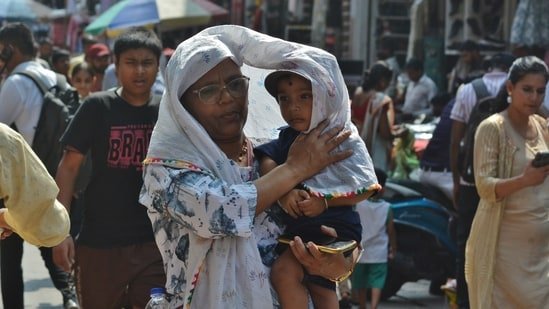
In the scorching summer months, heatwaves are becoming an increasingly common phenomenon in large parts of the country. And while it impacts people of all ages, children and infants are particularly vulnerable for obvious reasons.
Also Read | Who is most at risk during severe heatwaves? Doctor reveals the high-risk groups and steps to stay safe
To understand the threat that children face from heatwaves and help guardians better take care of them, HT Lifestyle reached out to Dr Rahul Nagpal, the principal director and head of the department of paediatrics and neonatology at Fortis Hospital in Vasant Kunj, Delhi.
He highlighted that children are more likely to be affected by heatwaves for two main reasons:
- Their bodies are less efficient at regulating temperature
- They rely entirely on caregivers for hydration and protection
“Identifying early warning signs and following strict safety protocols can prevent severe conditions like heat exhaustion or life-threatening heatstroke,” stated the doctor, before sharing a list of precautionary guidelines for parents and guardians to follow.
Guidelines for parents to protect children from heatwaves
- Prioritise hydration: Adults should encourage children to drink water every 30 to 40 minutes, even if they do not feel thirsty. “For infants under 6 months, offer extra breast milk,” suggested Dr Nagpal.
- Avoid giving children sugary, caffeinated, or high-energy drinks that can worsen dehydration.
- Limit outdoor exposure: Adults should try to keep children indoors during peak heat hours, typically from 11am to 4pm. The essential outdoor activities or sports should be scheduled for the early morning (before 9am) or late evening.
- Dress appropriately: Children should be dressed in lightweight, loose-fitting, and light-coloured cotton clothing that will allow airflow and reflect sunlight.
- Try to ensure that children use a wide-brimmed hat and apply broad-spectrum sunscreen (SPF 30+) every two hours when outdoors.
- Maintain a cool environment indoors: That involves keeping curtains and blinds closed during the day to block direct sunlight, and using fans or air conditioning. However, Dr Nagpal cautions against pointing fans directly at infants as this can increase dehydration in extreme heat (at temperatures greater than 35°C).
- Never leave a child in a car: Temperatures inside a parked vehicle can reach fatal levels in minutes, even with windows cracked.
Warning symptoms to watch out for
Dr Nagpal further shared three stages of children’s health being affected by heatwaves, their symptoms, as well as ways to tackle the conditions. According to the paediatrician, parents should monitor children closely for the following symptoms:
1. Mild Dehydration
Symptoms: Thirst, dry mouth, fewer wet nappies, and dark urine.
What to do: Offer small, frequent sips of water or ORS.
2. Heat Exhaustion
Symptoms: Heavy sweating, dizziness, nausea, muscle cramps, and cool/clammy skin.
What to do: Move to a cool area, loosen clothes, and apply cool, damp cloths.
3. Heatstroke (Emergency)
Symptoms: High fever (>104°F/40°C), confusion, rapid pulse, no sweating, or unconsciousness.
What to do: Emergency services immediately. Cool the child with wet towels while waiting.
