

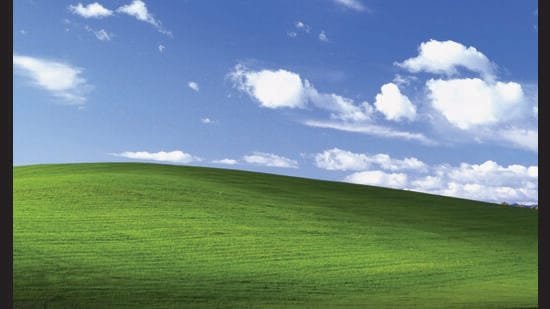
Frutiger Aero visuals. How to capture the excitement and the futuristic optimism of being online in the 2000s? Artist Sofi Xian coined the term Aero in 2017 to describe the vibes of the 2005 – 2013 internet era (It stands for Authentic, Energetic, Reflective, and Open). Think of Windows wallpapers (fluffy clouds, blue skies, endless green fields), glossy skyscrapers, and utopian stock imagery. On FrutigerAeroArchive.Org, you can browse and download old desktop wallpapers and see how the style translated across web design, music players, games and TV. It was core before core became a thing.

HTML layouts. Ah, early websites. Chunks of info dumped link by link, graphics clustered in garish hues. The Web Design Museum has preserved snapshots of the first versions of websites, dating all the way back to 1991. McDonald’s site in 1996 has a Paint app-style drawing of Ronald McDonald welcoming customers; Christina Aguilera’s 2002 website had pics of her brooding mysteriously above a list of her Most Recent Appearances. They look like the test pages we’d “code” in the school computer lab.

Browser games. Remember when the biggest joy as a kid was sneakily playing online games during IT class in school? Flashpoint Archive hosts over 2 lakh playable games from the last 20 years, in all their colourful, noisy, over-the-top excess. There are crowd-pleasers such as Papa’s Pizzeria (where we first learned how to hustle) and the strategy game Kingdom Rush (where we first learned how to make bad decisions). Today’s iPad kids could never.

Winamp skins. The media player, which was launched in 1997, allowed you to customise skins, essentially themed doilies. Otakus had their fav anime characters staring soulfully out in the background; cyber bros made their skins look like something you’d see in The Matrix. There’s a Winamp museum of over 100K skins from the era – plus a stock list of 13 songs you can actually play on each of them. Meanwhile, we’re stuck with annoying Spotify ads in 2026. Take us back.

Custom cursors. Before whimsy became a social media trend, wide-eyed teen Millennials and baby Gen Zs were experimenting with making the internet their own. Enter custom cursors: Hourglasses, CDs, pixelated hearts, even tiny weapons. Engineer Tim Holman built an interactive section on his website where you can experience what it was like to surf the web with some old-school cursors. This unlocked a core memory we didn’t know we had.

Blinkies stickers. If you’re older than 25, you love those small, animated text badges with flashy borders or blinking text that were all over blogs, forums and message boards in the 2000s. If you were basic, you put your name (or some quote from The Amazing Race). If you were edgy, you’d put self-deprecating jokes (A life? What’s that?) Blinkies Cafe allows you to create and download your own blinkies and pretend that it’s 2010. Can we write “Chat, are we cooked?”

MySpace profiles. How much would you like to personalise your profile? OG MySpace users: Yes. People would go crazy over their landing page. The goth baddies – and guys – ran wild with creepypasta-style visuals. Most users’ profiles looked as if a unicorn had vomited rainbows all over them. Admit it, you’ve written stuff like “I kno u haterz r jealouz of me” on your profile. No one shamed you for your niche obsessions, and you got to add a cool intro song to your page, too. The website SpaceHey simulates the mood of being 15 again, with their everything-goes profile pages.

Skeuomorphic app icons. Wordy term for a simple idea – icons that replicate the look and feel of the real-world applications they were modelled after. We’re used to flat logos on our phone screens now, but app designers used to love making icons seem like mini digital versions of IRL objects. On Dribble.com, users have created their own versions of the Maps, Clock, Radio and Camera icons. Life was better when the Instagram logo looked like a Polaroid camera.

Vaporwave designs. If you mix RoboCop and Tron with glitchy, neon palettes, you get the vaporwave moodboard. The visual style started as an electronic music genre and morphed into an early web aesthetic, blending elements such as Greek statues, tropical plants and pixel art. Surreal, dreamy vaporwave visuals were splashed all over Tumblr and Reddit in the 2010s, and now the style has found a new life on Pinterest.

Geocities universes. This is what the Metaverse wishes it could be. In the late 1990s, when we were years away from talking about social media, Geocities had web users creating their own “neighbourhoods”, aka themed pages where they’d wax lyrical on a topic they were passionate about. The visual style was amateur – just normal people creating and uploading stories and pictures – but it’s where generations of internet users learned to code, met friends and spouses, and memorialised their lives. On The Geocities Gallery, there are snapshots of an age where the web had fewer trolls and much, much more wholesome content.
From HT Brunch, July 11, 2026
Follow us on www.instagram.com/htbrunch
