

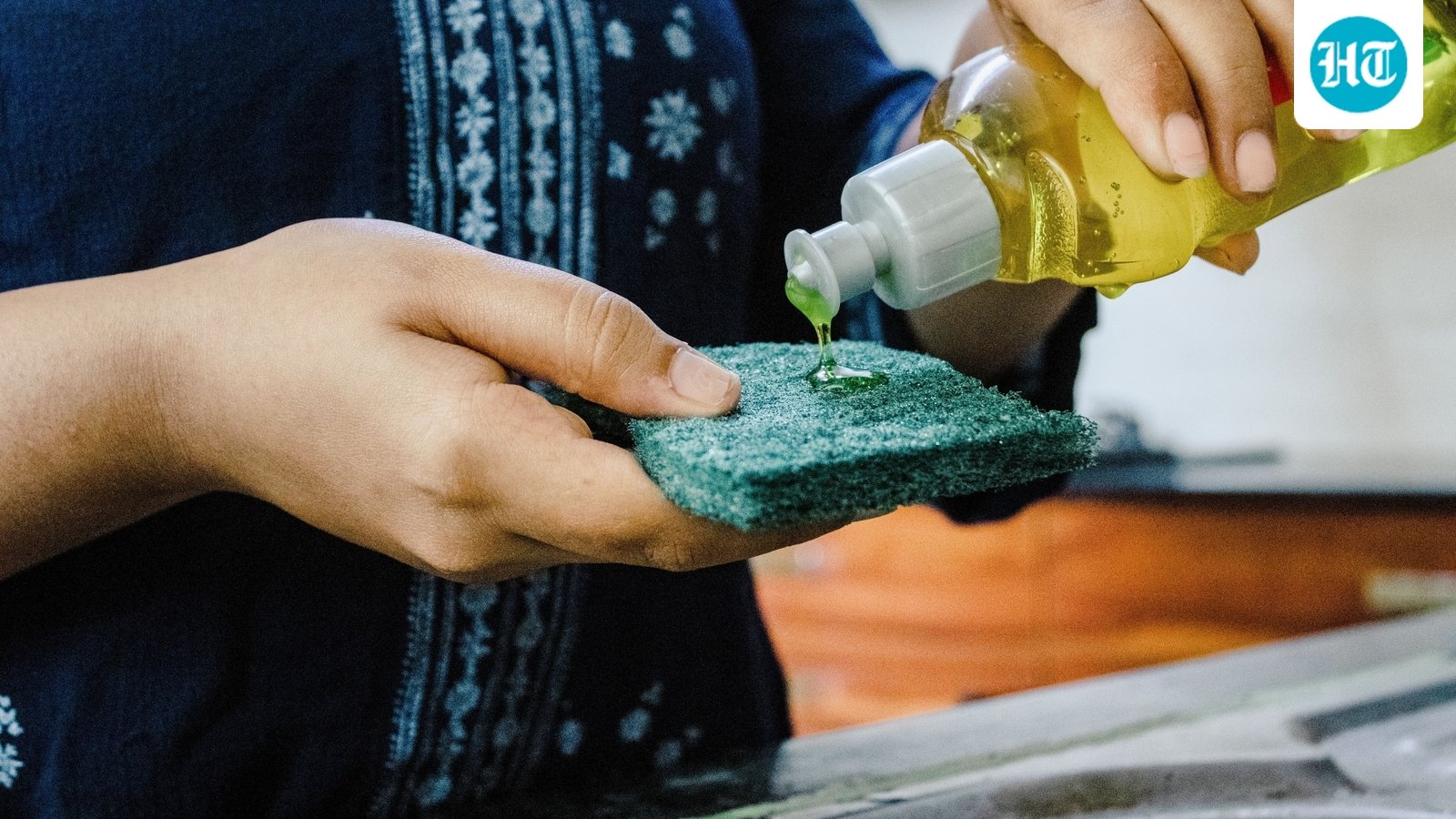
Every day, we clean dirty dishes in our homes with a sponge commonly found in many kitchens. But it could be the reason you are falling sick. Ahana Nazar Hafis, a Qatar-based food safety officer, in an Instagram post shared on June 4, cautioned that kitchen sponges are extremely dirty and should be replaced frequently.
According to Ahana, a kitchen sponge can harbour more pathogenic bacteria than a toilet seat because their porous, damp nature easily traps organic food debris. To maintain proper food safety, it is essential to rinse and dry these tools thoroughly after every cleaning task.
Kitchen sponges might be making you sick
The food safety officer posted the Instagram reel with the caption, “Your kitchen sponge may look clean, but it can actually be one of the most bacteria-contaminated items in your home. If not maintained properly, it can spread germs instead of removing them.” She added, “When was the last time you changed your kitchen sponge?”
In the video, she warns that we wash our dishes every day with a kitchen sponge and often don’t replace it for months at a time, adding, “The kitchen sponge is one of the most bacteria-ridden items in your kitchen because it stays wet, traps food particles, and provides a perfect environment for bacteria to grow. So every time you use an old sponge, you may be spreading bacteria instead of cleaning.”
How can you make using sponges safer?
According to the food safety officer, to reduce the risk, one should follow these steps regularly:
- Rinse your sponge thoroughly after every use.
- Squeeze out excess water and allow it to dry properly.
- Disinfect it regularly by soaking it in hot water.
Though regularly disinfecting a kitchen sponge in hot water can help, these measures do not replace the need for frequent disposal. The food safety officer recommends replacing sponges weekly to prevent the accidental spread of germs across dishes and surfaces.
“Replace your sponge at least once a week. And honestly, kitchen sponges are one of the cheapest items in your kitchen. Buy them in bulk and replace them regularly instead of using the same sponge for weeks or months. Your cleaning tool should never be the dirtiest thing in your kitchen,” she explained.
Better alternatives
According to a report by The Independent, research has found that food residues easily get trapped in kitchen sponges, creating an ideal environment for bacteria to grow and multiply. To reduce the bacterial load, sponges can be heated in water at temperatures above 70 degrees Celsius for at least two minutes. However, the better alternative is to use microfibre cloths, as they harbour fewer bacteria, dry more quickly, and can be washed in a washing machine.
Ahana Nazar is a food technologist and a food safety and hygiene trainer based in Qatar. She also works as a food safety auditor in Qatar. Ahana is HACCP level 3 and 4 certified. She completed her MSc in Food Technology and Quality Assurance at Mahatma Gandhi University in Kerala. She is also a food content creator.
Note to readers: This article is for informational purposes only and not a substitute for professional medical advice. Always seek the advice of your doctor with any questions about a medical condition.
This report is based on user-generated content from social media. HT.com has not independently verified the claims and does not endorse them.
