

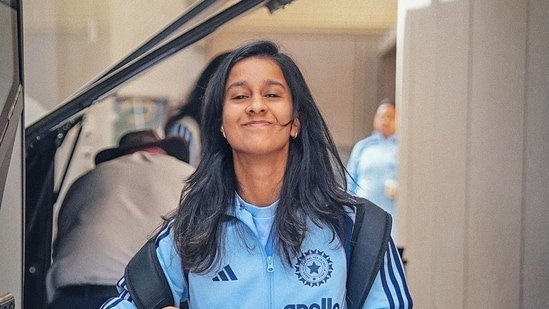
Early in her career, Jemimah Rodrigues often found herself navigating an unspoken silence around menstruation – one that made it difficult to even acknowledge what she was going through. In an interview with Hindustan Times, the cricketer recalls powering through physically draining and mentally taxing days on her period, saying there was a time when she chose to endure it quietly rather than speak up.
Even now, she points out, outdated notions continue to linger, with many still believing that menstruation makes women weaker or affects their performance. It’s a narrative Jemimah is keen to dismantle by using her voice to push for a more open conversation around women’s health in sport.
On misconception about menstruation in sports
During the conversation, Jemimah acknowledges that several misconceptions around menstruation persist within the world of sports.
“I think the biggest misconception is that menstruation makes you weak or impacts performance. Because of that mindset, many girls feel they have to hide their discomfort or just push through silently. Periods are a natural part of life, and everybody responds differently, there shouldn’t be one expectation or pressure,” Jemimah tells us.
She continues, “Normalising conversations starts with talking about it openly within teams, with coaches and support staff, just like we talk about any other aspect of health. When you acknowledge it without judgment, it becomes easier to manage training, rest when needed, and support each other better. The more comfortable we are having these conversations, the more confident young girls will feel to pursue sports without fear or hesitation.”
On facing stigma around menstruation in her cricketing career
In fact, early in her career, Jemimah also grappled with stigma around menstruation, often feeling hesitant to speak about her period with anyone.
“Like many girls, menstruation wasn’t something that was spoken about openly, especially early on in my career. There was a hesitation around bringing it up, and often you just managed it quietly,” says the middle-order batter, who recently collaborated with Whisper to promote next-gen period panty.
The cricket icon adds, “Over time, I realised that silence only adds to the stigma. Addressing it meant normalising the conversation, talking openly with teammates and support staff and treating menstrual health like any other aspect of overall well-being. Once you do that, it becomes much easier to manage training, take rest when needed, and support each other without any embarrassment.”
Opening up about the challenges she faced while training or playing during her period days, Jemimah shares, “Like many athletes, there have been days when playing or training during my period has felt physically and mentally challenging, whether it’s discomfort, low energy, or just not feeling at your best.”
“Earlier, you tended to just push through it quietly without really talking about it. Over time, I’ve learnt that listening to your body is very important. Being open with teammates and support staff, planning better, and having period care, I trust has really helped. Once you stop treating it like something you need to hide and start managing it like any other aspect of health, it becomes much easier to cope and stay confident on the field,” she adds.
Now, Jemimah feels it is time to normalise this conversation in the sports field, saying, “It’s important because periods are a normal biological reality and pretending they don’t exist doesn’t help anyone”.
“For a long time, it felt like something we just had to manage quietly and push through, without really talking about how it affects you physically or emotionally. When athletes speak openly about it, it sends a powerful message – it’s okay to acknowledge what your body is going through. It doesn’t make you less strong or less committed. In fact, understanding your body better can help you perform better. Normalising the conversation also makes younger girls feel less alone. If they see professional athletes talking about it without shame, it removes that sense of embarrassment,” she says.
On need to have open conversations around menstruation
Here, Jemimah emphasised that the first step is to stop viewing menstruation as a barrier and instead accept it as a natural part of a girl’s life. And it will start when there are more open conversations around it.
She asserts, “Open and honest conversations start when we stop treating menstruation as a barrier and begin acknowledging it as a natural part of a girl’s life — in sport and otherwise. For years, many girls have quietly stepped back from sports during their periods, not because they couldn’t play, but because of discomfort, fear, or stigma. That’s one of the biggest reasons girls drop out.”
“We need to create environments – at home, in schools, and within teams – where girls feel supported to speak up and make choices that feel right for them. Conversations should focus on helping girls stay connected to sport, whether that means adjusting training, taking rest, or simply feeling confident enough to show up,” says Jemimah, who was a key member of the squads that won the 2025 Women’s Cricket World Cup, the 2022 Women’s Asia Cup, the gold medal at the 2022 Asian Games, and the silver medal at the 2022 Commonwealth Games.
