

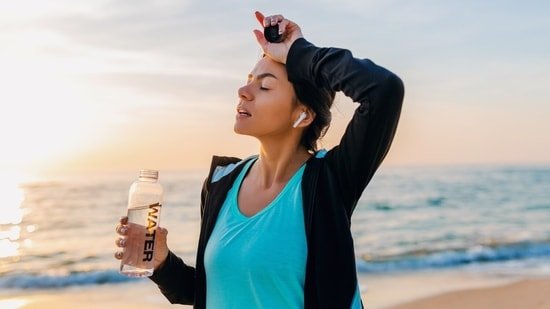
As summer temperatures continue to surge and withering heat intensifies, the risk of heat exhaustion rises; if left unaddressed, it can progress to heat stroke. Adopting a few simple daily habits can go a long way, as their cumulative effect offers helpful protection against heat-related illnesses.
ALSO READ: More headaches in the heat? Doctor explains the summer migraine link and how to prevent it
To better understand how simple lifestyle habits can help prevent heat-related illnesses during a heatwave, we asked Dr Vimal Pahuja, internal medicine and metabolic physician at the Diabetes and Weight Management Clinic, Dr LH Hiranandani Hospital, Powai, Mumbai, who acknowledged that even small, consistent routine changes can play a significant role in mitigating heat exhaustion chances.
3 regular habits that help to prevent heat stroke
Contrary to what many believe, heat exhaustion is not triggered by a single incident, like spending too much time in the sun on one day. It actually builds up gradually over time, until one particularly hot day can act as the tipping point.
The doctor emphasised that heat illness is not random. “Heat illness is the result of accumulated physiological stress, not a random event,” he said. The key is to lower your thermal load on a daily basis. The doctor shared three simple hacks that can help:
- Timing: Restricting outdoor activity to before 8 AM or after 6 PM to avoid peak heat hours.
- Digestion: Eating smaller, more frequent meals. Heavy meals divert blood flow to the gut, stealing resources the skin needs for cooling.
- Conductive cooling: A 10-minute cool shower or applying wet cloths to pulse points (wrists and neck) acts as legitimate preventive medicine.
Golden hydration habits you need to know!
Next comes a set of habits related to hydration, arguably the most important ones.
1. Drink water regularly
The doctor advised drinking water regularly and not just when you feel thirsty. In fact, thirst is one of the earliest signs of dehydration. “Thirst is a ‘lagging indicator, by the time you feel it, you are already 1-2 per cent dehydrated,” Dr Pahuja asserted.
2. Drink water before morning tea or coffee
The next habit may feel slightly different from your usual routine. While most people begin their day with tea or coffee, advocating a shift from reactive to proactive hydration, the doctor urged, “Drink 400–500 ml of water before your morning tea or coffee.” So the first source of hydration needs to be something more potent- like water, before you drink your morning hot beverage.
3. Hydration sources of electrolyte balance
While water is one of the primary sources of hydration, it may not be enough in extreme heat. For this, the doctor recommended ORS or coconut water around midday to maintain proper electrolyte balance, especially during peak heat.
Vulnerable groups
Certain people are more predisposed to falling ill during a heatwave. The doctor identified three key categories based on their reduced ability to cope with heat stress:
- Chronic conditions: Patients with obesity, diabetes, or thyroid disorders struggle because their cooling systems are already under strain. (e.g., neuropathy can blunt the sweat response).
- Medication interference: Those on diuretics, beta-blockers, or anticholinergics are at a disadvantage, as these drugs chemically impair the body’s ability to dissipate heat.
- Primary groups: The elderly, young children, pregnant women, and outdoor labourers.
Signs your body is struggling
Spotting the early warning can help prevent the condition from worsening and reduce the risk of heat exhaustion progressing to heat stroke.
Dr Pahuja cautioned that dizziness is not always the first sign; it can begin with unquenchable thirst and a dull, persistent headache.
When does it become an emergency? “If you stop sweating despite the heat, you have moved from heat exhaustion toward heat stroke. This is a medical emergency.”
Things which do not work
Now that you know which habits help, it is equally important to understand what does not work during extreme heat.
Do cold drinks really help you cool down?
Cold drinks are all the rage in summer, but are they the best choice for hydration? Dr Pahuja brought to our attention that it is actually a very common misconception that ice-cold drinks are most effective.
“Extremely cold liquids can cause vasoconstriction and gastric distress, actually slowing down rehydration,” he explained. Instead, he recommended opting for room-temperature beverages. “Room-temperature or slightly cool water is absorbed by the body much faster.”
How effective are fans?
Fans are among the go-to cooling methods, but in reality, their effectiveness actually depends on the surrounding temperature. The doctor explained that fans only work when the air is cooler than your body. “Once ambient temperatures exceed 37–38°C, a fan simply circulates hot air, accelerating fluid loss through evaporation without actually lowering your core temperature,” he mentioned. In many conditions, fans may end up increasing fluid loss rather than effectively cooling the body.
Note to readers: This article is for informational purposes only and not a substitute for professional medical advice. Always seek the advice of your doctor with any questions about a medical condition.
