

Protein has become the nutrient everyone is chasing, with many people carefully tracking their daily intake and even encouraging their parents to eat more of it. But amid the protein craze, fibre has quietly slipped off the radar. Most people don’t even meet half of their recommended daily fibre intake, despite its crucial role in gut health, digestion and long-term disease prevention. This is a sign to move beyond viewing protein and fibre as competing priorities and instead focus on foods that provide both.
Dr Joseph Salhab, a Florida-based gastroenterologist and health content creator specialising in digestive, liver, pancreatic and nutrition health, is highlighting the importance of eating foods rich in both protein and fibre. In an Instagram video shared on June 28, he reacts to a woman saying, “Respectfully, you should be trying harder to hit your fibre goal, not your protein goal. Young people aren’t dying of protein deficiency, they’re dying of colon cancer.” Agreeing with her point, he recommends foods that are rich in both nutrients.
Why choose foods rich in protein and fibre?
According to Dr Salhab, foods that combine protein and fibre are worth adding to your diet because they help keep you fuller for longer while supporting gut health and digestion. They also nourish the gut microbiome, promote regular bowel movements and help regulate blood sugar levels.
He explains, “Foods that are high in protein and high in fibre deserve a spot in almost everyone’s diet. When a food contains both protein and fibre, it can help keep you full longer, support gut health, improve digestive health, promote bowel regularity, support your gut microbiome, help with blood sugar balance, reduce cravings, and make healthy eating a whole lot easier.”
Recommended protein and fibre-rich foods
Lentils
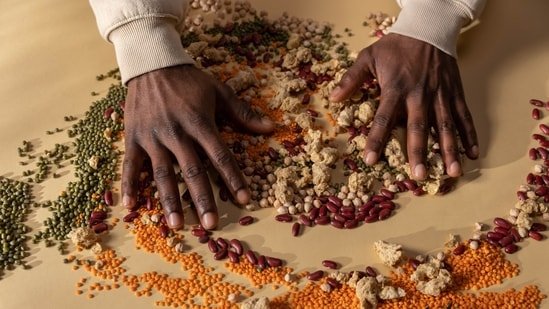
According to Dr Salhab, lentils are a great choice because they are loaded with 18 grams of protein and 15 grams of fibre per cup. Besides this, he also adds that lentils are “packed with plant protein, fibre, resistant starch, iron, and prebiotics that nourish beneficial gut bacteria.”
Black beans
Dr Salhab highlights that black beans are “loaded with protein, fibre, antioxidants, and nutrients that support heart health, digestive health, and healthy cholesterol levels.” He states that these beans contain 15 grams of protein and 15 grams of fibre per cup.
Chickpeas
Chickpeas are another rich source of plant protein and fibre. According to the gastroenterologist, one cup contains 14 grams of protein and 12 grams of fibre. He adds, “Chickpeas are rich in both protein and fibre, making them perfect for salads, soups, grain bowls, roasted snacks, or hummus.”
Edamame
Dr Salhab recommends edamame as “one of the best plant-based sources of protein,” containing all nine essential amino acids and plenty of fibre. Edamame delivers 17 grams of protein with eight grams of fibre per cup.
Tempeh
The gastroenterologist explains, “Tempeh is a fermented soybean food that’s naturally high in protein and fibre while also supporting a healthy eating pattern.” It contains 31 grams of protein with eight grams of fibre per cup.
Chia seeds
Just two tablespoons full of chia seeds deliver 10 grams of fibre along with four grams of protein. Dr Salhab notes, “Chia seeds are packed with fibre, plant protein, healthy fats, and omega-3 fatty acids. Great in yoghurt, overnight oats, smoothies, puddings, and homemade jams.”
Hemp seeds
According to Dr Salhab, hemp seeds are an easy way to boost protein while also adding healthy fats, minerals and other nutrients to oatmeal, smoothies, salads and yoghurt bowls. He states that hemp seeds contain almost the same amount of protein and fibre as chia seeds.
Quinoa
The gastroenterologist notes that quinoa is “one of the highest-protein grains while also providing fibre, vitamins, and minerals.” It is also a great substitute for rice, containing complex carbohydrates along with eight grams of protein and five grams of fibre.
Sprouted grain bread
Dr Salhab highlights that sprouted whole wheat bread not only delivers five grams of protein and five grams of fibre per slice, but is also bloat-friendly, making it an excellent choice for people with sensitive guts. He notes, “Sprouted grain bread often contains more protein and fibre than traditional bread, making it an easy swap for toast and sandwiches.”
The gastroenterologist concludes, “Adding more of these foods to your meals is a simple way to increase protein intake, boost fibre intake, support weight management, improve satiety, nourish your gut microbiome, promote healthy digestion, and build a more nutrient-dense diet.”
Note to readers: This article is for informational purposes only and not a substitute for professional medical advice. It is based on user-generated content from social media. HT.com has not independently verified the claims and does not endorse them.
