

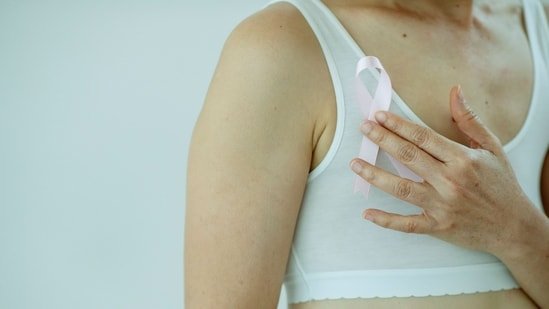
Breast cancer is one of the most common types of cancer diagnosed in women across the globe, and like other variants of the disease, early detection goes a long way in fighting the condition.
Also Read | AIIMS-trained doctor shares lifestyle factors that lead to increased hair loss in younger people
Dr Jyoti Arora, radiologist and principal lead, women’s imaging, at the Apollo Athenaa Women’s Cancer Centre, told HT Lifestyle that it is very common for women to wait for too long before getting diagnosed.
It can be because of a number of reasons, including feeling no lumps, experiencing no pain, or simply being afraid of test results. These are the things that cost lives. “The truth is that the most dangerous breast cancers are often the ones you cannot feel, and today’s technology is finding them earlier than ever before,” noted Dr Arora.
She went on to explain to HT Lifestyle why waiting increases the risk and how modern technology has made diagnosis easier and more accurate.
Why is it important not to delay testing?
According to Dr Arora, breast cancer does not always announce itself. “Some of the most aggressive forms begin as tiny clusters of calcifications, subtle distortions in tissue architecture, or small areas of abnormal enhancement visible only on specialised imaging,” she shared.
By the time a lump becomes palpable, the cancer may have been quietly growing for years. This is precisely why waiting for a symptom is a strategy that no longer makes sense.
“Modern mammography, particularly 3D tomosynthesis, has transformed our ability to see through dense breast tissue,” noted the radiologist. “Where conventional mammography produced flat, overlapping images, tomosynthesis builds a layered picture, slice by slice, revealing abnormalities that were previously invisible. Cancers we once missed are now being found at the size of a grain of rice.”
Modern methods of breast cancer detection
There are a number of ways to detect breast cancer, and mammography is just one of them.
“For women with dense breasts, a strong family history, or a known genetic predisposition, mammography alone may not suffice. Breast MRI detects tumours based on their blood supply, making it extraordinarily sensitive to early malignancy,” noted Dr Arora.
After a tumour is detected, a biopsy is performed to diagnose cancer. Earlier, that meant a procedure requiring anaesthesia, stitches, scarring, and anxiety-filled days of waiting. Today, that paradigm has completely changed, shared the radiologist.
For lesions visible on ultrasound, a core needle biopsy suffices. Dr Arora described it as “a quick, precise, minimally invasive procedure done under local anaesthetic that provides reliable tissue diagnosis without any surgery whatsoever.”
“However, for more challenging cases, as in lesions visible only on mammography or MRI, or those too small or subtle for standard techniques, vacuum-assisted breast biopsy, or VABB, is a true game changer,” stated the radiologist.
“VABB uses a small probe guided precisely to the target, removing multiple high-quality tissue samples with remarkable accuracy. No scalpel, no stitches, and patients walk out the same day. Crucially, VABB is not only invaluable for diagnosing these difficult lesions; it can also be used to completely excise or remove benign non-cancerous lumps such as fibroadenomas, sparing women an operation entirely.”
Thus, it is important to attend the screening, know one’s breast density, and, if at high risk, ask about an MRI. “And if something is found, trust that today’s tools offer answers with minimal discomfort and potentially save your life,” she noted.
Note to readers: This article is for informational purposes only and not a substitute for professional medical advice. Always seek the advice of your doctor with any questions about a medical condition.
