

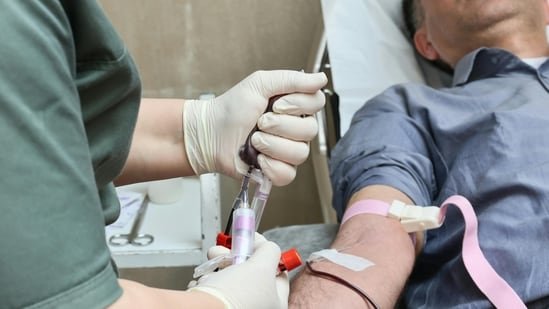
Donating blood is often equated to giving the gift of life. It is something that is encouraged both by society and the healthcare community. However, since it literally involves giving up blood from individuals, it is reasonable that some of them would have questions about its impact on their health.
Also Read | Doctor explains the effect of ever-busy lifestyle on health: ‘Busy is the new smoking’
Dr Pawan Kumar Singh, vice chairman of BMT at ShardaCare–Healthcity, shared his answers to the commonly asked questions on blood donation with HT Lifestyle to make us more informed and debunk the myths that have grown around the subject.
“Thousands of patients need blood transfusions each day, as a result of accidents, surgery, cancer treatment, childbirth complications and other blood-related disorders. One blood donation can save up to three lives,” he stated. “However, there are many people who still do not donate blood due to misconceptions and myths about the effects of blood donation on health.”
How blood donation affects health
According to Dr Singh, blood donation is generally considered safe for healthy people and, in some instances, can even provide health benefits.
“It is a common misconception that donating blood makes people weak for long periods of time or that it causes severe health complications,” he stated. “The body is able to replenish the donated blood. Plasma is generally restored in 24 to 48 hours, and red blood cells are restored in the following weeks.”
Prior to donating blood, donors are checked for basic health parameters, including their blood pressure, haemoglobin, body weight and fitness. This ensures that healthy blood donors give blood, and it is safe for both the donor and recipient, shared Dr Singh.
“Research suggests that donating blood regularly can keep iron levels in the body healthy,” stated the oncologist. “Iron overload has been associated with oxidative stress.” However, he did note that blood donation is not a preventive measure to avoid any health issues. Its primary goal is to help the people in need.
Debunking blood donation myths
Acknowledging the presence of myths and misconceptions surrounding blood donation, Dr Singh debunked three of them.
Myth 1: Blood donations make a man permanently weak: Most healthy donors resume their usual activities within a few hours. Usually, there is no discomfort after blood donation, as long as adequate fluids are consumed and a healthy meal is eaten shortly following the donation, followed by a short rest.
Myth 2: Blood donation causes weight loss or weight gain: There is no significant change in body weight due to donating blood.
Myth 3: Blood donation reduces immunity: There are no scientific grounds to support this belief. In healthy people, blood donation does not make the person more susceptible to diseases.
Myth 4: Blood donation increases risks of infection: The single-use, sterile equipment used for blood donation makes the chances of infection very low.
Who can donate blood?
According to Dr Singh, “Adults may donate blood if they fall within the weight and haemoglobin parameters and are healthy between the ages of 18 and 65. Donors with specific medical histories or diseases may be required to delay donation. If there are any concerns, it is always better to consult healthcare professionals at the blood donation centre.”
Note to readers: This article is for informational purposes only and not a substitute for professional medical advice. Always seek the advice of your doctor with any questions about a medical condition.
