

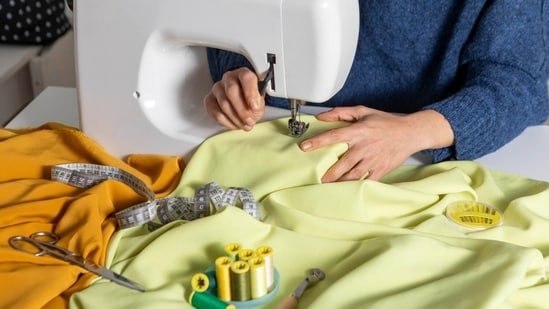
DIY fashion appeals to the human urge to create in ways that are sometimes inexplicable. Whether it is the desi mom’s jugaad of turning a tattered saree into cushion covers or the trendy Gen Z searching at the thrift store for patchwork vintage jeans.
ALSO READ: Ditch the denim: Trade your jeans with these stylish bottoms options
The undulating tide of social media trends has made wardrobe seasonal in nature. One month, preppycore autumn collections are in; the next, streetwear summer styles are out. You never know when something is trending, and when it is outdated in a jiffy. But this constant churn also generates textile wastes, a ginormous environmental crisis where landfills are overflowing, and clothing production continues to use up valuable resources.
DIY fashion encourages one to become more responsible with what they already own. Besides helping mitigate the environmental threat, it also keeps the sentimental value of old garments intact, only in a refreshed and revamped format.
DIY fashion practices can be easily integrated into daily life. In an interview with HT Lifestyle, Seema Mahajan, president of the Studio of Fashion and Craft at Usha International revealed practical ways one can get started with DIY fashion. But at its very core, DIY fashion teaches to pause in a world that is hyperfixated on a trend-driven sartorial culture.
Seema addressed this, “DIY fashion is emerging as an easy and meaningful way to refresh wardrobes without constantly adding more. It encourages people to make the most of what they already own, helping reduce textile waste while giving existing garments a new lease of life.”
This suggests that instead of treating clothes as disposable whenever they feel old, torn or out of trend, people can creatively give them new meaning.
What techniques, methods, and machines do you need to know to get started with DIY fashion?
Before you get intimidated by DIY fashion and shy away, believing it to be the forte of someone with advanced tailoring skills or complicated tools, remember that getting started is actually simpler than it looks.
Seema assured that a regular sewing machine is enough to get started. However, she emphasised that one needs to be willing to experiment. With a little experimentation, she believed even beginners can undertake simple DIY projects easily.
“Techniques such as patchwork, embroidery, appliqué work, lace detailing, fabric painting, and tie-dye can transform everyday clothing into a distinctive statement piece,” she walked us through some of the techniques which help in elevating an old garment into something new.
Next comes the actual stitching. As per the expert, the basics are quite simple, and beginners only need to learn a few essential skills to get started with DIY fashion. “Knowing how to stitch a hem, attach a decorative patch, alter a fit or add a design element can open up countless possibilities.”
4 easy ways you can DIY fashion
You may imagine DIY fashion as a dramatic transformation, but it actually begins with small steps. The first step is to identify the clothes or materials you do not use often or intend to dispose of. Then, with small but creative tweaks, you can make them look and feel new again.
Seema shared these four ways for every DIY enthusiast:
1. Reinvent old denim
- Pair of jeans lying unworn at the back of the wardrobe can become trendy shorts, a casual skirt or even a functional tote bag.
- Denim scraps can also be repurposed as patchwork accents on jackets and shirts, adding texture and character to everyday outfits.
2. Refresh wardrobe staples like kurtas and shirts
- Plain kurtas and shirts provide the perfect canvas for creativity.
- A touch of embroidery on the neckline, lace detailing on sleeves, fabric patches or subtle embellishments can instantly elevate a basic piece while preserving its comfort and versatility.
3. Give heirloom pieces like sarees a modern twist
- Sarees and dupattas carry stories and sentimental value.
- Instead of storing them away, they can be transformed into fusion jackets, shrugs, overlays or statement accessories that seamlessly blend tradition with contemporary style.
4. Experiment with colour and silhouettes
- Tie-dye techniques and fabric painting can breathe fresh energy into basics such as T-shirts, kurtas and dresses.
- Pair these with simple alterations to update the fit or silhouette, creating pieces that feel entirely new.
