

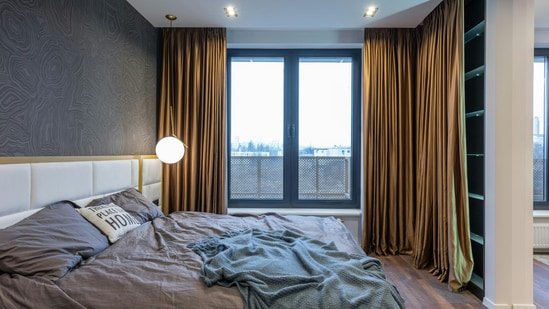
Summer is here, and it’s showing no mercy. You wake up at 6:00 AM thanks to harsh sunlight, and by noon, your room feels like a trapped glass box. Not ideal. Running the AC all day is not the answer either. It adds to your bills, and let’s be honest, it is not great for the planet. Small changes at home can actually make a difference. Blackout curtains are one of those fixes. Over the decade when I was designing homes, I realised these are not just underused, but most people in India are unsure of how to use them properly. People relate to blackout curtains as a tool used to block light. But what one does not realise is that they help reduce heat transfer through windows and also mute sound by a few decibels, making them more three-dimensional in their use than just to block light out from your home.

They block light, cut down heat, and make your space far more livable. At their core, they are tightly woven or layered fabrics designed to keep light out and comfort in.
What are blackout curtains?
Regular curtains are like a thin cotton t-shirt, while blackout curtains are more like a high-tech sun shield. They are made from a special triple-weave fabric or have a clever backing that acts as a seal against the heat.
The best part is that they don’t have to look heavy or dark. You can find them in crisp whites, soft pastels, or even fun prints. They can look perfectly light and breezy on your windows while still doing all the heavy lifting behind the scenes.
Windows are the top source of heat transmission into your home
Here is a quick fact for you. Windows are responsible for about 30% of the heat gain in your home. That is a massive amount of unwanted warmth. Think of blackout curtains as a physical barrier. If you keep them shut during the peak hours of 10:00 AM to 4:00 PM, you stop the heat before it even enters the room.
The summer necessity: Temperature control
Blackout curtains are a summer essential because they act as a physical shield against the sun. Since windows account for 30% of heat gain, drawing these curtains blocks the warmth before it enters. This keeps your home naturally cooler, slashes your AC bills, and significantly reduces your carbon footprint.
What to do:
- Keep curtains shut from 10:00 AM to 4:00 PM
- Open them in the evening to let heat escape
Pro tip (and it works):
- Draw blackout curtains first to block heat
- Use AC or a cooler briefly to chill the room
- Switch it off and let the curtains hold that cool air
Simple move. Big difference.
Why do blackout curtains help you sleep longer?
The science of sleep: Melatonin and the Sun
Summer transition can throw your sleep off track. Early sunrises wake you up too soon, while late sunsets push your bedtime further out. Your body relies on darkness to produce melatonin, the hormone that supports restful sleep. Blackout curtains help by creating a consistently dark environment, so you fall asleep faster and stay asleep longer with fewer interruptions. They are especially useful for night-shift workers, parents managing young kids, and anyone dealing with bright streetlights outside.
Other benefits of blackout curtains
1. Protects your interiors from sun damage
Blocks harsh UV rays that can fade furniture, rugs, and artwork over time, helping your space look newer for longer.
2. Softens outside noise for a calmer space
The thick fabric helps reduce everyday sounds, such as traffic and evening activity, making your room feel more settled.
3. Improves screen visibility at home
Cuts glare on TVs and laptops, making movie nights, gaming, or even work calls far more comfortable.
Blackout curtains are a solid summer upgrade. Cooler rooms, better sleep, and less dependence on the AC. Draw them during the day, keep the heat out, and enjoy a space that actually feels like a break from the weather outside.
Similar articles for you
Cushion covers to brighten up your rooms this summer; My top 8 picks
Office chairs with lumbar support: Understanding why this is important for your back
Switched my armchair to an ergonomic office chair: Changed how I work from home
The author of this article holds a Master’s Degree in Interior Design and has spent over a decade in research, teaching, and designing homes from scratch.
Disclaimer: At Hindustan Times, we help you stay up-to-date with the latest trends and products. Hindustan Times has an affiliate partnership, so we may get a part of the revenue when you make a purchase. We shall not be liable for any claim under applicable laws, including but not limited to the Consumer Protection Act, 2019, concerning the products. The products listed in this article are in no particular order of priority.
