

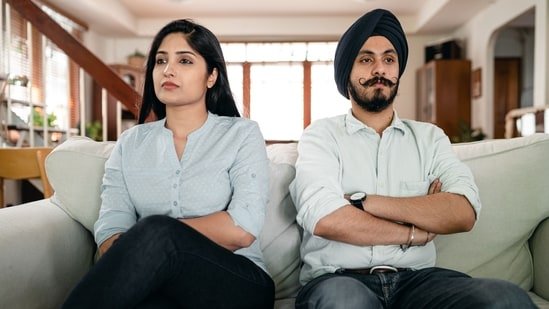
Was either of us wrong?” “No.”
“Then what went wrong?” “Nothing, really. We were good people… just not good together.”
One of the biggest myths about relationships is that if both people are good, the marriage will naturally work. But sometimes, two wonderful individuals simply don’t create a fulfilling partnership. And this difference can be difficult to understand, especially in an arranged marriage. In an interview with HT Lifestyle, Harshada Desai, mental health counsellor, shared what actually makes a good partnership.
Being a good person and a good couple: What’s the difference?
Harshada highlighted that being a good person and being a good partner draw on different skill sets. According to Desaid, kindness, honesty, and generosity are character traits, while compatibility, communication, and emotional attunement are relational skills.
A marriage can have two decent, well-intentioned people who are still mismatched in how they process conflict, express care, or need connection.
Why don’t good people make good couples?
1) Good people often avoid necessary friction
Harshada highlighted that people who see themselves as good, agreeable, or nonconfrontational sometimes suppress resentment to preserve harmony.
Over years, unspoken needs accumulate into distance rather than dramatic rupture. It’s not a fight that erodes marriage — it’s the absence of enough honest ones.
2) Different love languages, same good intentions
“A couple, both described by friends as genuinely good people, where one partner equates love with acts of service and the other needs verbal reassurance. Neither is withholding intentionally — they are simply fluent in different emotional languages, and years pass before they realise it,” explains Harshada.
For instance, one partner manages finances, fixes what breaks around the house, and handles logistics — convinced this is how care is demonstrated.
While the other partner is waiting to hear “I’m proud of you” or wants a hand held during a hard week.
Both are legitimate expressions of love. Neither partner is failing. But if the receiving partner doesn’t recognise the gesture as love — because it doesn’t match their own internal definition — it simply doesn’t register and over time, this creates a strange, quiet grievance.
3) Family-of-origin scripts
According to Harshada, two good people can carry very different unspoken rules about what marriage should look like — inherited from their own parents’ marriages — without ever having compared notes explicitly before the wedding.
One partner may have grown up in a household where disagreements were aired loudly and resolved within the hour. Their partner may have grown up in a household where conflict was never voiced directly — tension was managed through withdrawal, and harmony was maintained by not naming the problem at all.
“Neither pattern is inherently healthier. But when these two people marry, one reads silence as the relationship being fine, while the other reads silence as something being deeply wrong,” said Harshada. Both are responding rationally — to different rulebooks and this can cause a lot of friction in a marriage.
Note for the readers: This article is for informational purposes only and should not be considered a substitute for professional advice. Please consult a qualified expert for personalised guidance.
