

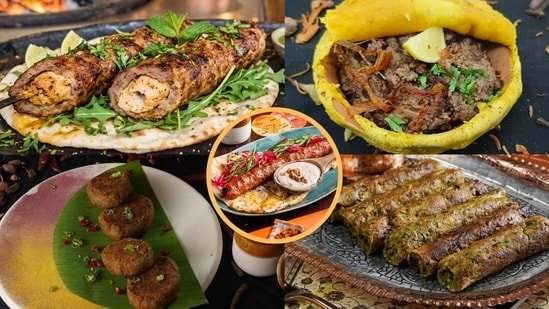
Few dishes have stood the test of time like the kebab. Believed to have originated with medieval soldiers grilling meat over open fires before reaching royal kitchens, it has continued to evolve without losing its appeal.
On this World Kebab Day today, chefs across the country are reviving forgotten recipes, celebrating regional specialities and experimenting with bold flavours, giving diners plenty to explore.
Back to the plate!
From melt-in-mouth Kakori kebabs brought to mainstream by Padma Shri late Chef Imtiaz Qureshi to Lucknow’s world-famous galouti kebab, there are now several versions that are being lapped by foodies.
India’s kebab repertoire is constantly finding a new audience says celebrity chef Ranveer Brar. “As chefs and researchers, it’s our job to dig into the royal kitchen, talk to khansamas and traditional home families and bring them out. But the credit goes to consumers who lap up these versions which have a lot of history behind them,” says Brar and adds, “There is a whole repertoire of kebabs that are made on utensils beyond the mahi tawa and singhri, like Ghutwa kebabs on patili or lagan. Mahi, Pathhar, Lagan, Majlisi kebabs, there are so many versions that are back on the platter.”
Lucknow-based chef Mohsin Qureshi, who hails from the family of khansamas, has brought traditional recipes to the mainstream.
“Majlisi and Ghutwa kebabs that were served during Moharram gatherings, Gola Kebabs that are made in both mutton and chicken versions and have curd filled in it (initially cooked in fat now in pure ghee), and Malai Zafrani Pasanda kebabs prepared on tawa… I introduced these at the Saraca Hotel and are now signature dishes,” says Qureshi.
Some of India’s most extraordinary kebabs are those that remain undiscovered by many, says Chef Daya Shanker Chaubey. “Lucknow’s Chola Kebab holds a special place for me because it demonstrates how time-honoured techniques and regional ingredients create depth of flavour and character that modern methods simply cannot replicate.” In this, minced meat is marinated with a carefully balanced blend of whole spices and traditionally slow-cooked within chickpea leaves, allowing it to absorb their earthy aroma and delicate smokiness.
Where two meats meet
Hailing from the culinary traditions of Punjab’s Rawalpindi region, the Dorra kebab requires great technical skill. Instead of mixing meats, the kitchen builds a dual-layer skewer: a soft inner core of spiced minced chicken, wrapped carefully in an outer layer of seasoned minced mutton and ghee.
Chef Sidharth Vasudev of The Tivoli Hotel says, “The beauty of Dorra Kebab is in its two layers. The mutton brings richness and smoke, the chicken inside stays tender and juicy. Getting both meats perfectly cooked at the same time is what makes this kebab so special.”
An unexpected mashup
While chefs routinely slip processed cheese into chicken seekh kebabs to keep the meat from drying out on the grill, Theysee, Hyderabad’s Kali Miri Seekh swaps standard dairy for an artisanal, silver-medal-winning Swiss Belper Knolle style cheese rolled in Kerala black pepper.
Chef Suryansh Singh says, “The Kali Miri Seekh was born from an honest question: if you’re going to put cheese in a chicken seekh to keep it moist, why not use a cheese worth talking about? The answer is a well-aged kali miri Belper Knolle, folded into a seekh that’s built to sit alongside a drink without asking for too much attention.”
A global fusion
The classic Malai Tikka, also a kebab, has been a staple of Indian menus for decades. Wasabi malai tikka is a modern interpretation that introduces Japanese wasabi to the tandoor, relying on the intense heat of the clay oven to marry the contrasting flavours.
Chef Dayanand Ghadi of Independence Brewing Company, Mumbai, says, “People often expect a malai tikka to taste a certain way, and we wanted to gently challenge that expectation. The wasabi isn’t there to dominate the dish; it’s there to add a layer of freshness and a mild heat that works with the creamy marinade rather than against it. The tandoor then brings in a beautiful smokiness, which rounds off the flavours and gives the kebab its depth.”
Mughal legacy
Kebab history isn’t exclusively for meat lovers. This Mewa Mawa Kebab from At Majlis, Noida digs straight into the private, lost archives of Emperor Aurangzeb’s Dastarkhwan (royal spread) to bring a rich, forgotten vegetarian masterpiece back to modern tables. Chef Osama Jalali says, “Mewa Mawa is our tribute to the forgotten grandeur of the Mughal Dastarkhwan. We combine mixed nuts and cottage cheese to recreate a dish that is rich, elegant, and deeply rooted in India’s royal culinary heritage.”
Another recipe that is delectable for the vegetarians is Awadhi Subz Seekh. Representing the legendary kitchens of Lucknow, this dish highlights the ultimate sophistication of Awadhi vegetarian dining.
Chef Osama Jalali, who orginally hails from Rampur, says, “The Awadhi Subz Seekh showcases the elegance of Lucknowi cuisine by transforming humble vegetables into a refined kebab. Infused with aromatic spices and finished in a traditional clay oven, the dish celebrates the delicate flavours and craftsmanship that define the Awadhi culinary legacy.”
The hidden gem from Kashmir
The Kashmiri Naan Kebab highlights Kashmir’s lesser-known spice pantry. Instead of relying on typical heavy heat, the kitchen seasons hand-pounded mutton with kabab chini (cubeb pepper) — a rare regional spice that offers an earthy, floral warmth. The meat is served over fresh regional flatbread alongside Doon Chetin, a traditional, rustic accompaniment made of walnuts and yogurt.
Chef Chetan Bolar of Bombay Brasserie says, “Our Kashmiri Naan Kebab reflects Bombay Brasserie’s philosophy of celebrating India’s lesser-known regional flavours. The delicate warmth of kabab chini, the smoky hand pounded mutton seekh, and the traditional Doon Chetin walnut yoghurt chutney come together to create a kebab that’s both authentic and memorable. It’s a signature because it introduces guests to the richness of Kashmiri cuisine in a way that’s approachable, distinctive, and full of character.”
