

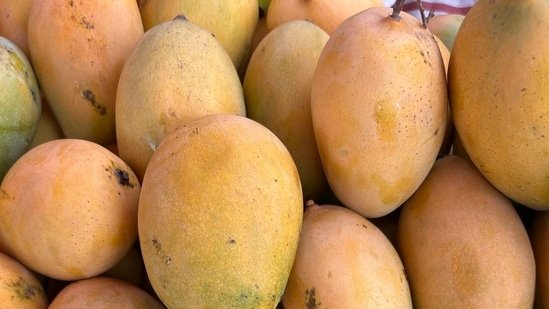
Summer and mangoes are synonymous in India. And with the onset of monsoon, ripe mangoes are readily available in the market. However, in the modern world, almost everything we eat comes with associated health risks, and it seems that mangoes are not safe from the trend as well.
Taking to Instagram on July 5, Dr Priyanka Sehrawat, neurologist and general physician based in Gurugram, Haryana, shared her concern with artificially ripened mangoes that have flooded the market. Such mangoes are laced with carbide, which is used to hasten the ripening of the fruits, and is a serious concern for public health.
Why should we avoid carbide-ripened mangoes?
Carbide helps fruits to ripen faster, and some cultivators use this method to bring their products to the market earlier. However, it is a serious health concern, as carbide in the mangoes reacts with water to form toxic chemicals, which, when consumed, can result in serious health issues.
In the words of Dr Sehrawat, “Mangoes, popularly called the king of fruits, have now become a public health concern. But why is that so? This is because carbide is being used to ripen the mangoes.”
“When this carbide comes in contact with moisture, it produces acetylene gas, which leaves behind harmful residues such as arsenic and phosphorus. These are causes of major health concerns.”
The neurologist shared that the Food Safety and Standards Authority of India (FSSAI) has banned carbide-ripened mangoes in the country.
Nevertheless, as part of the general population, one should be aware of how to make the distinction between carbide-ripened mangoes and naturally-ripened mangoes in the market, so that they can make a healthy choice before consumption.
How to detect carbide-ripened mangoes?
According to Dr Sehrawat, it is possible to detect carbide-ripened mangoes in the marketplace using four senses.
- Sense of sight: Mangoes turn a lovely golden shade when ripe. But the carbide-ripened variants turn unusually bright yellow. According to Dr Sehrawat, the hue of the yellow of such mangoes is almost unnatural.
- Sense of smell: Mangoes have their typical sweet smell, which may differ with the specific types. However, there is not much to smell in carbide-ripened mangoes, noted the neurologist.
- Sense of taste: The sweet taste of mangoes needs no description. However, the ones ripened with carbide taste bland and unnatural.
- Sense of touch: The sense of touch can help differentiate between carbide-ripened mangoes and naturally ripened ones. The first type is hard from the outside and soft from the inside.
Note to readers: This article is for informational purposes only and not a substitute for professional medical advice. Always seek the advice of your doctor with any questions about a medical condition.
