

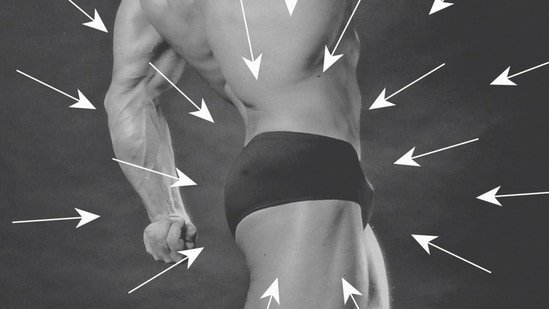
Daniel Rice is a personal trainer in Los Angeles, a job that gives him a front-row seat to the physique coveted by today’s American man. Rice recalls the washboard abs of the ’90s; the athletic build of the early 2000s; the quest, in the 2010s, for tiny waists and huge biceps.
Now “the guys all want thick thighs and a bigger butt,” he says. “It’s become a glute-dominant culture.”
For $200 a session, Rice says he can take “clay”—a rear end that’s never been sculpted—and turn it into “a mountain.” Some of this is to look more desirable, he says, but more often than not his clients are focused on health and longevity. He has them doing hip thrusts, banded side lunges, goblet curtsy squats and cable kickbacks. Also, the StairMaster, especially as men age.
“I tell my clients, ‘As long as you can climb flights of stairs, you can have sex.’ ”
Walk into any high-end gym right now and it will be hard not to spot those training their glutes. Equinox says male bookings of its “Best Butt Ever” class have increased 17% since 2024. Life Time, the high-end health club chain, affirms an uptick in its glute-centric classes. Men who train with the Whoop app have doubled their booty exercises over the past 24 months, according to the company. Dogpound, the elite personal-training gym where Taylor Swift got in shape for her Eras Tour, recently added more glute-building machines to its Los Angeles location because trainers said their clients wanted more of them, the gym’s owner Lili Gattyan says.
“Bulgarian split squats, Romanian dead lifts—I’m learning a new phrase every few days,” says Jake Villegas, a model and content creator in New York who hopes that building his glutes will open doors to more modeling opportunities. He’s put on 15 pounds of muscle in the past year and does lower-body training three times a week.
“It’s brutal, but it’s a good pain,” Villegas, 26, says.
The body’s largest muscle group is increasingly understood to be the foundation of physical strength and well-being. For the man who wants to live forever, few assets are more sought-after.
Jay Ferruggia, a personal trainer in Los Angeles who specializes in training “the high-achieving man over 40,” says it’s “a status symbol and a badge of honor” for men to have fit legs and strong glutes in midlife.
“It’s a terrible look to have a pancake ass, aesthetically,” says Ferruggia. “And so guys are making their upper backs and glutes their top priorities. If you see someone in their 40s, 50s and their glutes are developed, it’s a sign of longevity.”
In case you haven’t noticed—and surely you have—it’s become table stakes for leading men to flash a perfectly chiseled derriere on-screen. Kit Harington had his shower scenes in Industry. So did Sterling K. Brown in Paradise. Barry Keoghan danced naked in Saltburn. Alexander Skarsgård left little to the imagination in the BDSM comedy Pillion. Patrick Schwarzenegger revealed his backside and then some in The White Lotus. Paul Anthony Kelly flashed some cheek while skinny-dipping as John F. Kennedy Jr. in Love Story.
The expectation weighs heavily on the industry. It’s why Carson Zone is at the gym every Monday and Friday, grunting into weighted hip thrusts and pushing through heavy staggered lunges.
“I know the time to show my ass on-screen will come,” the 30-year-old working actor says. “I want to be ready for it.”
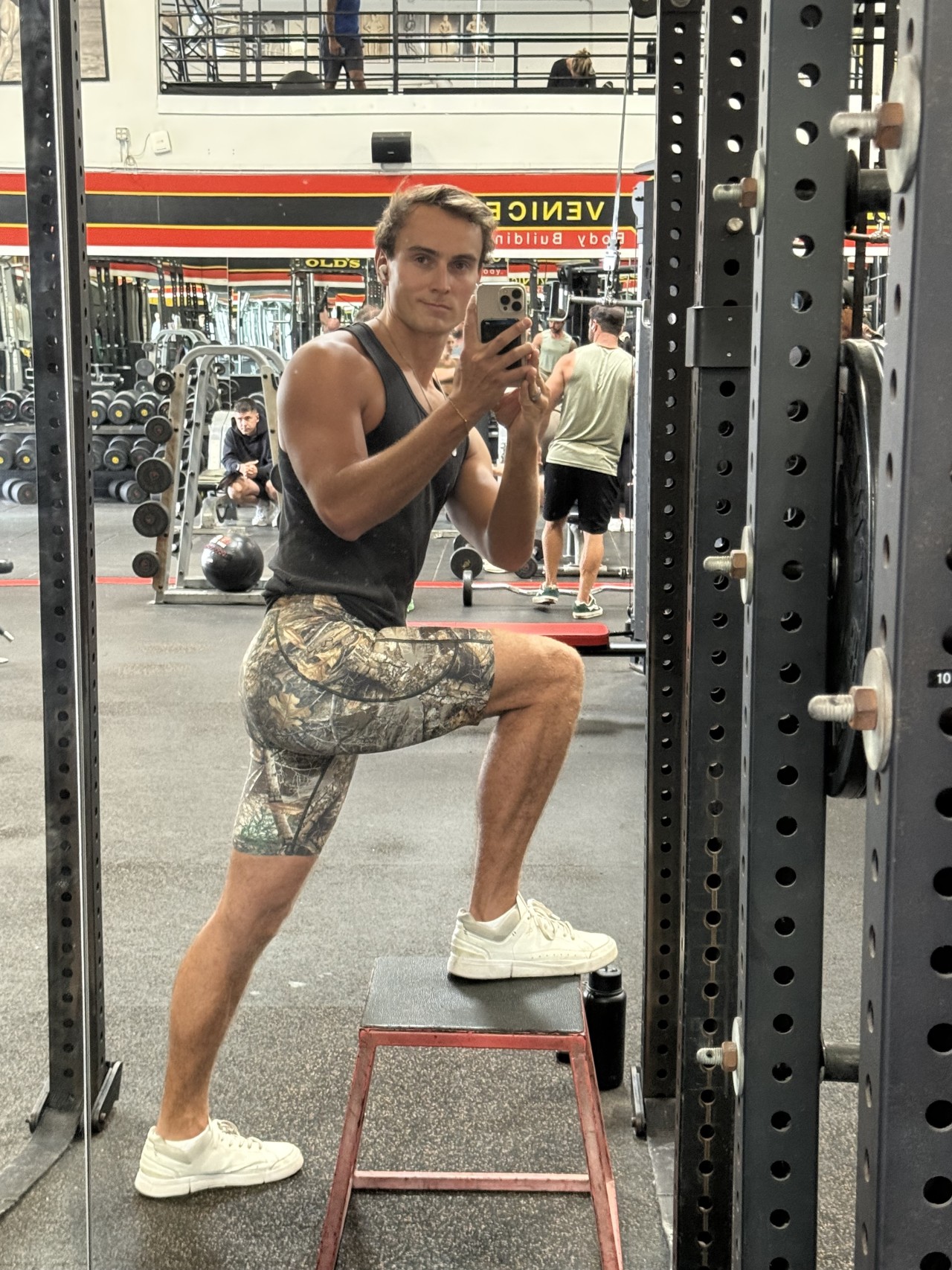
At Heimat, an elite private gym in Hollywood that costs around $350 a month, Zone has exercised alongside a full roster of male celebrities burning out their glutes: Shameless actor Cameron Monaghan going heavy on curtsy squats in HIIT classes; TikToker Noah Beck, who was recently cast in the Baywatch TV series reboot, clobbering flights on the stair machine.
Glute envy hit a fever pitch in November, when Heated Rivalry actors Connor Storrie and Hudson Williams entered the chat. The days after the racy hockey romance hit HBO Max late last year, “every single glute machine was taken” at the Life Time in Brooklyn’s Dumbo neighborhood, says Trent Ellsworth, a marketing professional.
“Everyone is training for a hockey butt,” Zone says, one that “gives you those dimples when it squeezes.” He says he aims to eat three portions of meat a day, often trekking to Costco to buy it in bulk. Between groceries and supplements, Zone is dropping serious cash to project an image of health and success. “You’re trying to be hot, smart and rich.”
Mario Garnello, a behavioral therapist in Chicago, was so inspired by Heated Rivalry that he incorporated Storrie’s suggested elevated kettlebell squats into his routine. A TikTok Garnello made about the endeavor hit over 900,000 views.
“I feel it in all the right places,” Garnello, 26, says.
Booty boot-campers and Pilates princesses have been building these muscles for ages. Men are just starting to catch up. On social media, fitness experts like Bret Contreras (whose first two books were specifically for women) and Mark Carroll preach the gospel of glutes to their armies of male followers. Robert F. Kennedy Jr. loves to go heavy on leg presses.
Within health and biohacking circles, there’s a growing discussion on how glute strength impacts longevity. “You do see temporary increases in hormones like testosterone and growth hormone with resistance training, especially when larger muscle groups are involved,” says Dr. Benito Villanueva, a longevity specialist and the medical director at the L.A. clinic Evolve Anti-Aging & Wellness.
“The bigger story is metabolic and cellular signaling,” he adds. “You’re improving how the body handles glucose, how it uses energy and how it maintains muscle over time.”
Ashley Borden, a strength coach, tells her clients that strong butt muscles are “bulletproofing your body against a Dad Bod.” The dreaded middle-age physique is what happens when you “lose your ass and everything moves to your stomach,” she says.
Adam Drawas, co-founder of brand marketing agency Walker Drawas, is one of personal trainer Rice’s clients in L.A. On top of the bench squats, step-ups and leg lifts he does during their sessions, he spends $1,600 a month on five different peptides—unapproved injectable drugs that Health Secretary Kennedy has vowed to loosen restrictions on. Drawas says a longevity doctor prescribes them for him.
“I put in 15 years to get where I am,” Drawas, 45, says. “I want to keep it that way.”
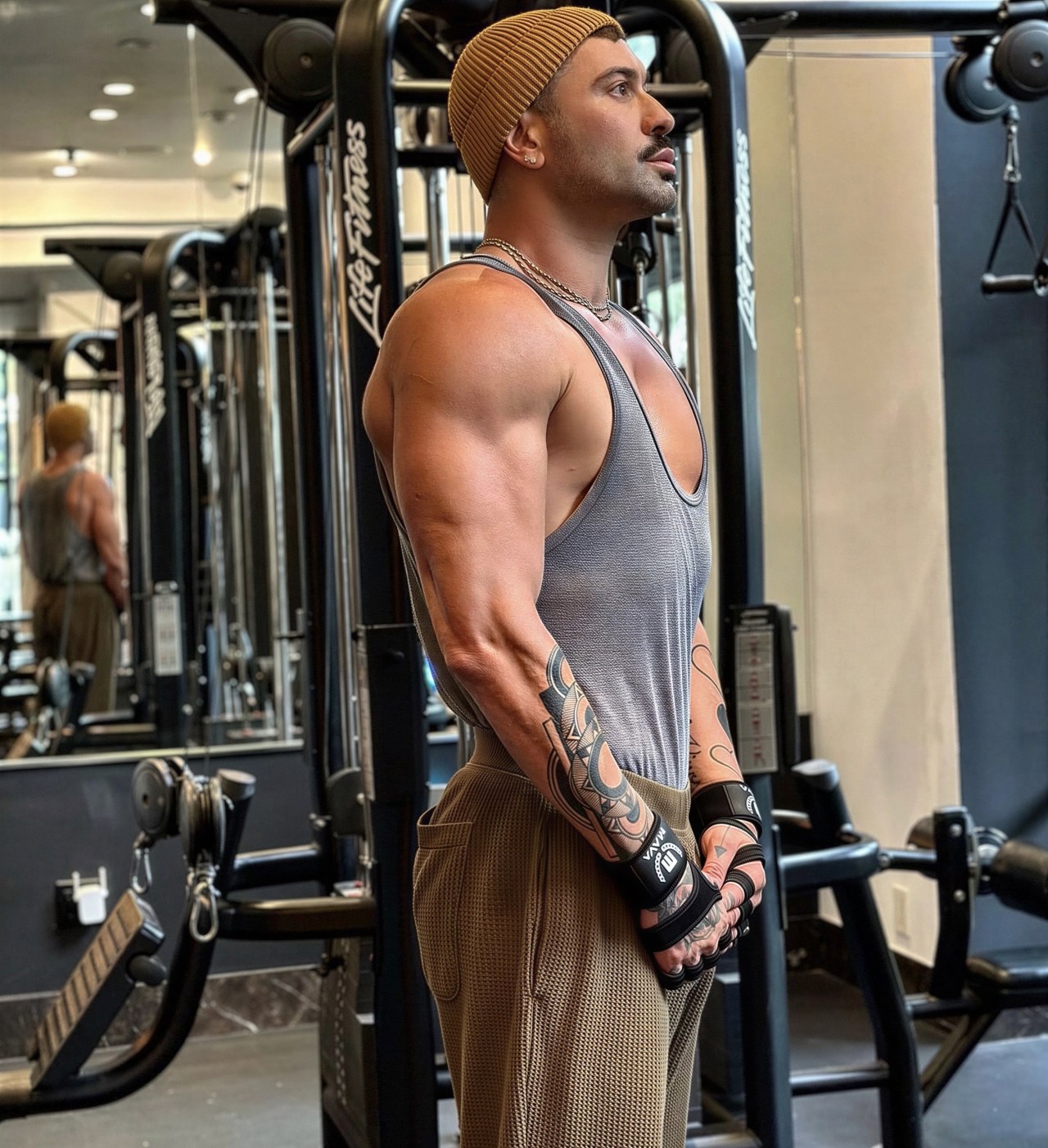
Rob Thompson, an L.A. trainer who works with celebrities and CEOs, says his clients regularly do body scans and visit longevity clinics. They’re now trying to offset the years they spent at the office, he says.
“They already have the standing desks, the treadmill walks, but the scans and assessments help them realize they need to strengthen their lower body,” Thompson says.
For the business elite, “it’s not about aesthetics,” Thompson says. “It’s about moving better for the next 20 to 30 years. Knee issues? Hip issues? Posture? Nine out of 10 times, the glutes are weak.”
Middle-aged men who’ve hopped on the glutes train say there’s no way they’re getting off. Thomas Chou, a managing partner at the law firm Morrison Foerster, spent much of his 30s and 40s doing yoga, hiking and training his upper body. Since he started building his leg and glute muscles two years ago, the L.A. resident says his posture has improved, and he’s never been more agile.
“I’ve transitioned from the guy who walks around the lake to someone who runs around the lake,” Chou, 53, says.
David Schwartz, co-founder and principal of New York City real estate developer Slate Property Group, does lower-body strength training three times a week at Dogpound in New York City, where the cheapest membership goes for around $8,000 a year. During a typical session, he does supersets of barbell hip thrusts, planks and walking lunges with 30-pound dumbbells. “The first minute is easy,” he says, “and the second minute is torture.”
Time is money for executives like Schwartz. The 49-year-old says lower-body training is “more of a bang for your buck. You engage your full body, and it has cardio benefits.” The results showed when he recently played tennis with someone around 20 years his junior.
“I had more stamina than he did.”
Write to Chavie Lieber at Chavie.Lieber@WSJ.com
