

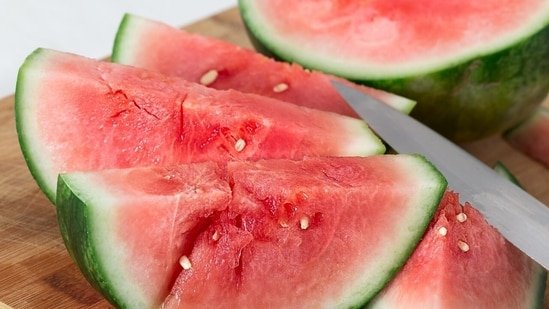
Watermelon is a much-loved summer fruit. Juicy and succulent, it is refreshing and provides a pleasant cooling effect when eaten. It is rich in many nutrients and has a high water content, making it perfect for the season. However, even a fruit with such a strong fan base needs to be eaten mindfully, as the wrong way of consuming it may reduce its health value and overall benefits, and backfire with unintended discomfort.
Let’s find out the correct way to eat watermelon and the basic nitty-gritties that can help prevent any health issues that may occur after consuming it the wrong way.
HT Lifestyle reached out to Dr Chhya Vaja, an internal medicine expert at Apollo Spectra Mumbai, who walked us through the best way to eat this fruit, while also bursting myths and explaining the ideal timing and quantity for consuming watermelon.
“Eating watermelon the right way is important, or there can be abdominal distress,” the physician cautioned, disclosing a major downside.
Benefits of watermelon
But first, let’s evaluate the nutritional profile of this fruit so you can understand its potential and how incorrect consumption may bring it down. The doctor described it as ‘magical’ due to its immense health advantages.
“Watermelon contains antioxidants like lycopene, which can enhance heart health. It is also low in calories and can aid in weight loss,” the doctor mentioned how it aids in weight management and improving heart health.
How much and when should you eat watermelon?
Watermelon may appear to come without any rules, unlike mangoes, which have an obviously high sugar content. Many assume that since it is high in water, not too sweet, it can be eaten freely without much thought. However, that is not entirely true, as watermelon also contains natural sugars. Its excessive juiciness can make the sweetness less noticeable.
First, the physician elaborated on the correct portion size, “Eat in moderation, as having it in large quantities is a strict no-no. 1 cup per day is a good idea. Too much of it can lead to bloating or a sudden spike in sugar levels, so diabetics should be careful.
Next comes the expert’s guidelines on the correct timing. Yes, even the time at which you eat a fruit matters, as it affects how your body processes it. This is because your body follows an internal clock, which in turn regulates critical functions such as digestion and nutrient absorption.
Dr Vaja recommended when to eat watermelon, “Eat it during day time, so maybe in the morning or early afternoon. Since it is rich in water and natural sugars, it is easier to digest when your metabolism is active.”
One common mistake
Since the doctor advised eating watermelon in the morning, what will happen if you eat watermelon at night? “Avoid eating it late at night to prevent gastric problems, bloating, and discomfort,” he noted.
Watermelon-related myths
There are many myths associated with watermelon that need to be debunked if one wants to consume it correctly and make the most of its benefits. Dr Vaja shared these myths, clarifying each of them with medical facts:
Myth 1: Watermelon should not be eaten with water
Fact: No evidence available stating that watermelon already has high water content; drinking too much water immediately after may cause abdominal discomfort.
Myth 2: Watermelon leads to weight gain
Fact: Watermelon is low in calories and can actually help in weight management when eaten in the right quantity.
Note to readers: This article is for informational purposes only and not a substitute for professional medical advice. Always seek the advice of your doctor with any questions about a medical condition.
