

Love is not always unconditional. Common perception measures love by its response. If love is given, it is expected to be returned, one way or the other. But unlike all physical elements that abide by Newton’s Third Law of Motion, where every action has an equal and opposite reaction, love stands out and often does not always follow the same rules. One kind, in particular, falls short of this expectation: unrequited love, also known as one-sided or unreciprocated love.
ALSO READ: Quote of the day by Jay Shetty: ‘Don’t fall in love too fast, you don’t truly know someone until…’
This type of love garners a sense of pity, as though one must be tragic, cursed and quite unfortunate to experience unreciprocated affection, left only with a suffocating longing. Some may urge to move on, deeming it silly to remain fixated on someone unavailable; others may frown at what they see as a lack of courage to pursue and bag the person. But none of this negates the love itself. Unrequited love is much more magnanimous than many may believe.
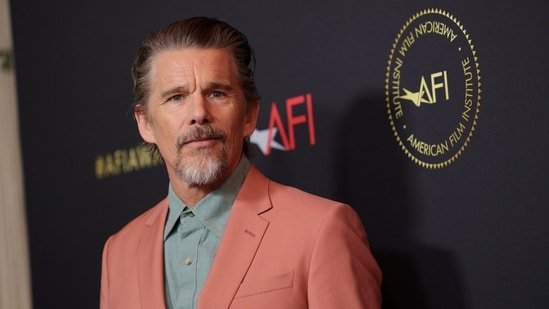
Hear it from acclaimed Hollywood actor Ethan Hawke, who starred in major blockbusters like The Black Phone, Sinister, Dead Poets Society, shared a very refreshing take at the 98th Academy Awards when host Amelia Dimoldenberg asked him about, “Do you have any advice for someone who also has a bit of an unrequited love theme in life?” His answer will surprise and reassure you, and may even corroborate the stubborn remnants of yearning in the heart for good.
Ethan Hawke’s quote on love
Ethan said, “The one who is in love always wins. It does not matter if you get your heart broken; you are living when you feel you are alive. But the sun does not care whether the grass appreciates its rays, right? It just keeps on shining. That’s you.”
What does Ethan Hawke’s quote mean?
His perspective on unrequited love challenges the label of pity and misfortune. Ethan actively flips the narrative head-on, urging people to think differently.
The success of love is not ingrained in reciprocation, but rather in the ability to love, which is magical in itself. The outcome does not undermine this magical feeling.
The actor, with his observation, did a brilliant job of separating the experience from the result. This is akin to the popular saying ‘enjoy the journey, not the destination’.
Rejection or heartbreak does not dissipate the beautiful feeling that comes with the experience of loving someone, irrespective of whether the feelings are returned or unreturned.
To love someone means you are capable of experiencing deep emotions, even navigating the vulnerable ones.
He firmly adjusts the focus here and places the value inward, rather than on the external result. Love is not transactional. You benefit here as it demonstrates your capacity to ‘feel’ as a human. As he mentioned, ‘if you get your heartbroken, you are living, you are alive.’
Ethan quickly drew a creative, empowering analogy. He compared love to sunlight, which shines by itself because it has the capacity to shine. It does not dim itself if it is not acknowledged by others. So love is more intrinsic than people realise, not exactly defined by any exchange.
Don’t beat yourself up, feeling embarrassed because you are hopelessly pining over someone. Unrequited love is not tragic, but rather is a triumph, because it takes a heart to love someone.
Why is Ethan Hawke’s quote significant today?
With so many people dissing modern dating and cringing at every new dating lingo that makes headlines, love lately is being treated like an archaic, obscure language, and many believe they are losing their fluency. Ethan’s quote is relevant in modern dating, advice that helps people stay afloat.
Case in point: ghosting. In the fast rush of swipe (and unmatch) culture, speed dating and situationships, it is only human to get hung up on someone, only to be met with, “I am not looking for anything serious.” Then, you begin to feel like a fool for feeling in the first place. That’s exactly where Ethan’s observation comes in. You don’t have to feel ashamed of feeling something. The feelings are precious and valid, and it shows you care, especially in an age of detachment.
Internalising the rejection was never the point, nor is it a flaw. It is actually a sign that you care deeply, a profoundly beautiful human trait.
