

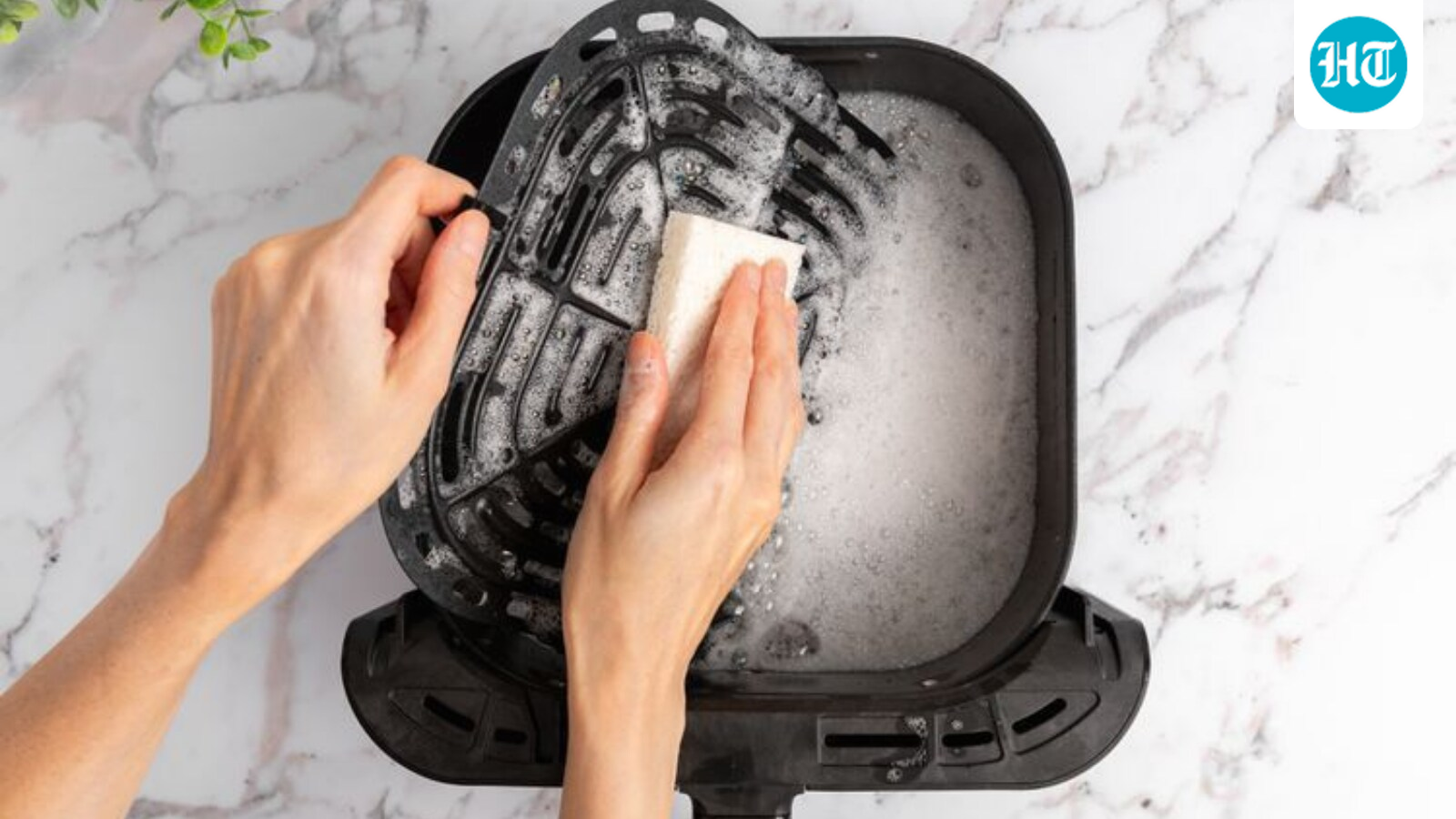
An air fryer that is not cleaned properly does two things: it starts smoking from built-up grease residue, and it slowly loses cooking performance as leftover oil affects airflow and heat distribution. The good news is that cleaning one properly takes a few minutes, not a deep-cleaning session, regardless of whether your basket is glass, ceramic or non-stick.
Quick Answers
The Basic Cleaning Routine (Any Material)
- Unplug and let it cool completely before cleaning, for both safety and to avoid thermal shock to a glass bowl.
- Remove the bowl, crisper tray and any lid or lift-out components.
- Wash with warm water and standard dish soap, using a soft sponge for coated surfaces or a slightly more abrasive sponge for uncoated glass or stainless steel if residue is stuck on.
- Wipe the interior heating chamber and base with a damp (not wet) cloth, since this part should not be submerged in water.
- Dry everything fully before reassembling, particularly around any electrical connections in the base unit.
Cleaning by Material
Non-Stick (PTFE-Coated) Baskets
Use a soft sponge and avoid abrasive scrubbers or metal utensils entirely, since both accelerate coating wear. Stuck-on residue should be soaked in warm soapy water for a few minutes rather than scrubbed off aggressively. Once a coating starts visibly flaking or scratching, it is a sign of wear, not something to scrub through, and continued heavy use of a damaged coating is where the safety questions covered in are air fryer coatings safe: PFAS, PTFE and PFOA explained become most relevant.
Ceramic-Coated Baskets
Similar care to non-stick: soft sponge, no metal utensils or abrasive pads, and a soak for stubborn residue rather than aggressive scrubbing. Ceramic coatings are somewhat more scratch-resistant than PTFE but are not scratch-proof.
Glass Bowls (Uncoated)
This is where glass has a genuine, practical advantage. Because there is no coating to protect, you can use a slightly more abrasive sponge or a baking-soda paste on stuck-on residue without worrying about scratching away a protective layer, since the glass itself is the cooking surface. Most glass air fryer bowls, including EDT’s LUMA, are also dishwasher safe per the manufacturer, which removes hand-washing from the routine entirely for that component. Full details on LUMA’s specific bowl construction and care are in the LUMA air fryer guide.
Dealing With Smoke and Burning Smells
A burning smell during use almost always comes from leftover oil or food particles from a previous session, heating up again rather than a defect in the appliance. If this happens:
- Stop the current cooking cycle and let the unit cool
- Remove and thoroughly clean the bowl, tray and any visible residue in the chamber
- Check the underside of the heating element area, where splattered oil commonly collects unnoticed
- Run one empty cycle at a moderate temperature for a few minutes after cleaning, to burn off any remaining trace residue, in a well-ventilated space
If the smell persists after a thorough clean, it is worth checking the manufacturer’s troubleshooting guidance or contacting support, since a persistent smell despite proper cleaning can occasionally indicate a component issue rather than residue.
Deep Cleaning the Interior Chamber
Every few weeks, depending on how often you cook with the appliance, go beyond the removable bowl and tray:
- Wipe the interior walls and heating element area with a damp cloth, taking care to avoid the element itself if it is exposed
- Check the fan and air vents for accumulated grease, using a soft brush or cotton swab for tight spaces
- Clean the exterior housing with a damp cloth and mild soap, avoiding excess water near any vents or the power connection
Preventing Buildup in the First Place
- Use the bowl’s crisper tray or rack as intended, so excess oil drips away from food rather than pooling underneath it
- Avoid overloading the bowl, since overflow is a common cause of splatter reaching the interior chamber
- Line the bottom of the bowl with a small amount of water or a compatible liner for particularly greasy foods, if your model’s manufacturer recommends this, to make post-cook cleanup easier
- Clean after every use rather than letting residue sit and harden over multiple sessions
