

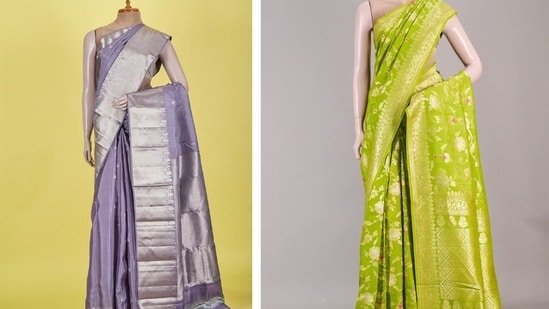
Zari is the luminous thread that gives India’s sarees their unmistakable aura. Derived from the Persian word Zar, meaning gold, the term itself reflects the richness of this centuries-old craft. Traditionally made with gold and silver-coated threads, zari is intricately woven into fabrics to create elaborate motifs that showcase both the weaver’s skill and the sari’s elegance. From the grandeur of Kanchipuram silks to the intricate beauty of Banarasi weaves, zari transforms a saree into a treasured heirloom. In conversation with HT Lifestyle, Anil Sancheti, partner at Mysore Saree Udyog, shared tips on how to identify real zari work.
Also read | Too hot to wear saree in summer? 5 breathable drapes that keep you cool and stylish
Types of zari
Anil Sancheti said, “Among the various types available in the market, pure zari stands apart for its craftsmanship and authenticity. It is made using pure silk threads coated with copper, silver (ranging from 15% to 92%), and finally gold, resulting in a rich, nuanced radiance that synthetic alternatives cannot replicate.” In contrast, tested zari is made with a mix of plastic and Lurex, making it less authentic and of lower quality.
Half zari
According to Anil, half zari is predominantly composed of 99% copper with a thin coating of silver and gold added for decorative effect. This zari is made in two ways: either with silk thread and a copper winding, or with polyester thread and a copper winding. This is sold as real zari but is not considered pure zari.
Pure Zari
Crafted on pure silk thread with copper and silver coating, and then gold coating, which is wrapped around a silk thread and electroplated with gold. In this, the silver content starts from 15% to up to 92%. It is detected by a real zari machine for testing purposes, even by the government lab.
Despite zari’s rich history and cultural significance, a lack of knowledge among consumers has led to widespread confusion in distinguishing authentic zari from imitations. This highlights the urgent need for greater awareness to be instilled through education and transparent practices.
How to identify real zari?
Understanding a genuine sari requires familiarity with its unique characteristics, which can help consumers distinguish. Here are the tips to consider:
Shine: Pure zari has a rich and subtle shine, distinct from synthetic zari, which often appears overly bright or shiny. When held under natural light, pure zari should glow with a soft and warm luster.
Weight: Pure zari is made from real metals and will be heavier compared to synthetic versions. If the fabric feels too light despite intricate zari work, it could be an imitation.
Weaving: The weaving pattern of pure zari is usually tight and detailed with no loose threads. The back of the fabric should also reveal a neat and clean finish.
Through these simple checks, buyers can ensure they are purchasing and investing in a piece of authentic zari that upholds India’s rich textile traditions. Beyond its material value, authentic zari represents centuries of skill, heritage, and artistry. Each thread tells a story, preserving a legacy that continues to charm across generations.
