

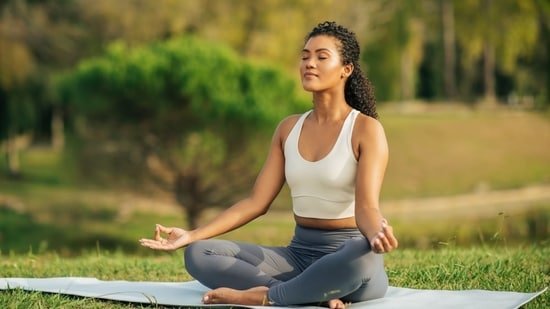
Meditation has become more accessible than ever through wellness apps that offer guided breathing exercises, sleep stories and mindfulness sessions. But for some practitioners, these digital tools are only the beginning. Many eventually become curious about the centuries-old traditions that gave rise to these practices.
According to experts from both neuroscience and spiritual traditions, ancient forms of meditation continue to appeal because they offer more than techniques for relaxation. They also provide a philosophy of living, self-inquiry and a sense of community.
“Meditation is not about getting rid of anxiety or making thoughts disappear,” says Dr. Judson Brewer, psychiatrist and neuroscientist at Brown University. “It’s about changing our relationship with our thoughts and habits.” His research focuses on how mindfulness can help people recognize patterns of worry rather than becoming trapped by them.
That idea has long been central to Buddhist meditation.
Buddhist meditation teaches awareness, not escape
For Buddhist teacher Jack Kornfield, meditation is not a quick fix for difficult emotions.
“The goal isn’t to stop thinking,” he has said in several public talks. Instead, practitioners learn to observe thoughts and emotions with kindness instead of reacting to them automatically.
Similarly, Sharon Salzberg, a leading teacher of loving-kindness meditation, believes compassion is as important as attention. Her work encourages practitioners to cultivate kindness toward themselves, particularly during periods of stress or emotional difficulty.
Hindu traditions see meditation as a lifelong practice
Meditation also occupies a central place in Hindu philosophy.
According to Dr. Edwin Bryant, professor of Hindu Religion at Rutgers University and a scholar of the Yoga Sutras of Patanjali, meditation was never intended as a productivity tool or a way to simply relax after a busy day. In the yogic tradition, practices such as dhyana and mantra meditation are part of a broader path of self-understanding and inner discipline.
Many practitioners, he explains, approach meditation as a daily practice that gradually shapes how they respond to life’s challenges.
Zen meditation encourages people to sit with the present moment
Zen meditation, or zazen, follows a similarly simple approach.
Roshi Joan Halifax, founder of the Upaya Zen Center, has often described meditation as an opportunity to develop resilience and compassion by learning to stay present, even during uncertainty.
Rather than chasing calm, Zen practitioners are encouraged to observe each moment without judgment.
