

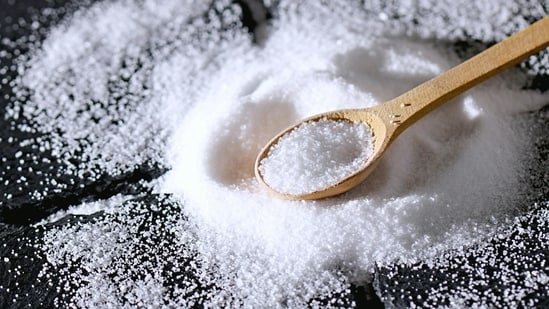
Salt is one of the basic necessities of any kitchen, and almost everyone has their brand of choice. However, with new brands coming up every day, and more varieties of salt becoming easily available in the market, one may wonder which would be the most beneficial for their health.
Taking to Instagram on June 1, Dr Jayesh Sharma, Raipur-based oncologist with over 25 years of experience, answered the question.
Which is the best salt?
According to Dr Sharma, the concept of one salt being significantly better than the other is inherently flawed. The various types of salt that are available in the market all comprise 97 to 99 percent of sodium chloride, which is the chemical formula for common salt.
“Whether it is rock salt, Himalayan salt, pink salt or sendha namak, the difference is basically of one or two percent,” stated the oncologist. “Even the salts that boast about having 84 minerals, those minerals make up just one percent of the salt, and sometimes even less.”
While the extra mineral does enter the body, its impact on a person’s health is almost negligible. “It is similar to finding a one-rupee coin lying on the road. While the person finding it will surely be richer by one rupee, the amount is not enough to make a major change in their life,” explained the surgeon.
“The amount of minerals added to salt is so small that it does not even meet one percent of our mineral requirement,” he shared. “ If we eat more salt just for the added minerals, then the increased sodium intake will do more harm than good.”
In a similar way, the anti-caking agent added to salt (which prevents salt from clumping) is also present in very small amounts of less than one percent. Therefore, it does not present any health risk, despite what fearmongers on social media might claim.
A mineral that has to be added to salt…
There is one mineral that is externally added to salt, which does have a serious health benefit. It is iodine.
In many parts of the country, the drinking water lacks iodine, an essential mineral that is important for thyroid health. Therefore, adding iodine to salt is very important, shared Dr Sharma.
Lack of iodine in the body causes diseases like goitre. “And a bigger problem related to thyroid function is that the mental development of children is affected if there is an iodine deficiency within the child or the mother,” cautioned Dr Sharma.
Therefore, no matter the colour, it is always important to consume iodised salt.
A salt with less sodium content…
There is just one salt which has less sodium than the others, shared Dr Sharma. That is black salt, which is commonly used in chaat.
“It has around 90 percent sodium, and the rest is sulphur compounds, which gives it its typical smell,” he noted. Excess sulphur is known to cause digestive distress like gas and bloating, and therefore, black salt is not the best choice for regular consumption.
Note to readers: This article is for informational purposes only and not a substitute for professional medical advice. Always seek the advice of your doctor with any questions about a medical condition.
This report is based on user-generated content from social media. HT.com has not independently verified the claims and does not endorse them.
