Amid rising temperatures, erratic rainfall patterns, altered land and sea use, invasive alien species are quietly expanding their kingdoms, while humans play catch-up.
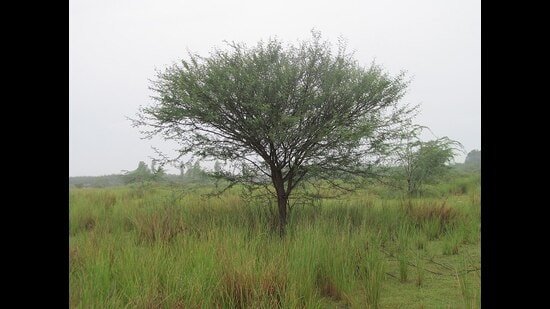
In Ethiopia, there are poems about the dangers of the fast-spreading invasive Prosopis juliflora, brought to the country in the 1970s as part of a fodder and anti-land-erosion effort. (Wikimedia)
Amid it all, a 2024 study by scientists from Austria, Hungary, the US, Australia and Germany found that, on average, natural areas owned by indigenous peoples played host to 30% fewer invasives. (The study was published in the journal Nature Sustainability.)
“While we don’t yet have complete information on why this is so, we do know that there is much to learn from traditional ecological knowledge and that we need to learn from and co-develop knowledge with Indigenous peoples for everyone’s benefit,” Laura Meyerson, professor of invasion science and habitat restoration at University of Rhode Island and lead author of the study, said in a note on the university’s website.
This knowledge is often embedded in the stories, poetry and songs of indigenous people.
Take for instance, a poem from Ethiopia that addresses the adverse impacts of the invasive Prosopis juliflora (called woyane harar) on fodder and cattle.
The shrub is native to parts of Mexico, South America and the Caribbean. It was introduced in the ‘70s and ‘80s, to provide fodder, fuelwood, shade, for dune stabilisation, to help combat desertification, and keep areas green. Its spread has since robbed other native plant species of water, sunlight and nutrients, altering the landscape and thereby impacting native animals and cattle.
Now, people chant…
“Cattle from upland, cattle from lowland
Goats from here, sheep from there
Are you [my camels] ever going to have the trees
That you once had all for yourselves?
In the summer, the floods
In the winter the locusts…
On the lowland the sorghum fields…
The woyane trees
Where should I take you my heart [my she camel]?”
“Our study makes it clear that protecting the rights of Indigenous peoples is also essential for the protection of biodiversity,” says lead author of the study Hanno Seebens, of Justus Liebig University Giessen and the Senckenberg Society for Nature Research, Germany.
सिद्धभूमि के लेखक एक प्रमुख समाचार लेखक हैं, जिन्होंने समाज और राजनीति के महत्वपूर्ण मुद्दों पर गहरी जानकारी और विश्लेषण प्रदान किया है। उनकी लेखनी न केवल तथ्यात्मक होती है, बल्कि समाज की जटिलताओं को समझने और उजागर करने की क्षमता रखती है। उनके लेखों में तात्कालिक घटनाओं के विस्तृत विश्लेषण और विचारशील दृष्टिकोण की झलक मिलती है, जो पाठकों को समाज के विभिन्न पहलुओं पर सोचने के लिए प्रेरित करते हैं।
एक ऐसे समय में जब प्रिंट एवं मुद्रण अपनी प्रारंभिक अवस्था में था ,समाचार पत्र अपने संसाधनो के बूते निकाल पाना बेहद दुष्कर कार्य था ,लेकिन इसे चुनौती के रूप में स्वीकार करते हुए स्वर्गीय श्री शयाम सुन्दर मिश्र “प्रान ” ने 12 मार्च 1978 को पडरौना (कुशीनगर ) उत्तर प्रदेश से सिद्ध भूमि हिंदी साप्ताहिक का प्रकाशन आरम्भ किया | स्वर्गीय श्री शयाम सुन्दर मिश्र “प्रान ” सीमित साधनों व अभावों के बीच पत्रकारिता को मिशन के रूप में लेकर चलने वाले पत्रकार थे । उनका मानना था कि पत्रकारिता राष्ट्रीय लोक चेतना को उद्वीप्त करने का सबसे सशक्त माध्यम है । इसके द्वारा ही जनपक्षीय सरोकारो को जिन्दा रखा जा सकता है । किसी भी संस्था के लिए चार दशक से अधिक का सफ़र कम नही है ,सिद्ध भूमि ने इस लम्बी यात्रा में जनपक्षीय सरोकारो को जिन्दा रखते हुए कर्मपथ पर अपने कदम बढ़ाएं हैं और भविष्य के लिए भी नयी आशाएं और उम्मीदें जगाई हैं । ऑनलाइन माध्यम की उपयोगिता को समझते हुए सिद्ध भूमि न्यूज़ पोर्टल की शुरुवात जुलाई 2013 में किया गया |
हमसे संपर्क करने और जुड़ने के लिए मेल करें -
siddhbhoomi@gmail.com
Subscribe to Updates
Get the latest creative news from FooBar about art, design and business.