


Chronically online. Meme fluent. Good vibes only. Who knew we’d see a world in which that was legit job description? Workplace roles are changing faster than we can say “quiet quitting”. Nobody cares if you’re “proficient in MS Office” and a “team player”. They want to know how well you know the internet – its little in-jokes, the fandoms, the constantly shifting language.
Doomscrolling can now officially earn you a salary. Know how to read a subreddit’s unwritten rules without getting banned? There’s a Reddit Specialist role waiting for you. Understand a meme’s shelf life? Congrats, you’re a meme marketer. Think you can keep 50,000 strangers from turning on each other in a Facebook group? You could be a community manager. Meet the people with the most Gen Z job titles we’ve seen in a while.
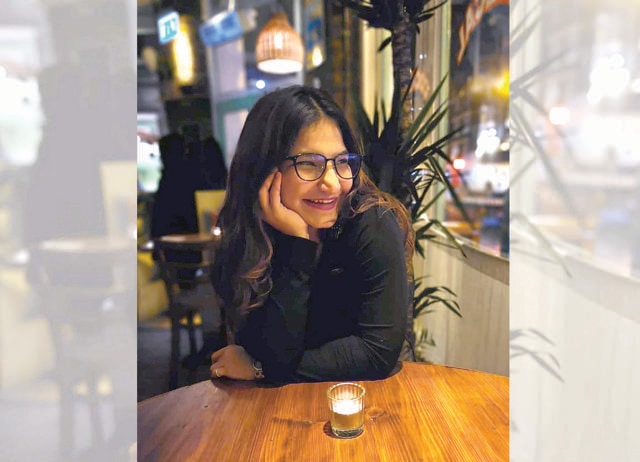
Muskaan Abichandani, 25
Chief Vibe Curator
It sounds like a made-up job. But Abichandani has the business card to prove it’s real. Here’s how she describes her role: “I curate an experience, not an event, not a standalone night, not a gathering, but a sense of community and belonging”. At Mriga, an organisation that brings people together through sports, wellness and personal development, she runs Mriga Socials, the arm for music, dance, art and wellness events in Ahmedabad. They do jazz nights, workshops to design Japanese fans, coil pottery sessions and dance fitness raves. “There’s a slim chance that you’ll leave a concert knowing more people than you walked in with,” she says. So, each session is deliberately small, an intimate huddle that feels more real.
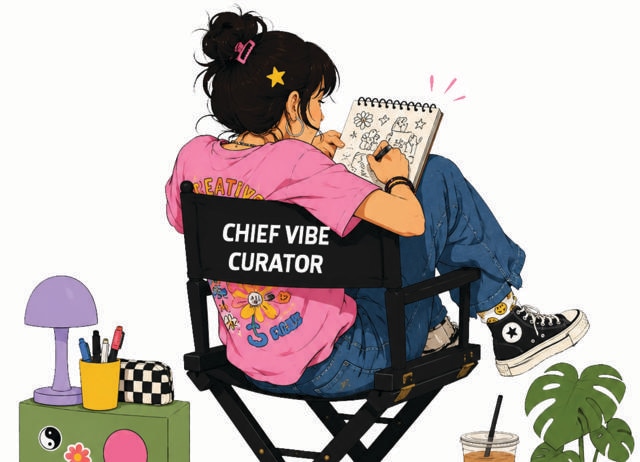
When Abichandani is in charge, she makes sure that everyone feels like they’re part of the group right from the start. “That fear of ‘I don’t have any friends to go with’, ‘I’m not sure this is for me’ or ‘I feel awkward’ must be alleviated,” she says. Before they start, her team speaks to every attendee. “You’re not left alone in a corner at any point. The seating is planned in a way that the stranger next to you complements you. There are mediators and facilitators to keep everyone included in the conversation.”
It helps that Abichandani spent time in London, organising events for hospitality and personal-care brands. Jobs like these start at ₹3.6 lakh per year, and go up to ₹12 lakh. The bonus: You feel like part of the group too.
Tanya Singh, 27
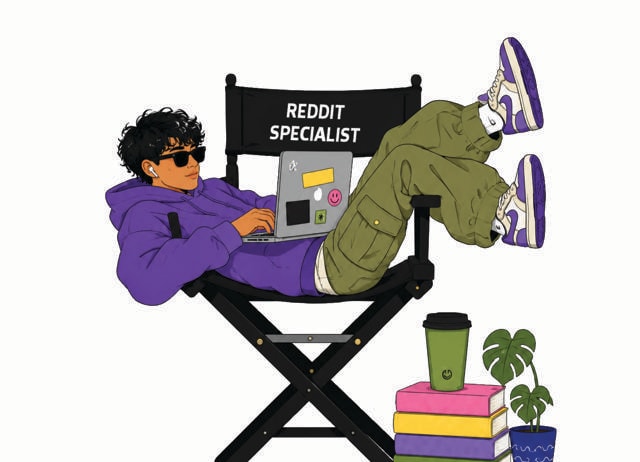
Reddit Specialist
A few years ago, Reddit was nowhere on brands’ radars. Now, companies are hiring people whose whole job is to speak its language fluently. Enter Tanya Singh who does it for a US-based sports media company. On sub-reddits that discuss everything from breaking sports news to controversies, Singh’s job is to smoothly slip her company’s article links into the group as a conversation starter.
It’s a sneaky job. Unlike Instagram or X, Reddit punishes anything that feels like advertising through downvotes or outright bans. “People don’t want a brand talking at them,” says Singh. “They want advice from a Redditor who genuinely knows the subject.” She’s that person, but on behalf of her employer.
That takes weeks of invisible work. Before she posts her first link, Singh has to build credibility by commenting, answering questions and earning karma across multiple communities. Slip up, and the ban is instant, and your device is dead to Reddit unless you factory reset it. She had about 12 to 13 accounts banned before she figured this out.
It’s also a specialisation she suggested to her company, not the other way around. Other brands are now interested in what she does. When a fitness brand, which got locked out of famously guarded fitness subreddits, needed an in, Singh spent weeks building credibility across 15 communities. Then, she posted unbranded progress photos and workout shots styled like regular users’ posts. She’d reply to comments with genuine advice, and when people volunteered their own weight-loss hacks and routines in return, she used it as a way to slip the branding in. “You really have to earn your place,” she says. Entry-level Reddit specialists pull in ₹5 lakh to ₹10 lakh per year. Karma points cannot be encashed, alas.

Onaiza Drabu, 36
Digital Anthropologist
So, you speak fluent brainrot? Cute. Onaiza Drabu does and gets paid for it. She studies the internet the way traditional anthropologists study villages: Observing communities, decoding rituals and spotting small cultural shifts. If everyone’s suddenly obsessed with matcha, Nigerian breakdance or “I was there” comments, she works out what it will mean six months from now.
Drabu trained at Oxford. She saw the shift towards clean, ingredient-first beauty, long before we learnt how to say Niacinamide. “When Diljit Dosanjh performed at Coachella in a black kurta and tehmat in 2023, I knew that hyper-regional pride was about to become mainstream,” she says. “Fashion brands would lean into local crafts, chefs would spotlight hyper-local ingredients.” Sure enough, in 2025, Masaba launched a lipstick called Thak Gayi as part of her Batua collection.
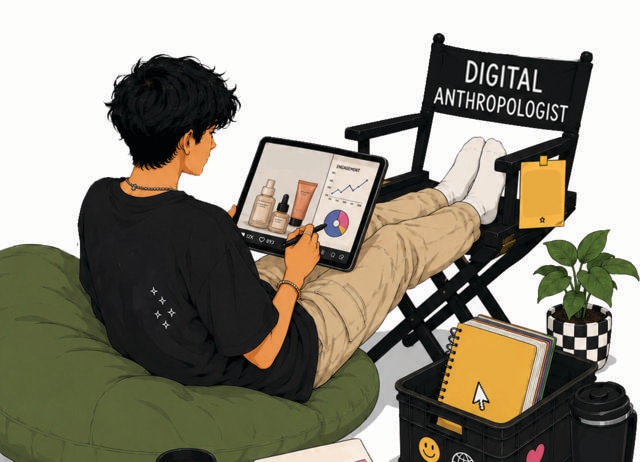
Observations like these are valuable business advice. Her firm, Codeswitch, helps companies design everything from websites and apps to packaging. When a frozen-food company wanted to organise products by category (chicken, seafood, vegetarian), she pointed out that young people don’t think about ingredients; they think about meals: What’s for breakfast? Lunch? Dinner? The firm reorganised their app around those questions to make it easier to navigate.
In Europe and North America, jobs like these pay $85,000 and $130,000 annually. Most of Drabu’s clients are overseas. In India, similar roles pay roughly ₹10 lakh to ₹30 lakh annually.
Bhumisha Rajgar, 24
Meme Marketer
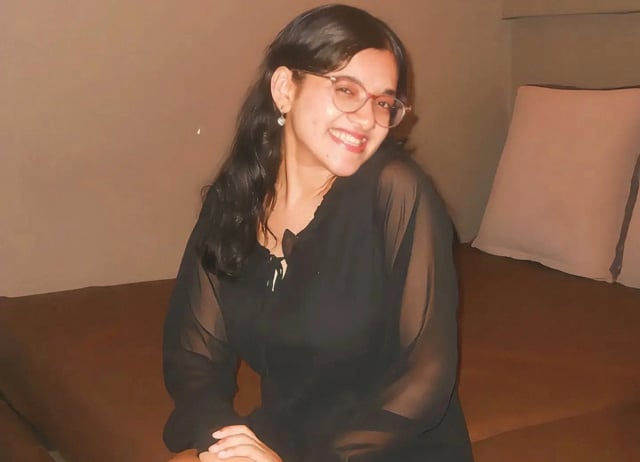
On an Instagram Reel from @MixFeels.in, the caption reads: The World Cup needs Shakira, like football needs a ball. It features the singer’s FIFA anthem Dai Dai. It has racked up over six million views. That connection, that wit, that split-second dopamine hit – it’s Rajgar’s stock in trade.
She and her team of 10 at 3Folks Media create content for music labels. They’ve worked on campaigns for K-pop star Jennie, Central Cee, King, Darshan Raval and the band W.i.S.H. The job description: Make paid content seem like it, like everything else, was birthed by the internet too.
It calls for as much planning as doomscrolling. “When a new song drops, we first post it across 100 to 200 Instagram pages,” she says. Alongside are discovery triggers: “Oh my God, Tyla just dropped a new album, you have to hear this”. Next, Rajgar’s team creates fan edits that piggypack on current trends, with the help of “meme vendors”, people who manage hundreds of meme pages across niches ranging from Bollywood and K-dramas to anime and even devotional content. Then the attention snowballs.
For Sunday by Aditya A, NAALAYAK and Ronit Vinta, her team paired the track with edits from the hit anime One Piece. The breezy tune matched perfectly with visuals of a smiling Luffy leaping across blue skies. The song hit 25,000 Reels on Instagram. For Travis Scott’s FE!N, they used a video of Navratri bloopers. It racked up over 12 million views.
“Earlier, clients thought memes were just for fun,” she says. “Now they understand they’re one of the fastest ways to make people discover a song.” If you’re good at it, you can earn around ₹1.5 lakh a month.

Saloni Jain, 28
Community Manager
In 2016, brands pretended to be “one of us” online: Campaigns featured fake feuds, slogans dropped the term Slay or Bestie. In 2026, that formula gives customers the ick. “Customers know they won’t feel a sense of belonging or compassion from a brand,” says Jain. So, she builds community instead. Jain runs the 50,000-strong Facebook community for Inito, a US fertility-monitor company.
It is made up entirely of women trying to conceive. Members celebrate pregnancies, grieve setbacks and swap advice on IVF treatments and emotional burnout. Engaged members are bumped up to “community champions”, who welcome newcomers and answer questions without Jain having to step in. “You can ask ChatGPT for information. But you can’t ask it what it felt like to go through the same thing you’re going through.” The real measure of a good community manager, she says, is how little you’re needed.
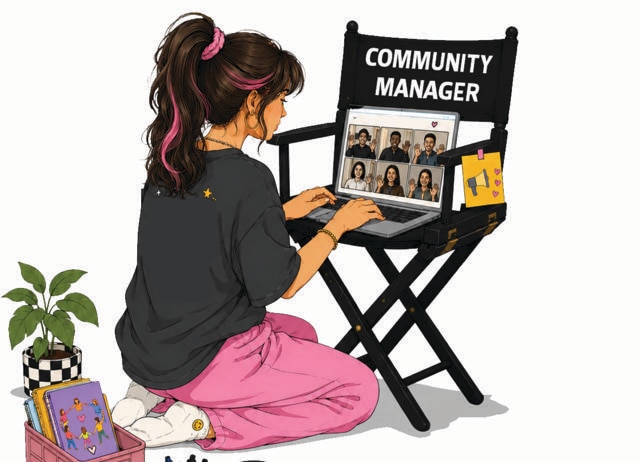
“It’s rewarding because you’re genuinely helping people,” she says. “You’ve built a space for people to trade advice and encouragement they can’t get anywhere else.” Sure, there’s compassion fatigue. Sure, some fights get ugly. That’s when she steps in, turns off comments before it ruins the vibe of the group, but reaches out separately to the feuding members to calm things down.
Jain fell into the gig sideways, after studying journalism, pursuing social media marketing, and handling a pet-care group for a pet-food company. Indian founders still undervalue the role, while American firms pay community managers roughly $170K a year. But for India, she expects that gap to close fast as AI eats into other marketing jobs.
From HT Brunch, July 18, 2026
Follow us on www.instagram.com/htbrunch
