

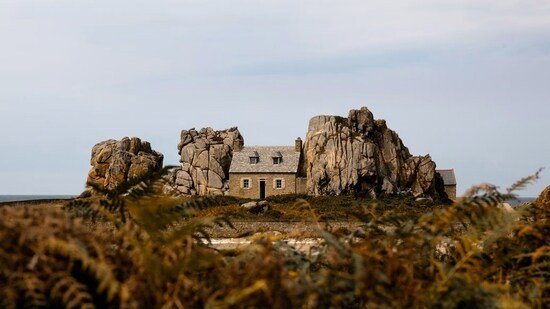
Nestled along the wild, windswept coastline of Plougrescant in Brittany, France, sits Castel Meur — known as ‘the house between the rocks’, EarthPix shared in an Instagram post on July 22. Also read | Step inside Umrao Jaan director Muzaffar Ali’s Delhi home where every corner tells a story of Indian art and heritage
Reportedly built in 1861 during an era when coastal building regulations were practically nonexistent, this tiny, idyllic stone cottage was strategically positioned at the tip of a precarious peninsula, intentionally placed with its back to the sea and flanked by two massive granite boulders to shield it from Brittany’s fierce ocean storms.
Architectural charm and exterior decor details
Visually, Castel Meur is a masterclass in classic stone architecture and rustic coastal design. The facade is crafted from warm, weathered fieldstones with contrasting light-coloured mortar. A textured, light-grey slate tile roof tops the cottage, featuring two distinct dormer windows framed with dark stone accents along the trim.
On the main level, two symmetrical multi-pane glass windows are flanked by crisp, light-grey or off-white wooden shutters that add a polished, cottagecore aesthetic. Rustic stone chimneys flank both the left and right ends of the roofline, grounding the cottage symmetrically against the towering cliff faces on either side.
Earthy green shrubs and wild bracken surround the base, creating a stark, picturesque contrast against the smooth, monumental grey granite boulders squeezing the structure. Also read | ‘World’s first zero-cement stone house’ in Bengaluru takes internet by storm. Watch video
From postcard royalty to private refuge
For decades, the storybook cottage remained a treasured family heirloom, passed down through generations to the original builder’s granddaughter, however, its picturesque setup eventually became its downfall, a 2020 report by Conde Nast Traveler highlighted. After being featured in regional tourism campaigns and a ‘world-famous’ postcard, Castel Meur was reportedly thrust into viral fame.
Tourists flocked to Plougrescant in droves, often trespassing or mistaking the home for an uninhabited monument. Visitors began taking beach stones as souvenirs — weakening the natural coastal barrier against high tides—and in one extreme incident, tourists reportedly even climbed onto the fragile slate roof, damaging the structure.
A stand for privacy
To protect the family residence and the surrounding ecosystem, multiple reports said the owner took legal action and successfully secured the image rights to the property, legally barring commercial tourism campaigns from using photos of Castel Meur.
Today, reportedly a protective stone wall surrounds the plot, with strict ‘No Access’ signage. While the private residence remains strictly off-limits to visitors, travellers can still admire and photograph the historic architectural marvel from afar while walking the nearby public coastal trails.
Note to readers: This article is for informational purposes only. This report is based on user-generated content from social media. HT.com has not independently verified the claims and does not endorse them.
