

Surya Grahan 2026: The second Surya Grahan or solar eclipse of 2026 will occur on August 12. The first solar eclipse occurred in March, and the one in August will be visible from many parts of the world. If you live in India, here’s everything you should know about this phenomenon, whether the eclipse will be visible from where you live, and the sutak time.
Surya Grahan 2026: Solar eclipse date, time and sutak
Date: August 12, 2026
Time: 9:04 pm, August 12 to 4:25 am the next day, on August 13
Eclipse will not be visible in India. Therefore, according to Drik Panchang, here’s what you should know about solar eclipse sutak timings and whether it affects you or not:
Sutak Begins – Not Applicable
Sutak Ends – Not Applicable
Sutak for Kids, Old and Sick Begins – Not Applicable
Sutak for Kids, Old and Sick Ends – Not Applicable
For the uninitiated, in Hinduism, sutak is a period that begins a set time before a solar and lunar eclipse and ends with the eclipse. Most common activities, such as reading, eating, sleeping, recreation, or any auspicious work, are avoided during this period. During this time, as per Hindu tradition, pregnant women take special precautions, and most temples remain closed.
Surya Grahan 2026: All you need to know about this solar eclipse
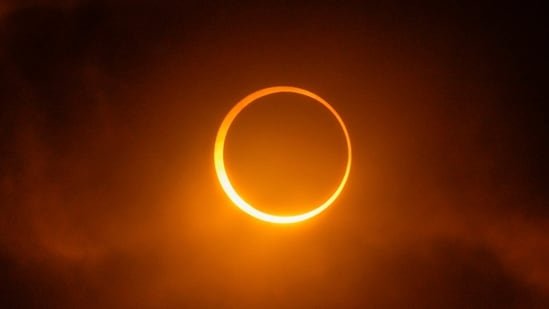
According to Indian Standard Time, this eclipse will occur at night. This will be an annular solar eclipse. During this time, the Moon will pass between the Sun and Earth. However, the Moon will not completely cover the Sun. Consequently, a bright ring will be visible around the Sun. This is also commonly referred to as the ‘Ring of Fire.’
This annular solar eclipse will be visible in many parts of the world, including many countries in Europe and Canada, Greenland, Iceland, the Arctic region, Northern Spain, the Atlantic Ocean region, and the north-eastern part of Russia.
If you belong to these parts of the world, you should take certain precautions while watching a solar eclipse: You should never look at a solar eclipse with your naked eyes, always use binoculars or a telescope to view the eclipse, take special care of eye protection, and use special solar filters for your telescopes, cameras and binoculars.
