

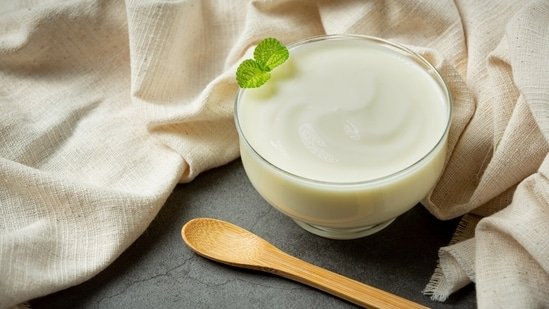
Curd is hailed as a healthy food for several reasons, from being a potent source of calcium to supporting gut health because of its rich probiotic content. But the timing of food also matters; otherwise, the wrong timing can reduce its effectiveness and lower the body’s ability to absorb its benefits. One of the doubts that remains regarding curd is whether it should be eaten at night, especially during peak summer.
ALSO READ: Tip of the day: Doctor suggests eating plain and unsweetened curd for better gut health
HT Lifestyle reached out to Dr Sukrit Singh Sethi, director and senior consultant in gastroenterology at Narayana Hospital, Gurugram, who helped to explain if this nutritional powerhouse can lead to any unexpected digestive discomfort.
But curd in itself is very dense, Dr Sethi noted, pointing out that it takes a lot of effort to digest. Digestion is easier when one remains active, but as the sun goes down, physical activity also decreases, leading to more difficult digestion of curd.
What happens if you eat curd at night?
The benefits of curd are closely associated with when and how it is consumed.
The gastroentrologist described in length, “When a person consumes thick curd at dinner and then lies down shortly after, the mechanics of digestion slow down. This horizontal position often triggers acid reflux or a heavy sensation in the chest. Instead of cooling the body, the curd remains undigested, and the undigested curd sits in the gut, ferments, and produces gas. This process leads to significant bloating and a restless night of sleep. The cooling properties of the curd do not outweigh the mechanical strain it puts on the stomach when the metabolism is in its resting phase.”
Sleeping position interferes with the digestion of curd. As you lie down, your stomach finds it difficult to digest heavy or dense foods, and curd is one of them due to its thick consistency. When curd is not properly digested, it may be fermented in the gut, resulting in bloating. So while curd may cool you, it comes at the expense of digestive comfort, especially at night.
What is safer for late evening?
If you are looking for an alternative that offers the same cooling benefits, the gastroentrologist advised going light, recommending buttermilk or chaas as the best substitute.
“Buttermilk, or chaas, serves as the perfect substitute. Since buttermilk is essentially diluted curd with the heavy fats removed, it contains much lower levels of lactose, ” he noted.
Dr Sethi also outlined why you digest buttermilk better:
- Lightness: It moves through the digestive tract much faster than thick curd.
- Hydration: It provides the necessary hydration without the caloric density.
- Ease: It remains far kinder to the gut lining during the late hours.
In the end, the doctor reiterated that curd is best eaten at lunch because digestion is strongest during the daytime, allowing the body to break it down effectively. Since curd is dense, night is not ideal, as digestion slows down at night. A lighter alternative for something cooling at night is buttermilk.
Note to readers: This article is for informational purposes only and not a substitute for professional medical advice. Always seek the advice of your doctor with any questions about a medical condition.
