

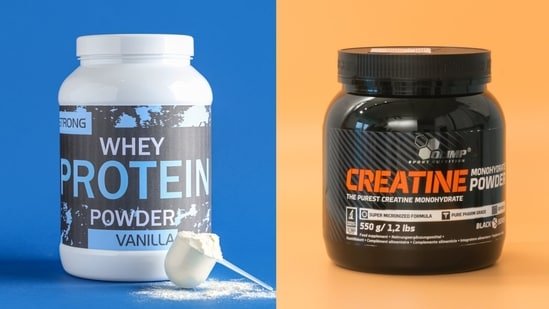
Walk into any gym today, and you will likely hear people talking about protein shakes and creatine supplements. Both are widely used for muscle gain, but many still do not understand how they actually work. With the global fitness industry booming and more people focusing on strength training, the demand for effective supplements has grown significantly. But protein and creatine are not the same thing. While one is essential for building muscle, the other helps improve performance during workouts. So, which one should you choose? According to fitness expert Bhavna Harchandrai, understanding their roles can help you make smarter, safer choices for your fitness goals.
Protein vs creatine: What is the real difference?
One of the biggest misconceptions is that protein and creatine are similar supplements, but they serve very different purposes.
“Protein is a macronutrient, essentially food. It comes from sources like milk (whey), eggs, lentils, soy, and nuts. It is required daily for muscle repair, growth, and overall health,” says Harchandrai.
“Creatine, on the other hand, is a compound naturally found in small amounts in foods like meat and fish and also produced by the body,” adds Harchandrai. However, the creatine supplements you buy are lab-made and designed to enhance performance.
Simply put, protein nourishes your body, while creatine boosts your body’s performance.
Why is protein essential for muscle growth?
Protein plays a direct role in building muscle. When you work out, especially during strength training, your muscle fibres break down. Protein helps repair and rebuild these fibres, making them stronger over time. It supports muscle protein synthesis, a process crucial for gaining muscle mass.
A study published in Nutrients found that adequate protein intake significantly improves muscle growth when combined with resistance training. Beyond muscle gain, protein also aids recovery, keeps you full for longer, and supports overall metabolic health. Common sources include meat, eggs, dairy, beans, lentils, and protein powders like whey, casein, or plant-based options.
What does creatine do to your body?
Creatine works differently. It does not build muscle directly but helps improve your performance during workouts. Stored in your muscles, creatine helps produce ATP (adenosine triphosphate), which is the body’s main energy source for short bursts of intense activity. This means you can lift heavier, perform more reps, and train harder. Over time, this improved performance can lead to increased muscle mass. Some studies also suggest that creatine may support faster recovery and even cognitive function.
Which is better for muscle gain?
If you had to choose one, protein comes first.
“Protein is the foundation of muscle growth,” says Harchandrai. Without enough protein, your body simply cannot build muscle effectively, no matter how hard you train. Creatine, however, plays a supportive role. It enhances your ability to train more effectively, which indirectly supports muscle gain.
A simple way to understand it is that protein is the building block, while creatine is the performance booster.
How much should you take?
For protein, a general recommendation is about 1 gram per kilogram of body weight per day, though the amount may vary based on activity level. It is best to spread your intake across meals rather than consuming it all at once.
For creatine, 3–5 grams per day is usually enough. Some people follow a loading phase, but consistent daily intake is more important than timing.
(Disclaimer: This article is for informational purposes only and not a substitute for professional medical advice. Always seek your doctor’s advice for any questions about a medical condition. At Hindustan Times, we help you stay up-to-date with the latest trends and products. Hindustan Times has an affiliate partnership, so we may get a part of the revenue when you make a purchase. We shall not be liable for any claim under applicable laws, including but not limited to the Consumer Protection Act, 2019, concerning the products. The products listed in this article are in no particular order of priority.)
