

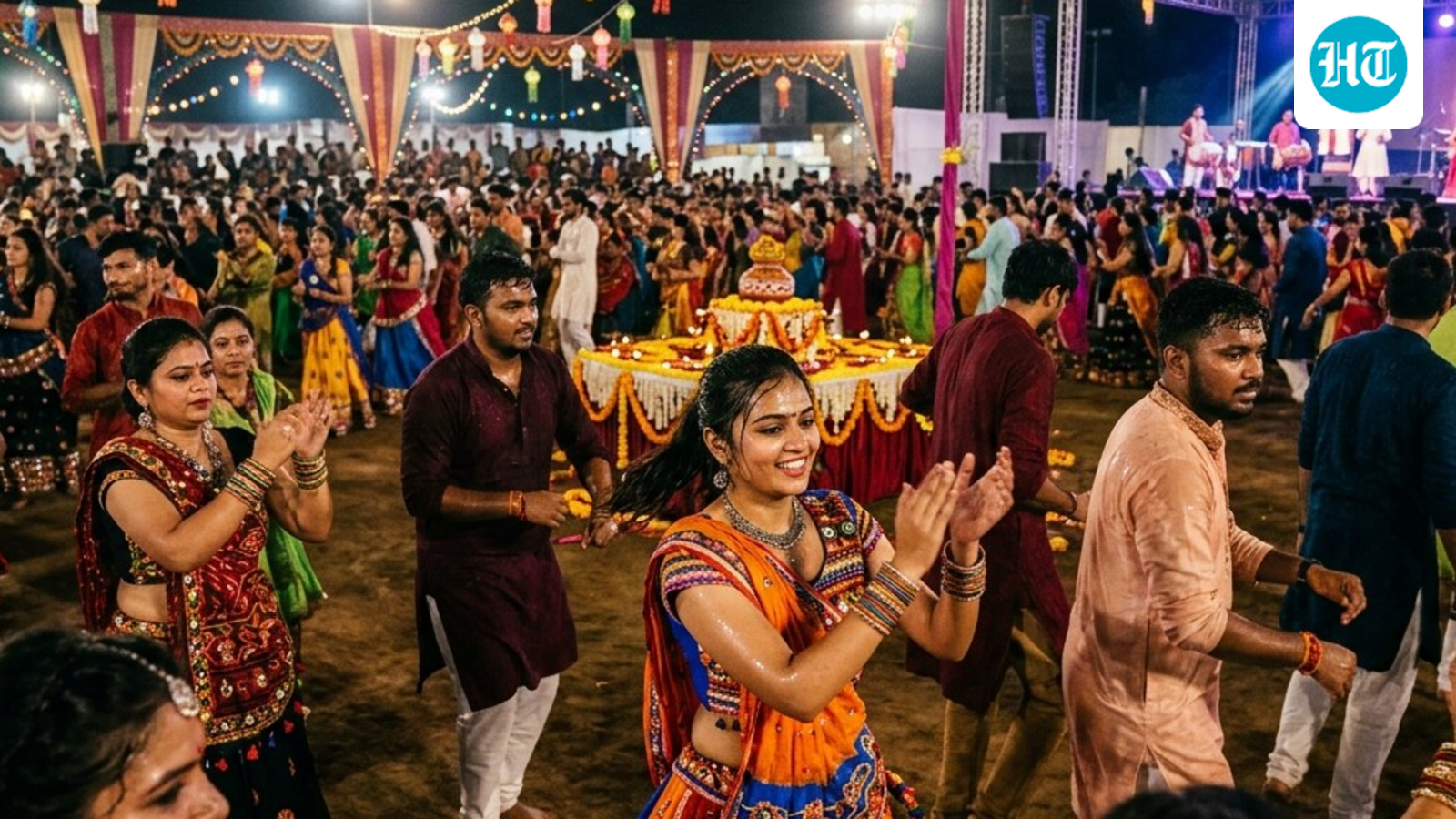
The festivals of Navratri and Durga Puja are celebrated with fervour every year by Indians. From pandal hopping to going garba dancing and wearing colourful, traditional clothes, the celebrations involve nine nights of energy, music and togetherness. However, behind all that fun, the body is working hard, too. Dancing for hours and walking in crowded places can cause heavy sweating and fluid loss, which can lead to health complications.
To understand how you can protect yourself from dehydration and other health issues during Navratri and Durga Puja celebrations, HT Lifestyle spoke with Dr Adit Zota, consultant pulmonologist and critical care specialist at Sterling Hospital, Gandhidham.
Hydration should begin well before the celebrations
According to Dr Aditi, if fluids are not adequately replaced, it can lead to tiredness, dizziness, headache, weakness, and painful muscle cramps, which can quickly take away the spirit. Therefore, hydration should begin well before you reach the pandals or the garba venues.
Dr Aditi advises starting the day by drinking fluids regularly, rather than waiting until the evening. “For healthy adults, about two to three litres of fluids in a day is a reasonable target, although needs differ with body size, weather, activity level, and medical conditions. On days with hours of dancing and heavy sweating, fluid needs may be higher,” she suggests.
Replenish the electrolytes
Dr Aditi underlines that when one sweats heavily during garba or while pandal hopping, the body loses not just water but also electrolytes, such as sodium. Therefore, during dancing sessions, plain water may not be enough. She recommends, “Coconut water, nimbu pani with some salt, chaas, or a suitable ORS solution can help replace fluids and electrolytes. These are familiar options useful during long garba sessions.”
Don’t wait until you are thirsty
Next, Dr Aditi cautioned against waiting until thirsty to drink water. She recommends keeping a water bottle handy and taking regular small sips during breaks instead of drinking a large amount at once. “A practical approach is to drink, especially when sweating heavily or dancing continuously,” she adds.
Food choices matter, too
While hydration is key to staying healthy during festive revelry, Dr Aditi stresses also taking care of what you consume, especially if fasting or eating meals. She suggests, “Foods that are high in water, like cucumbers, oranges, watermelon, and pomegranates, can increase intake while providing some carbohydrates and electrolytes.”
Aftercare
Lastly, Dr Aditi stresses that after garba or a night of pandal hopping, continue to rehydrate and let the body cool down and recover. “There is no need to avoid water; what matters is drinking comfortably and replacing fluids that have been lost. If heavy sweating has occurred, an electrolyte-containing drink may be useful,” she recommends.
Most importantly, she stresses that one should listen to one’s body. “Persistent dizziness, confusion, severe weakness, fainting, vomiting, little urine, rapid heartbeat, or severe muscle cramps can be warning signs of serious dehydration or heat illness. Stop dancing, move to a place to begin rehydrating, and seek medical help if symptoms are severe or do not improve,” she advises.
As for people with kidney, heart, or liver disease, or those taking medicines that affect balance, fluid and electrolyte levels, Dr Aditi stresses that needs may differ and should be determined by a doctor. The goal is simple: “hydrate before, during, and after Garba so that every beat can be enjoyed safely and the next night can be welcomed with energy.”
Note to readers: This article is for informational purposes only and not a substitute for professional medical advice. Always seek the advice of your doctor with any questions about a medical condition.
This report is based on user-generated content from social media. HT.com has not independently verified the claims and does not endorse them.
