

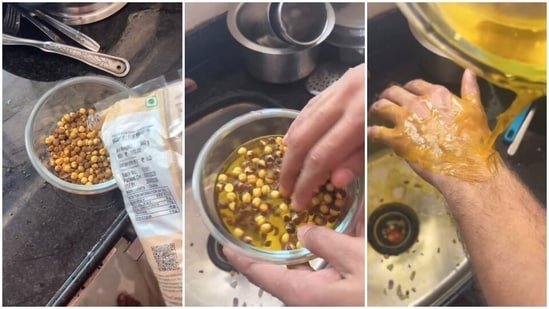
A video of a man washing kala chana, or black chickpeas, is doing the rounds on social media, raising questions about the safety of the packaged products we consume daily. The video, shared on May 26 by the page Unfiltered.haribros, shows a yellow pigment in the water used to wash the chickpeas.
Also Read | Ukrainian woman shares difference between gym culture in India and Europe: ‘Everyone is super friendly’
The man stated that he purchased the packet of Whole Farm chickpeas from Blinkit, an Indian quick-commerce company. In his caption, he tagged them and criticised the quality of their products. “@blinkitstores, please implement a proper quality-check process before listing products on your platform. Otherwise, consumers will lose trust in your platform,” the caption said.
The video garnered millions of views, with Instagram users criticising the quality of the products sold in the market. However, what alarmed many was the packaging label on the back, which didn’t mention any dyes used in the product, raising the question of how companies often mislead consumers.
To understand the harmful effects of the food colouring used by companies to make their products more appealing, HT Lifestyle got in touch with Dr Kandarp Nath Saxena, consultant – gastroenterology, Manipal Hospital, Jaipur.
What are the harmful effects of food colouring in daily consumables?
According to Dr Saxena, food colouring in daily consumables can lead to behavioural and cognitive issues, including hyperactivity in children, ADHD (Attention Deficit Hyperactivity Disorder), and aggression. He stressed that it may also cause allergic reactions and hypersensitivity, including skin and respiratory symptoms.
Moreover, in some cases, it can lead to gastrointestinal distress such as nausea, vomiting, and diarrhoea. Certain dyes, such as Red 3, have also been found to cause cancer in animals.
Does washing the product really help?
Like the content creator who shared the video, many might resort to washing the products to remove the dye and then consume the food. But does that really help? Dr Saxena says, “Washing removes only superficial unbound colourant or dye. Water-soluble dyes such as Red 40 and Tartrazine penetrate the food matrix and cannot be completely rinsed off once bound. Chemicals such as bleach (sodium hypochlorite), which is a strong oxidising agent, can break bonds in dyes.”
What precautions can one take?
The gastroenterologist suggests people read the ingredient labels on food products and check for harmful dyes. Doubtful food products should also be tested by concerned agencies. “Consumers should stay aware of the ingredients present in food products and be cautious about products containing harmful dyes,” he stated.
Note to readers: This article is for informational purposes only and not a substitute for professional medical advice. Always seek the advice of your doctor with any questions about a medical condition.
This report is based on user-generated content from social media. HT.com has not independently verified the claims and does not endorse them.
