

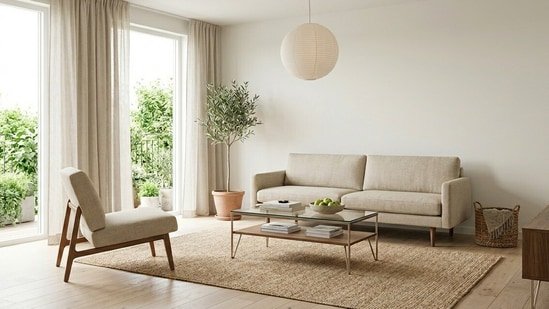
When you enter a living room, your eyes naturally move across the decor pieces, souvenirs, sofa and coffee table. But sometimes, despite everything being in the correct place, one experiences the feeling that something is missing. This is where the speciality of rugs is felt, where they pull the room together, ensuring a wholesome completeness.
ALSO READ: Living room feels ‘off’ even after trendy makeover? 5 common decor mistakes homeowners make
How should homeowners place a rug in the living room? Haphazard placement can make the space feel visually disconnected or poorly balanced. To understand the right placement techniques, HT Lifestyle spoke to Saina Takkar and Kanika Takkar, founders of Ardhi Looms, a homegrown brand rooted in handcrafted textiles and craftsmanship. They shared that the way homeowners see rugs is changing now.
Before breaking down the new functionality of rugs, they gave 3 tips on how rugs can be placed in living rooms well, with intention:
1. Let the rug anchor the room
- A rug should visually connect the seating rather than sit isolated under a centre table. Placing at least the front legs of the sofa and chairs on the rug helps the room feel more cohesive and grounded.
- In larger living rooms, extending the rug slightly beyond the furniture arrangement creates a softer and more relaxed spatial flow.
- Layering a smaller textured rug over a larger neutral base can help define conversation areas while adding depth to the space.
2. Choose the right size
- Choosing a small rug is a common mistake.
- Larger rug creates a calmer and more expansive visual flow, especially in living rooms with multiple furniture pieces.
- Unconventional placements, such as using a runner beside the sofa or layering rugs asymmetrically, can bring movement and make the layout feel less rigid.
3. Balance colour, texture, and material with the room
- Rugs do not need to match the furniture exactly; instead, they should balance the overall mood and materiality of the space.
- Earthy tones and natural fibres can soften interiors with marble, glass, or darker wood finishes, making them feel warmer and more inviting.
- Intricate patterns or handwoven textures work especially well in minimal living rooms, where the rug can quietly become a focal point without overpowering the space.
Saina observed that rugs are becoming intentional design elements, rather than just accessories. She said, “Rugs have begun to play a far more intentional role. No longer treated as mere finishing accessories, they are increasingly being used to define movement, introduce texture, soften architecture, and bring a sense of grounding into a room.”
Kanika added to this by highlighting how rugs can change a space’s visual identity. She described, “A thoughtfully chosen rug can subtly influence how expansive a space feels, how furniture interacts with each other, and even how comfortable a room becomes emotionally. It can make larger spaces feel more intimate, bring softness into structured interiors”
Essentially, something that lies underfoot can coordinate everything that sits above it. Both experts agreed that the right rug can anchor a living room, balance its visual flow and make the space warmer and more cohesive.
