

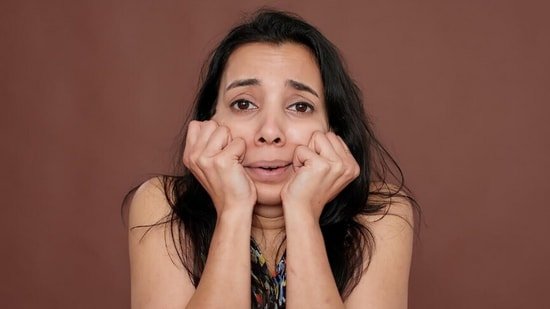
In the modern era of constant connectivity and high-pressure environments, your bathroom mirror might be revealing more about your stress levels than your birth certificate. An expert in dermatology is sounding the alarm on how lifestyle-induced anxiety is manifesting as physical ailments that no amount of cream can fully hide. Also read | Does skincare need to age with your skin? Know what your skin really needs in 20s, 30s and 40s
In an interview with HT Lifestyle, Dr Nishita Ranka, dermatologist and co-founder, Dr Nishita’s Clinic for Skin, Hair and Aesthetics, Hyderabad, said the trend is undeniable.
She shared, “There is a conversation I find myself having more and more in my clinic. A patient walks in, points to a cluster of breakouts on their jaw… and says: ‘Doctor, I haven’t changed anything. Why is this suddenly happening?’ The answer, almost always, lives in the one thing they have changed the most: their lifestyle.”
Biology of burnout: the cortisol connection
According to Dr Ranka, the skin acts as an ‘honest reporter’ for internal turmoil. The primary culprit is cortisol, the body’s stress hormone. While protective in short bursts, chronic excess becomes ‘destructive’ to the skin’s barrier. Also read | ‘Cortisol Face’ is all over your feed, but what does it mean?
“For the skin, elevated cortisol means several things happening at once. Sebaceous glands are stimulated to produce more oil, setting the stage for acne. The skin’s barrier function weakens, making it more reactive and prone to inflammation… and collagen synthesis, the scaffolding that keeps skin firm and youthful, begins to slow,” Dr Ranka said.
Perhaps most concerning is the link between stress and accelerated biological ageing. Dr Ranka highlighted the role of telomeres — the protective caps on our chromosomes — which shorten under pressure. This leads to ‘inflammaging’, a state of chronic low-grade inflammation.
Beyond adolescence: adult acne and pigmentation
Her clinic has seen a surge in women aged 25 to 45 suffering from adult-onset acne, Dr Ranka shared, noting the pattern is specific: clustering along the jaw, chin, and neck. “Stress-induced spikes in androgens stimulate oil production… but it is not just hormones in isolation,” she explained, adding, “Sleep deprivation compounds the problem significantly.” Also read | Everything you need to know about adult acne
Furthermore, stress acts as an ‘amplifier’ for pigmentation issues like melasma. Dr Ranka warned that even successful treatments can be undone by a bad month at the office, sharing, “This is not a treatment failure. It is the body communicating clearly.”
The delayed signal: hair fall
One of the most confusing symptoms for patients is hair loss, which Dr Ranka identified as telogen effluvium. The lag? “The shedding that follows typically happens two to four months after the stressful event,” she noted. The trigger? “I regularly see patients who come in distressed about hair fall in March, and when we trace back the timeline, the trigger was a difficult December,” Dr Ranka said.
Remedies for healthy skin and hair
Dr Ranka shared that the most effective treatments aren’t sold in bottles, but practised in daily habits:
⦿ Sleep: “Seven to nine hours… is when the skin undergoes its most intensive repair,” she said.
⦿ Diet: Avoid high-sugar diets that drive glycation, making collagen ‘rigid and brittle’.
⦿ Movement: According to Dr Ranka, a consistent walking habit is ‘one of the most underrated anti-ageing interventions’.
⦿ Stress regulation: Mindfulness and breathwork are ‘not soft science’ but tools that directly lower inflammatory markers, Dr Ranka shared.
“The acne, the pigmentation, the hair fall. These are not cosmetic inconveniences. They are invitations to look inward,” Dr Ranka concluded, adding, “The most beautiful skin… has come from the combination of good medicine and a life genuinely lived well.”
Note to readers: This article is for informational purposes only and not a substitute for professional medical advice. Always seek the advice of your doctor with any questions about a medical condition.
